
Hammam and its Traditions
Aysar Akrawi, Collection Owner
January 2026
“Heritage is our legacy from the past, what we live with today, and what we pass on to future generations. Our cultural and natural heritage are both irreplaceable sources of life and inspiration.” – UNESCO (1)
Passing cultural heritage from one generation to the next is vital for every society, especially in times of change and disruption. Cultural heritage includes both tangible elements—such as artifacts, monuments, and historical sites—and intangible expressions like traditions, stories, and rituals. Iraq’s heritage is especially rich, stretching back to ancient civilizations. The Iraqi Hamman collection is one meaningful part of this long and important history.
Background
The hammam, or traditional public bathhouse, has deep cultural and historical roots in both Iraq and Syria. It served not only as a place for physical cleansing but also as a space for social interaction, relaxation, and spiritual purification. Originating in the Roman and Byzantine periods, the hammam was later adapted and flourished during the Islamic Golden Age.
The origins of the hammam can be traced to the Roman thermae, the elaborate bathing complexes found throughout the Roman Empire, including in regions that are now Iraq and Syria. As these areas came under Islamic rule, the practice of public bathing was adapted to align with Islamic concepts of ritual purity.
In Syria, hammams thrived under the Umayyad Caliphate (661–750) and continued to develop during the Ayyubid and Mamluk periods. Damascus became renowned for its public baths, many of which were celebrated for their architectural elegance. While their use became more closely aligned with Islamic norms, many architectural elements, such as the progression from hot to warm to cold rooms, were retained from Roman models. Several historic hammams, including the well known Hammam Nur Al‑Din, still survive in Damascus today.
In both Iraq and Syria, hammams became an essential feature of urban life from the Abbasid period onward. During the Abbasid Caliphate (750–1258), particularly in Baghdad, numerous hammams were constructed, reflecting both the prosperity of the empire and the religious and cultural importance of cleanliness.
Although many similarities exist between hammams in Iraq and Syria, this article focuses specifically on the hammam in Iraq. The collection presented here is primarily from Iraq and was produced by Iraqi metal smiths.
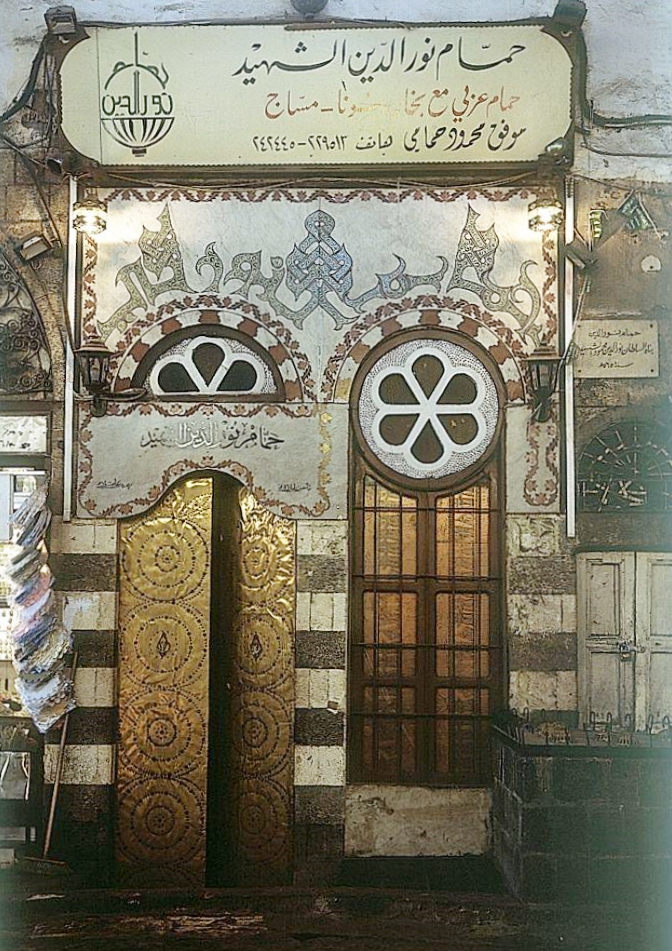
(01) Hammam Nur Al-Din, Damascus, Syria. Image source: Museum with no Frontiers (MWNF).
Architecture and Function
Hammams in Iraq typically followed a common architectural layout consisting of three main rooms. Al‑Barrani, (exterior) the cold room where visitors began their experience by relaxing, undressing, and preparing for bathing. Al‑Wastani (middle), the warm room that served as a transitional space allowing the body to gradually acclimate to heat and where scrubbing and washing often took place. Al‑Jawwani (interior), the hot, steam filled chamber similar to a sauna, where deep cleansing and perspiration were encouraged.
These bathhouses usually featured domed roofs with small glass openings that filtered in light, creating a calm and serene atmosphere. Rich decorations such as mosaics, marble, and carved wood further emphasized the hammam’s role as a space of relaxation, luxury, and social wellbeing.
Social and Cultural Significance
Hammams in Iraq were more than places for personal hygiene. They served as social hubs where people gathered, relaxed, and exchanged conversations. They also played an important role in major life events, such as pre‑wedding baths for brides and grooms, post‑childbirth cleansing, and preparation for religious holidays like Eid. For women, the hammam offered a rare public space where they could socialize freely and strengthen community ties.
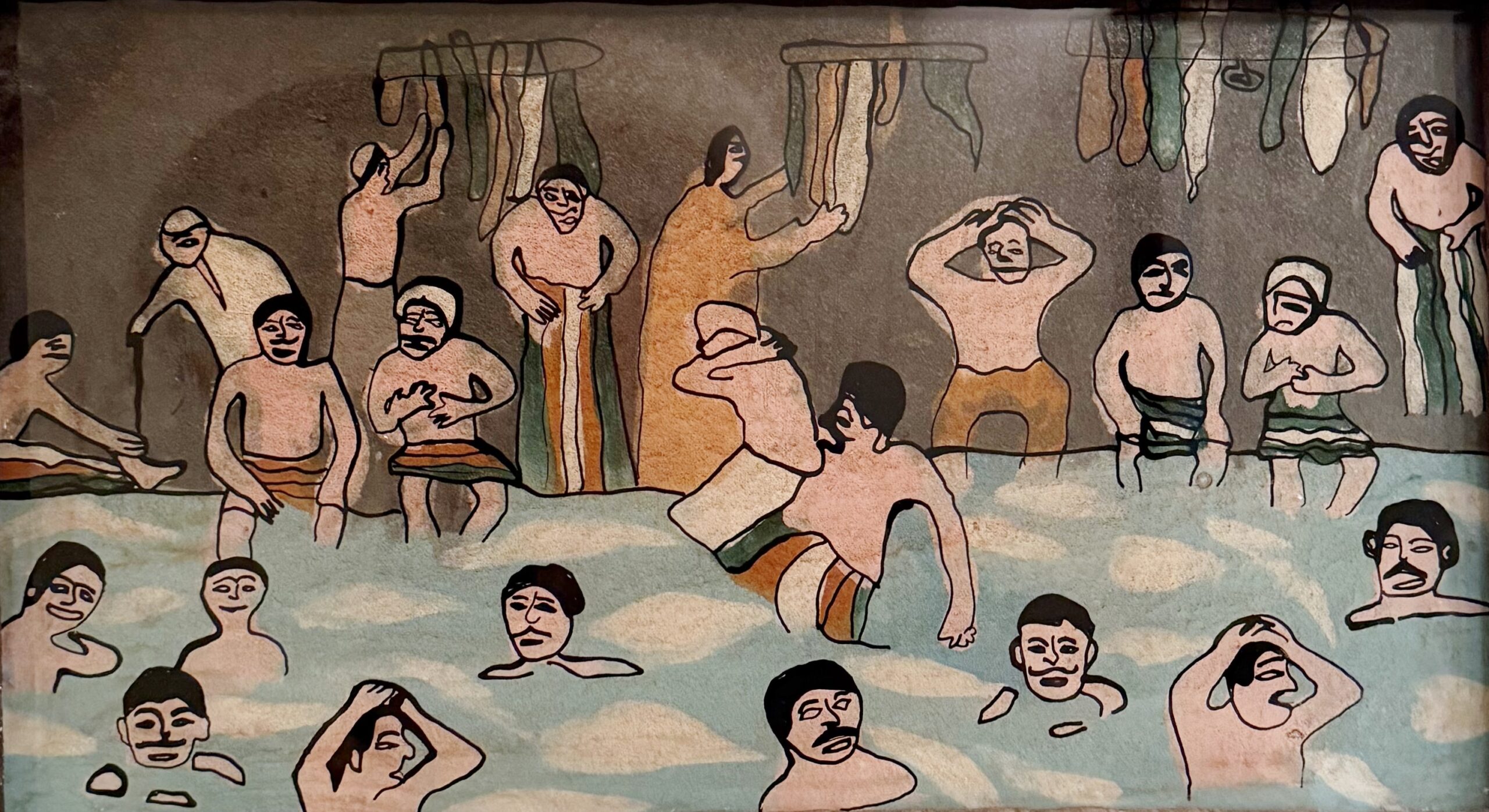
(02) Revers art glass technique, from Morocco, undated.
Gender Segregation in Hammam
In Iraq, men and women traditionally did not use the same hammam at the same time, reflecting cultural norms of privacy. Women often followed additional modesty practices, such as covering their bodies with a pestemal (towel or wrap) while moving between rooms.
Segregation was maintained in several ways:
Separate Hammams for Men and Women: In some locations, entirely separate bathhouses existed for each gender, with distinct entrances, facilities, and attendants serving only men or only women.
Shared Hammam, Different Times: More commonly, a single hammam building was shared, but men and women used it at different times of the day or on different days of the week. Women might have access in the mornings or on designated days, while men used the hammam in the afternoons or evenings. Women’s visits were often longer and more social, involving grooming, conversation, and relaxation with friends and family. Men’s visits tended to be shorter and more functional, focused on bathing, shaving, and occasional socializing. Staff thoroughly cleaned and reset the space between sessions. Female attendants served women, while male attendants served men, ensuring strict privacy.
Private Hammams: In wealthier households or estates, families sometimes had private hammams for personal use. Men and women of the same household might share the facility, though typically not at the same time. These private baths were smaller and designed for individual or family use rather than public gatherings.
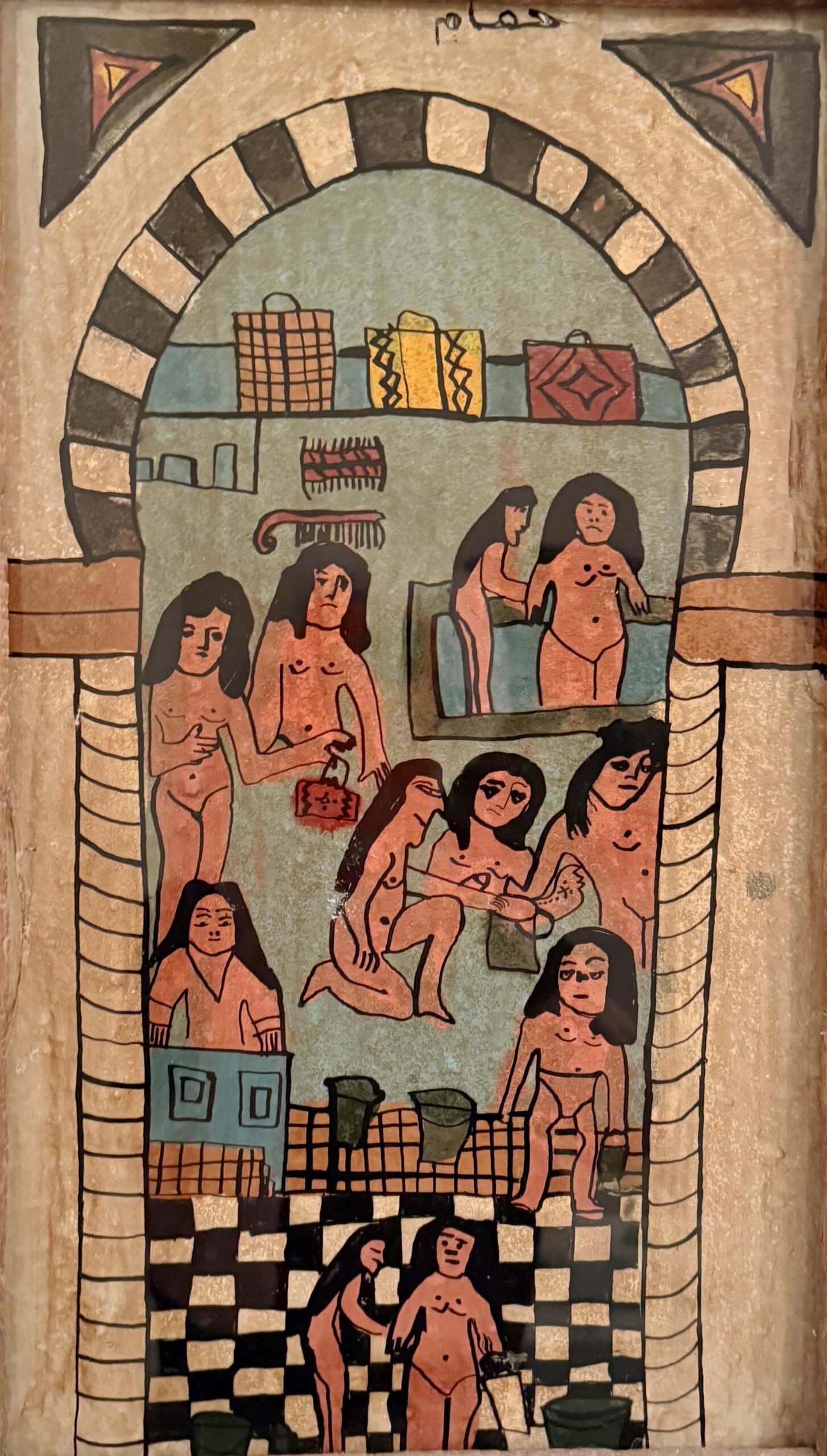
(03) Reverse art glass technique from Morocco, undated.
Aysar’s Hammam Collection, The Beginning
My mother Nazha Akrawi, she was the first to notice my interest in both tangible and intangible cultural heritage. It began when I was a child, visiting archaeological sites with my parents every weekend. After I returned from university, my mother started taking me to Al-Nahir Street and the magical old covered suq (market) in Baghdad.
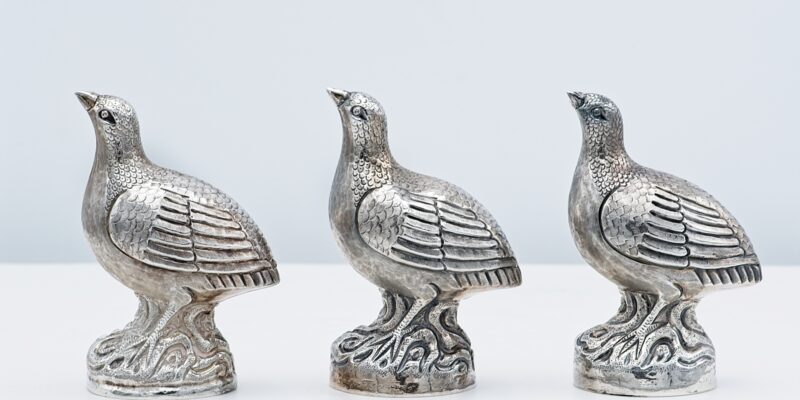
On Al-Nahir Street, where the silversmiths worked and had their shops, I fell in love with the silver ducks (Image 48) and bought my first set. When I wanted to buy a second set, she wouldn’t let me purchase the whole group—only the two small ducks. To this day, I still begrudge that!
Now, at 82 years old, I understand that she recognized the compulsive side of my personality when it comes to collecting, something that continues to this day. The good ending is that I miss her deeply, and I hope she can see my collections from heaven.
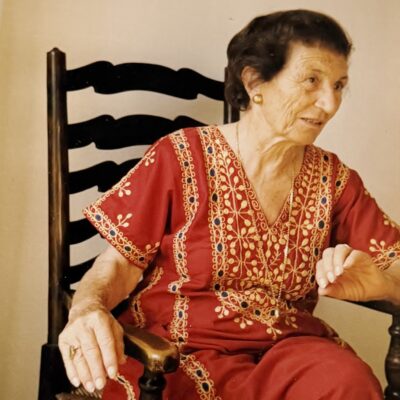
(04) Nazha Akrawi (1910 – 1992), Aysar’s mother.
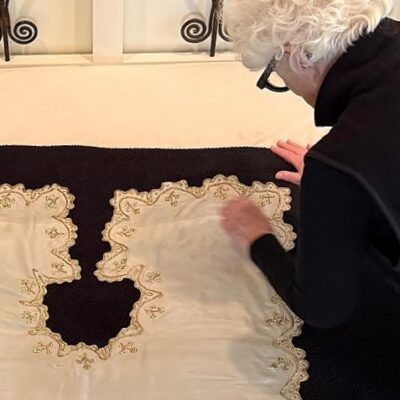
(05) Aysar Akrawi, gently handling and smoothing the gold quilted hammam robe preparing it for a photo shoot.
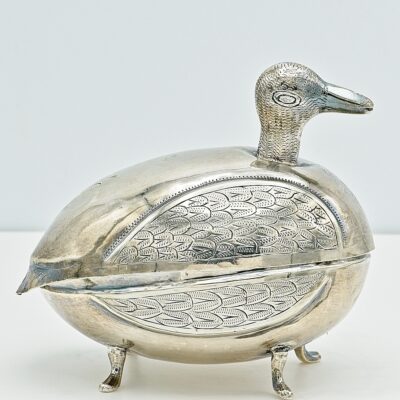
(06) Duck Shaped Container, D1. Iraq, 20 century, ca 1920. Iraqi Jewish silversmiths, silver.
Items Used at Hammam
When visiting a hammam in Iraq, both men and women traditionally brought specific items to ensure a comfortable and effective bathing experience. Although these items varied slightly between genders, they generally served the same purposes: cleanliness and grooming.
Hammam accessories in Iraq were primarily functional, however, for many people, these items also held cultural and sentimental value and often became expressions of personal style and social status. Many individuals owned personalized pieces that were passed down through generations, reflecting family heritage and craftsmanship.
Common Items for both Women and Men
Soap (Sabun):
An essential item brought by visitors, most commonly natural varieties such as Aleppo soap a traditional hard bar made from olive oil and laurel oil. Originating in Syria, this soap was highly valued for its gentle cleansing qualities and its ability to moisturize and nourish the skin.
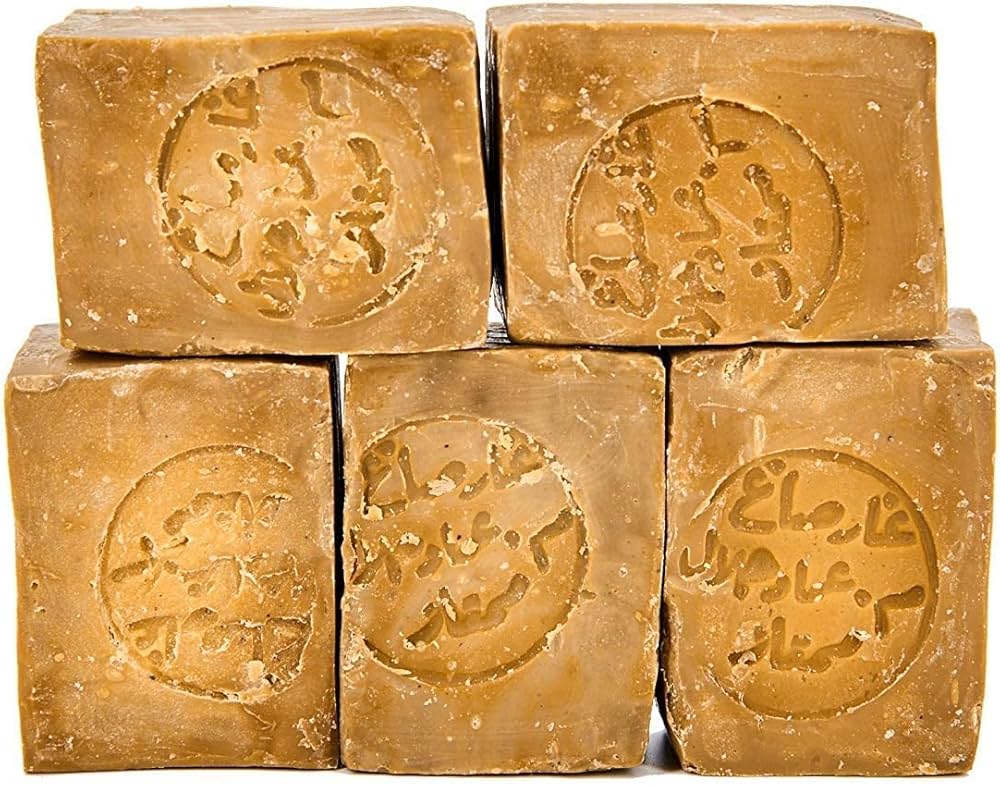
(07) Aleppo soap.
Exfoliating Mitt (Loofah / Kees):
Mitts used to scrub the body and remove dead skin. The scrubbing was often performed by a dellak, the bath attendant.
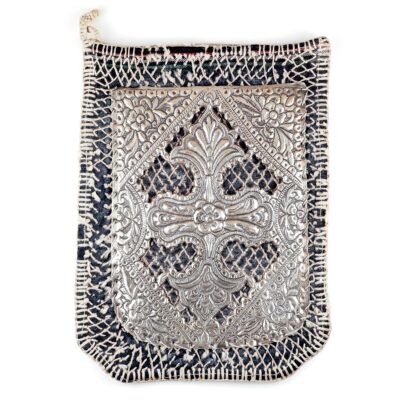
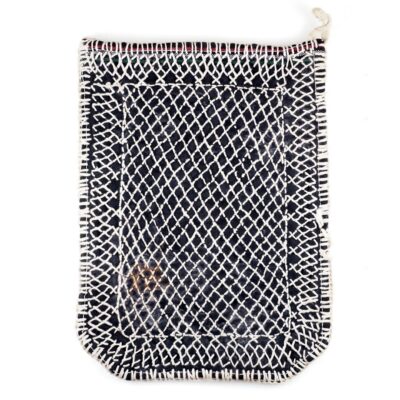
(08) Exfoliating Mitt EM1, front and back. Iraq, Mosul, 20th century, ca.1900, Iraqi Christian silversmiths, silver and fabric.
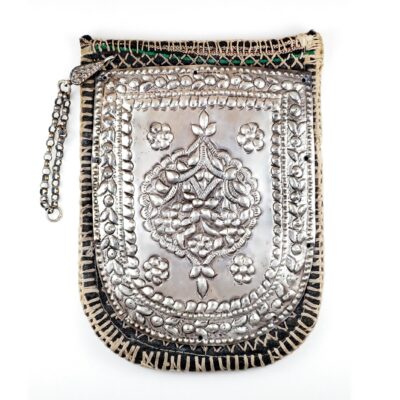
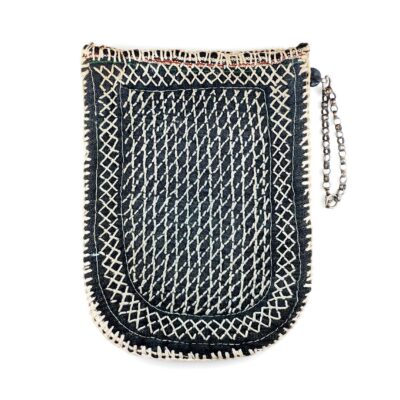
(09) Exfoliating Mitt EM2. front and back, Iraq, Karbala, 19th century, ca.1890, Iraqi silversmiths, silver and fabric.
Pumice Stone / Foot Scrubs:
Dressed up with silver cover, the pumice stone was used in the hammam to clean and scrub the feet, especially around the ankles.

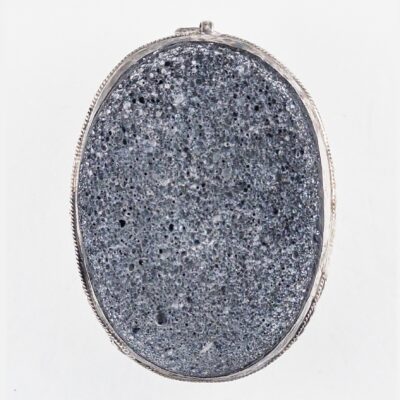
(10) Pumice Stone PC1. front and back. Iraq, 20th century, ca.1920, Iraqi Jewish silversmiths, silver and pumice.
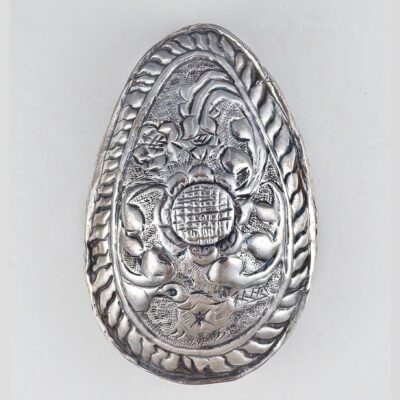
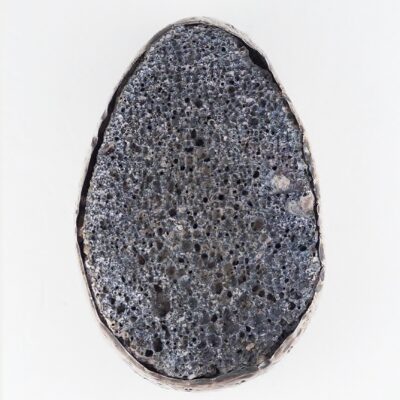
(11) Pumice Stone PC2, front and back. Iraq, 20th century, ca.1920, Iraqi Jewish silversmiths, silver and pumice.
Small Mirror:
A compact mirror to assist with grooming and makeup application, helping visitors ensure their appearance was neat and pristine before leaving the bath.

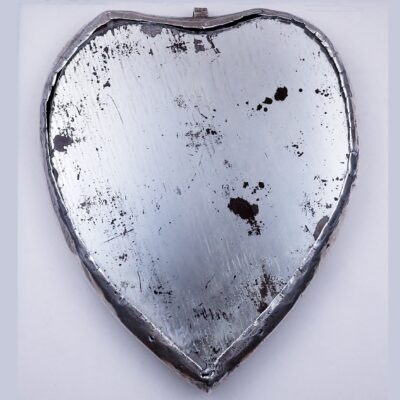
(12) Mirror M1, front and back. Iraq, Mosul, 20th century, ca.1930, Iraqi silversmiths, silver and glass.


(13) Mirror M2, front and back. Iraq, Karbala, 20th century, ca.1930, Iraqi silversmiths, silver and glass.
Wooden Slippers (Qabqab):
Protecting the feet from the wet and sometimes slippery floors of the hammam, slippers were worn featuring elevated wooden soles that kept the wearer comfortably above the damp surfaces.

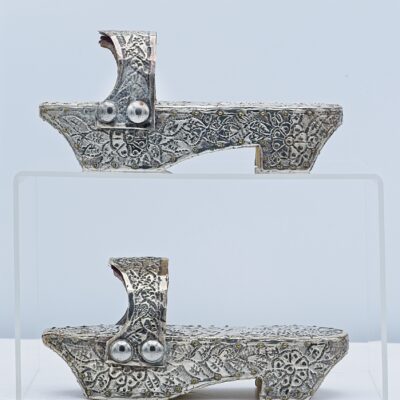
(14) Slippers SL1, top and side. Egypt, 20th century, ca.1970, Egyptian silversmiths, silver and wood..

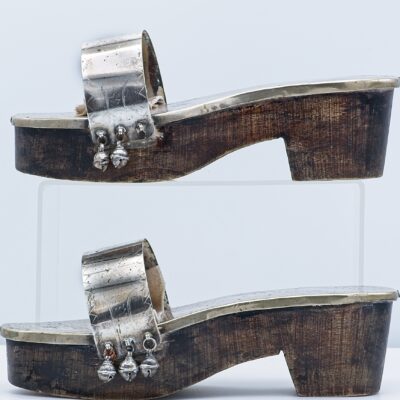
(15) Slippers SL1, top and side. Iraq, 20th century, ca.1920, Iraqi Jewish silversmiths, silver and wood.
Towels / Bath Wrap (Fouta / Pestemal):
Light weight, thin cotton towels were brought to dry off after bathing. Men also used simple cloth wraps, while women often carried larger and more decorative versions. Women wrapped themselves in the pestemal for modesty while inside the hammam or when transitioning between its different rooms.
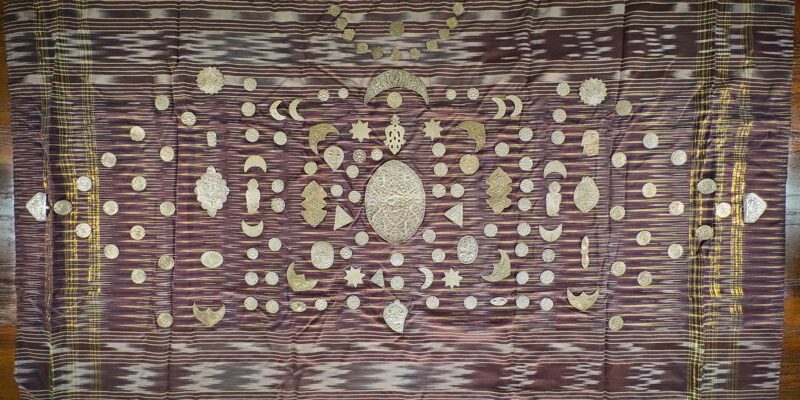
(16) Wrap W1, Iraq, 20th century, year 2016, wrap hand made by Aysar Akrawi using silver pieces made in Iraq and synthetic silk.
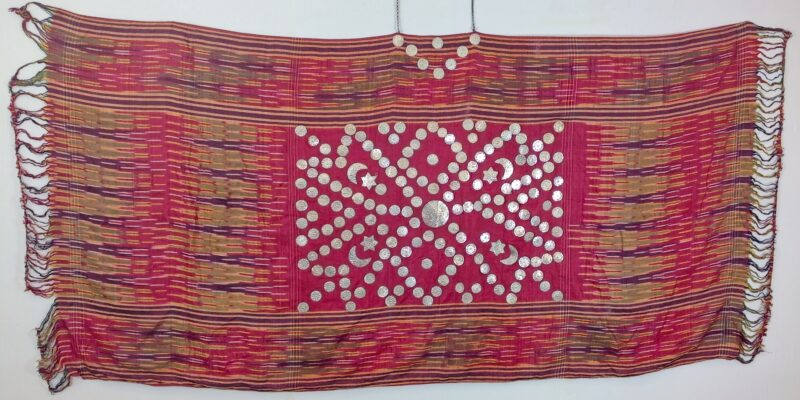
(17) Wrap W2. Iraq, 20th century, ca.1920-1940, Iraqi silver pieces and silk material from Syria.
Perfumes and Oils:
After bathing, men and women often applied scented oils or perfumes to their skin. Rosewater, orange blossom water, and oud (fragrant wood commonly used in Middle Eastern perfumes) were commonly used to scent the body and hair. Visitors also brought oils for massages, a popular service in the hammam, especially in the hot room (Al‑Jawwani).
Rosewater Sprinklers:
These Items were made of silver and other metals. These ornate, long-necked vessels were traditionally used in hammams or for the ceremonial sprinkling of rosewater on guests during weddings, religious ceremonies, and other special occasions.
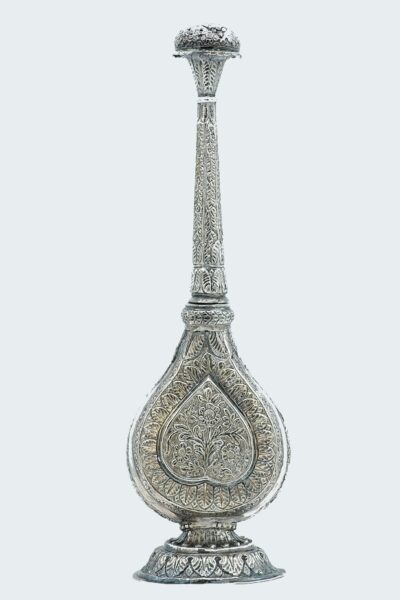
(18) Sprinkler Rosewater SP1, Iraq, Mosul, 20th century, ca.1930, Iraqi silversmiths, silver.

(19) Sprinkler Rosewater SP4, Pakistan, 20th century, ca.1970, Pakistani metalworkers, metal.

(20) Sprinkler Rosewater SP5, Iraq, 20th century, ca.1920, Iraqi Jewish silversmiths, silver.
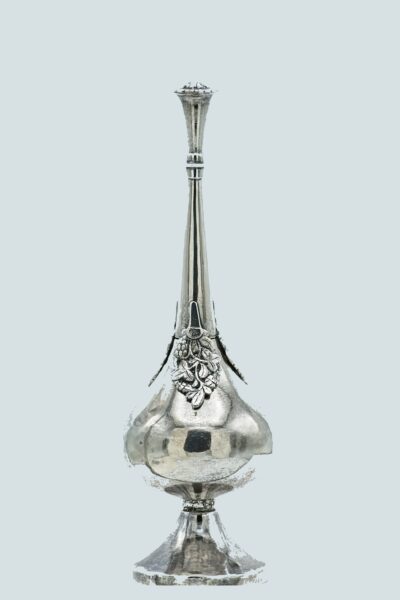
(21) Sprinkler Rosewater SP2, Iraq, 20th century, ca.1920, Iraqi Jewish silversmiths, silver.
Water Bowls (Tassa):
Traditional water bowls used for scooping and pouring water in a hammam. They are shallow and wide, typically made of silver, copper or brass.
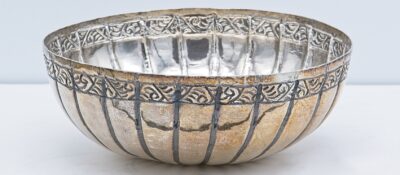
(22) Water Silver Bowel B1, side. Iraq, Mosul, 20th century, ca.1900, Iraqi silversmiths, silver.
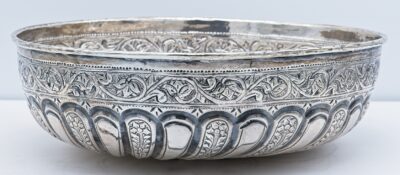
(23) Water Silver Bowel B2, side. Iraq, Mosul, 20th century, ca.1900, Iraqi silversmiths, silver.
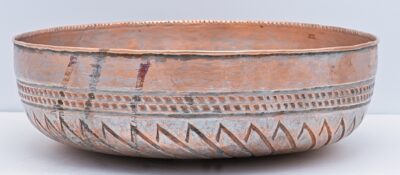
(24) Water Brass Bowel B1, side, Iraq, Mosul, 20th century, ca.1900, Iraqi metalworkers, copper.
Flasks:
Bathers brought flasks containing drinking water and herbal drinks, for use during their bath.
Water Ewers (Ibrik):
A water ewer, is a metal container with a spout used for pouring water during the bathing process. Ewers were often crafted from brass, copper, or silver and could be engraved with floral motifs or geometric designs.
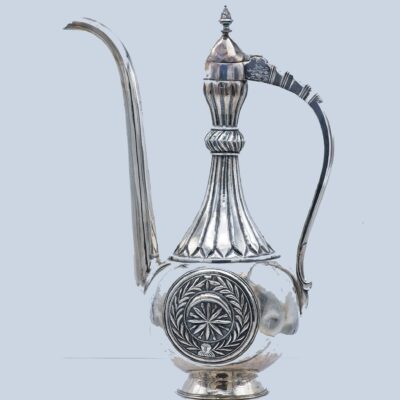
(25) Water Ewer Jug J1, Iraq, 20th century, ca 1930, Iraqi Jewish silversmiths, silver.
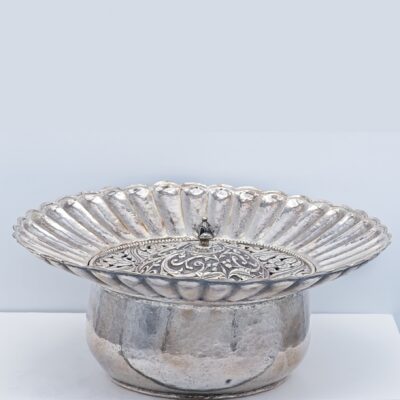
(26) Bowl B1, front, Iraq, 20th century, ca 1930, Iraqi Jewish silversmiths, silver.
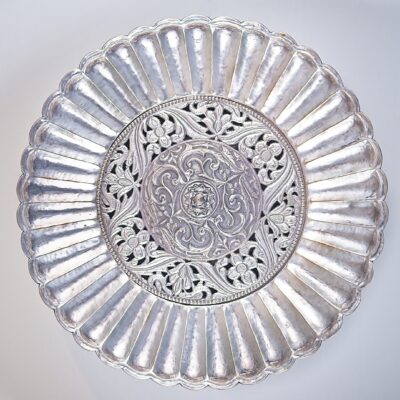
(27) Bowl B1, top. Iraq, 20th century, ca 1930, Iraqi Jewish silversmiths, silver.
Items Used by Women
Comb and Hair Accessories:
Women often carried combs to untangle and groom their hair after bathing. They also brought pins and ties to style their hair.

(28) Comb C, Iraq, 20th century, ca.1920, Iraqi Jewish silversmiths, silver and bone.
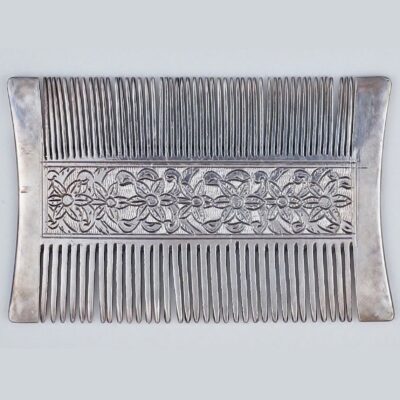
(29) Comb C1, Iraq, 20th century, ca.1930, Iraqi Jewish silversmiths, silver.
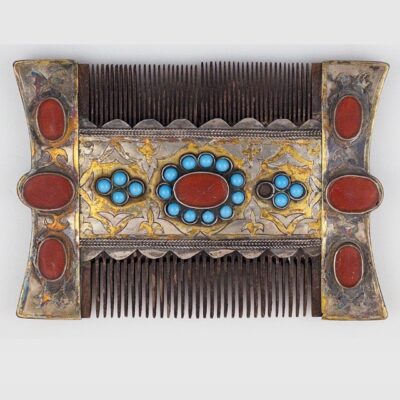
(30) Comb C2. India, 20th century, ca.1970, Indian silversmiths, silver, bone and semi precious stones.

(31) Comb C3, India. 20th century, ca.1970, Indian silversmiths, silver, bone and semi precious stones.
Kohl:
Women brought kohl, a traditional eye cosmetic, to apply after bathing. This was especially common for those attending a hammam visit in preparation for a social event or wedding. Kohl was stored in small decorative vials made from silver, brass, or other metals.
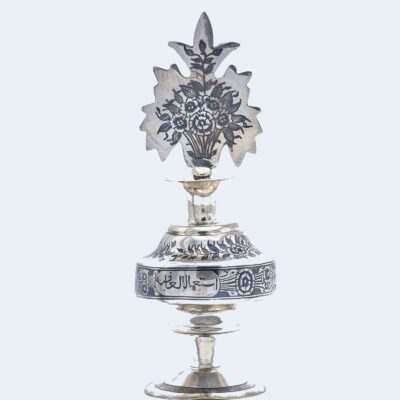
(32) Kohl K1. Iraq, 20th century, ca.1930, Iraqi Sabaeans / Mandaeans, silver and niello.
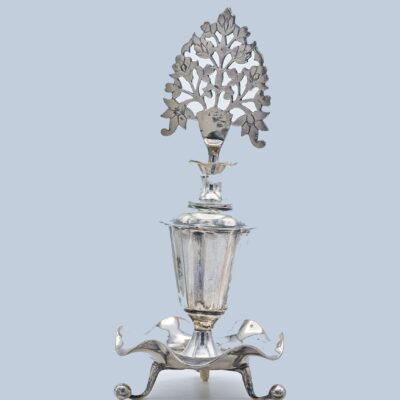
(33) Kohl K2. Iraq, 20th century, ca.1920, Iraq, Baghdad, Iraqi Jewish silversmiths, silver.
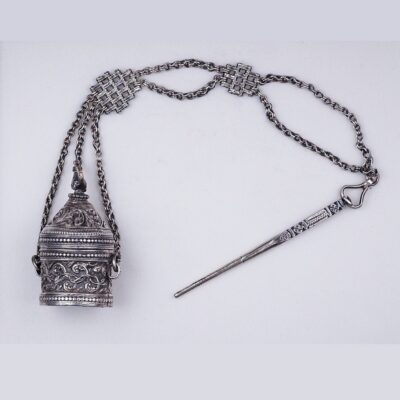
(34) Kohl K3. Iraq, 20th century, ca.1920, Iraq, Karbala, Iraqi silversmiths, silver.

(35) Kohl K4. Iraq, 20th century, ca.1920, Iraq, Karbala, Iraqi silversmiths, silver.

(36) Kohl K6. Iraq, 20th century, ca.1930, Iraqi Sabaeans / Mandaeans, silver and niello.
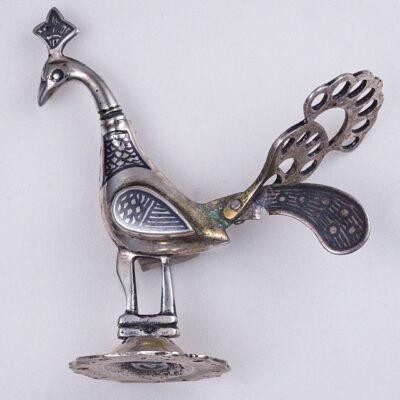
(37) Kohl K7. Iraq, 20th century, ca.1940, Iraqi Sabaeans / Mandaeans, silver and niello.

(38) Kohl K8. Iraq, 20th century, ca.1930, Iraqi Sabaeans / Mandaeans, silver and niello.
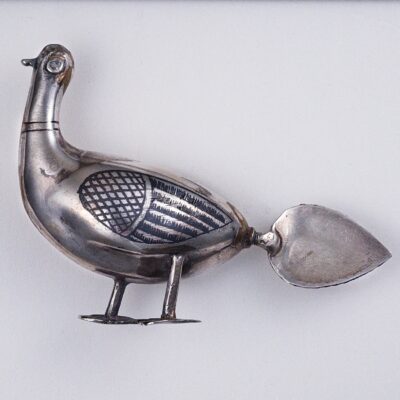
(39) Kohl K10. Iraq, 20th century, ca.1950, Iraqi Sabaeans / Mandaeans, silver and niello.
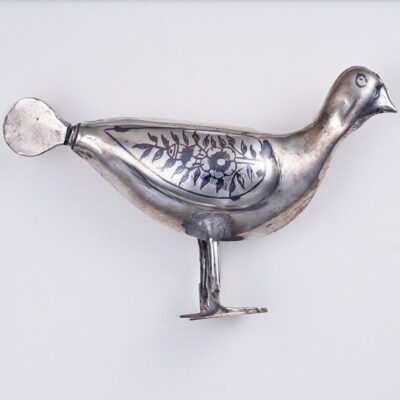
(40) Kohl K9. Iraq, 20th century, ca.1950, Iraqi Sabaeans / Mandaeans, silver and niello.

(41) Kohl K5. India, 20th century, ca.1930, Asian silversmiths, silver.
Cosmetic Boxes:
Women carried small compact cases, made from silver and niello, which held items such as powder, lip colour, or other beauty products. These boxes were often adorned with intricate designs, and some were small enough to fit in a pouch.
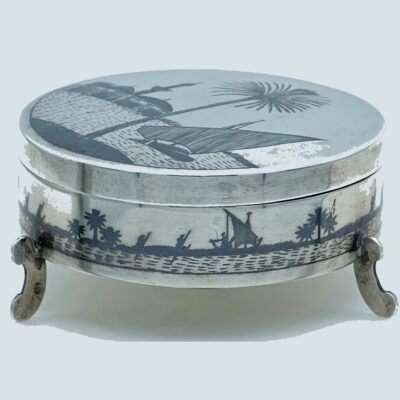
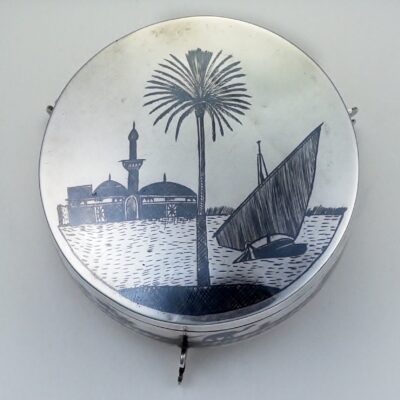
(42) Powder Container PC1. Iraq, 20th century, ca.1930, Iraqi Sabaeans / Mandaeans, silver and niello.
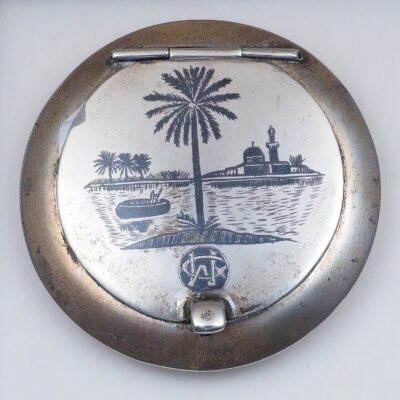
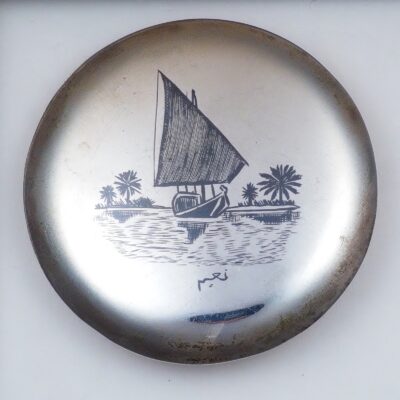
(43) Powder Container PC2. Iraq, 20th century, ca.1950, Iraqi Sabaeans / Mandaeans, silversmith Naim, silver and niello.
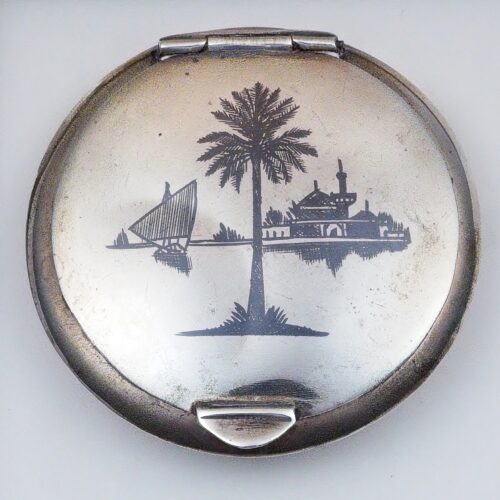
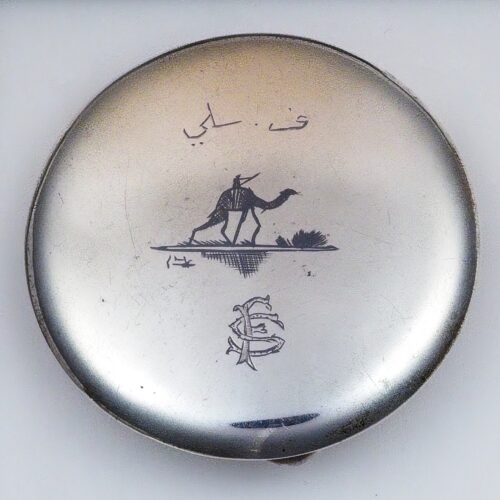
(44) Powder Container PC3. Iraq, 20th Century, ca.1950, Iraqi Sabaeans / Mandaeans, silversmith Salem, silver and Niello. (Private Collection – Barbara Porter).
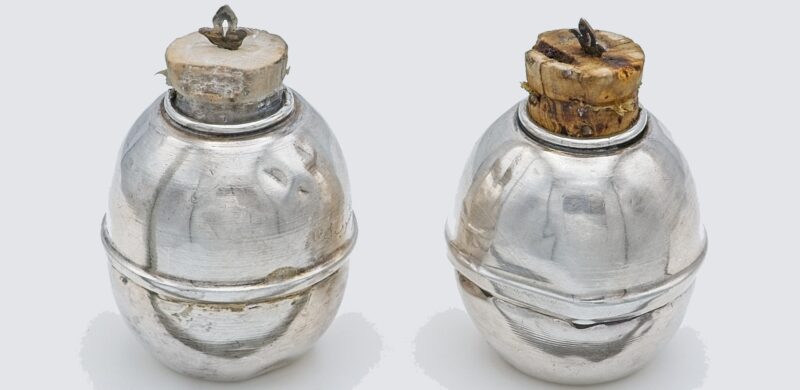
(45) Perfume Bottle BO, Syria , 20th century, ca. 1960, Syrian silversmiths. silver
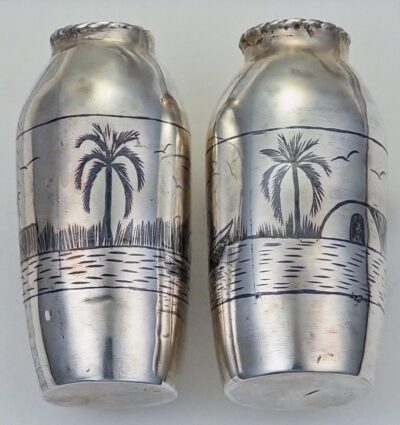

(46) Perfume Bottles S1, Iraq, 20th century, ca.1950, Iraqi Sabaeans / Mandaeans, silversmith Salem, silver and niello. (Private Collection – Barbara Porter)
(47) Perfume Container S2, Asian, 20th century, ca. unknown date, Asian silversmiths, silver.
Henna:
Henna is obtained from the dried leaves of Lawsonia inermis, which produce a reddish-brown dye used for temporary coloring of the hair and body. Women prepared henna paste for application to the skin or hair, particularly as part of beauty rituals associated with weddings and other special celebrations. The paste was commonly mixed and stored in special containers, often small metal bowls or lidded vessels.
Henna Footrest:
In traditional Iraqi hammams, specially designed footrests were used for henna application and personal grooming. Crafted from materials such as marble, brass, or copper, these objects were used in pre-wedding henna ceremonies and other ritual occasions. The bride would rest her feet on the elevated support while henna was applied by skilled artists or female relatives. Some examples incorporate a recessed area or embedded shallow plate designed to hold henna paste, eliminating the need for a separate container.
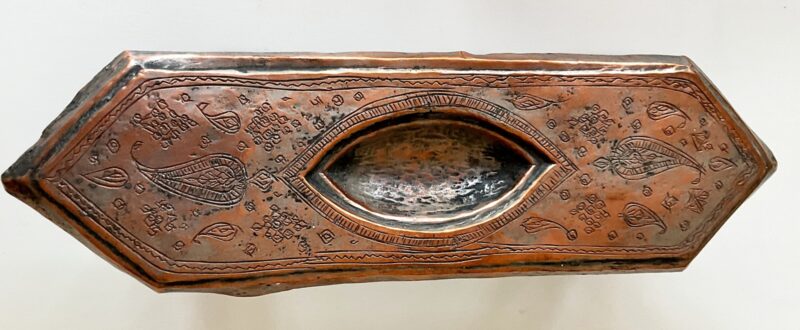
(48) Henna Footrest HS1, Asian source, copper.

(49) Henna Footrest HS2, Asian source, alabaster.
Razor or Thread and Scissors:
These tools were essential for personal grooming, including shaving and hair removal. Many women used threading to remove facial and body hair. Decorative scissors were also common and served both practical and aesthetic purposes, especially for trimming and styling hair.

(50) Scissors SR1, Qajari, Persian, 18-19 century, gold inlay, iron and brass.
Jewellery and Personal Items Containers:
Women also carried small cases or caskets for jewellery, hairpins, or other personal adornments. These containers were typically crafted from silver or brass and often had compartments to keep different items organized.
Symbolism and Luxury Items
The use of silver and brass containers in the hammam was not only practical but also a reflection of personal taste and social status. These objects contributed to the ritualistic and communal atmosphere of the bathhouse, where grooming and cleanliness were approached with a sense of elegance and cultural pride.
Silver and brass signified affluence, and their elaborate designs, often featuring intricate arabesque patterns, floral motifs, or calligraphy showcased the region’s rich artisan traditions and skills. Many of these containers were treasured possessions, passed down through generations as family heirlooms.
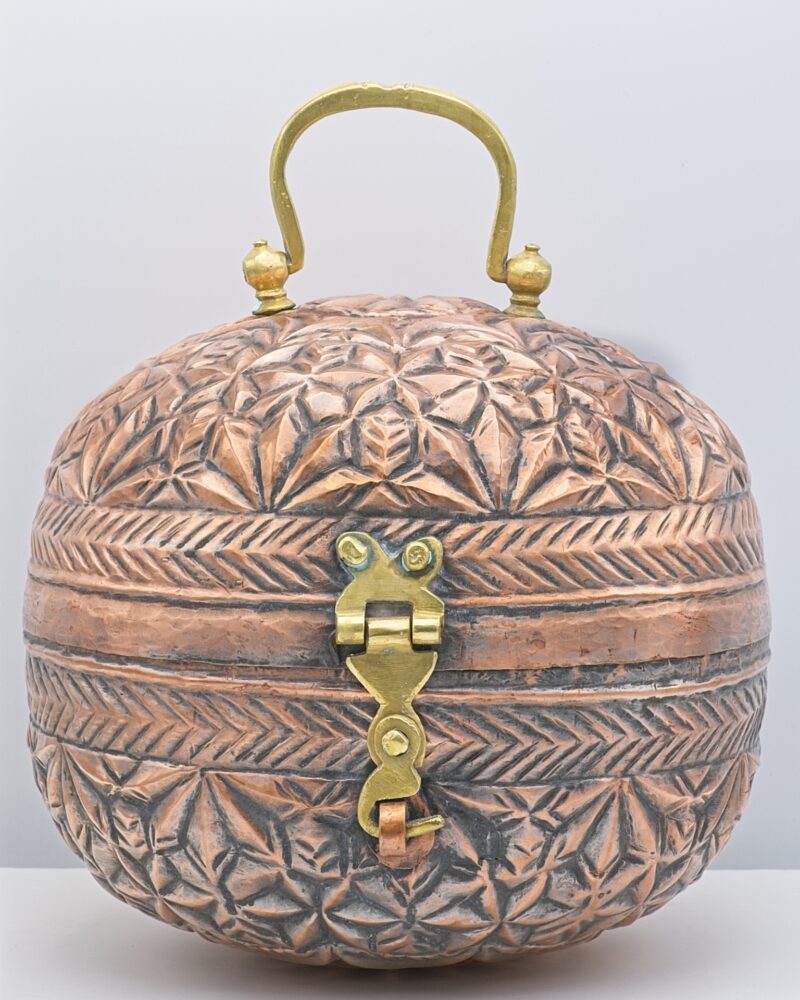
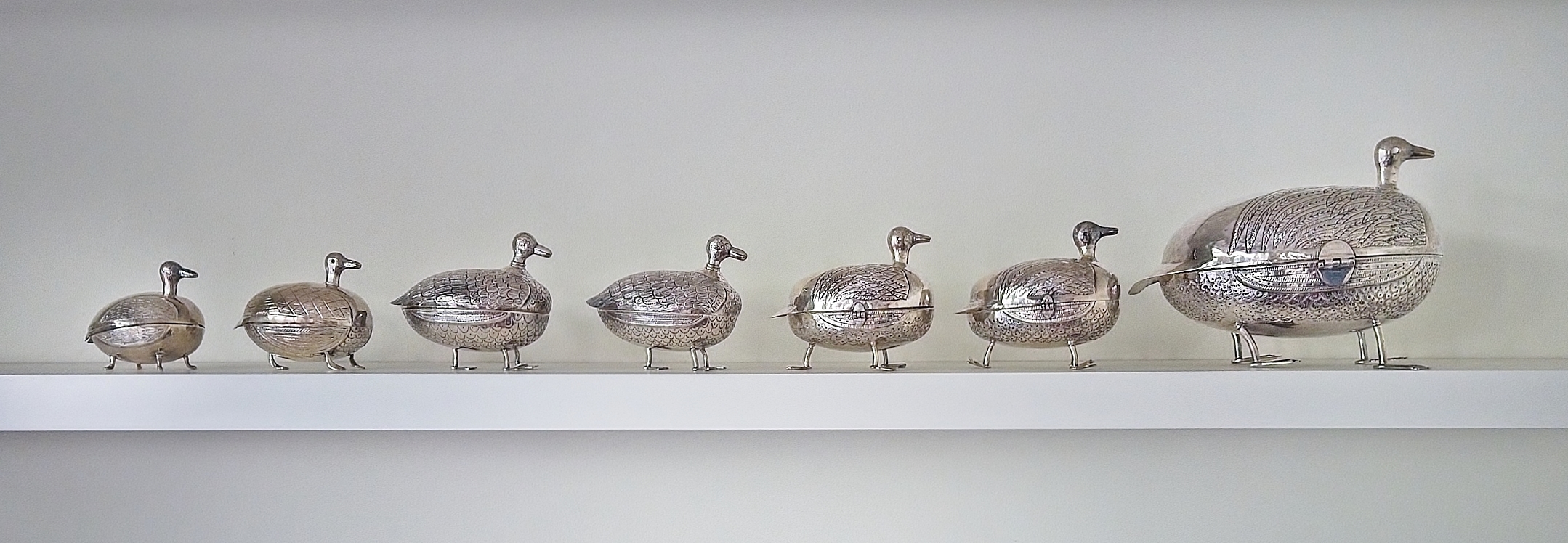
(51) Melon Shape Container M1. Iraq, Mosul, 20 century, ca 1900. Iraqi copper smith and brass smith, copper and brass.
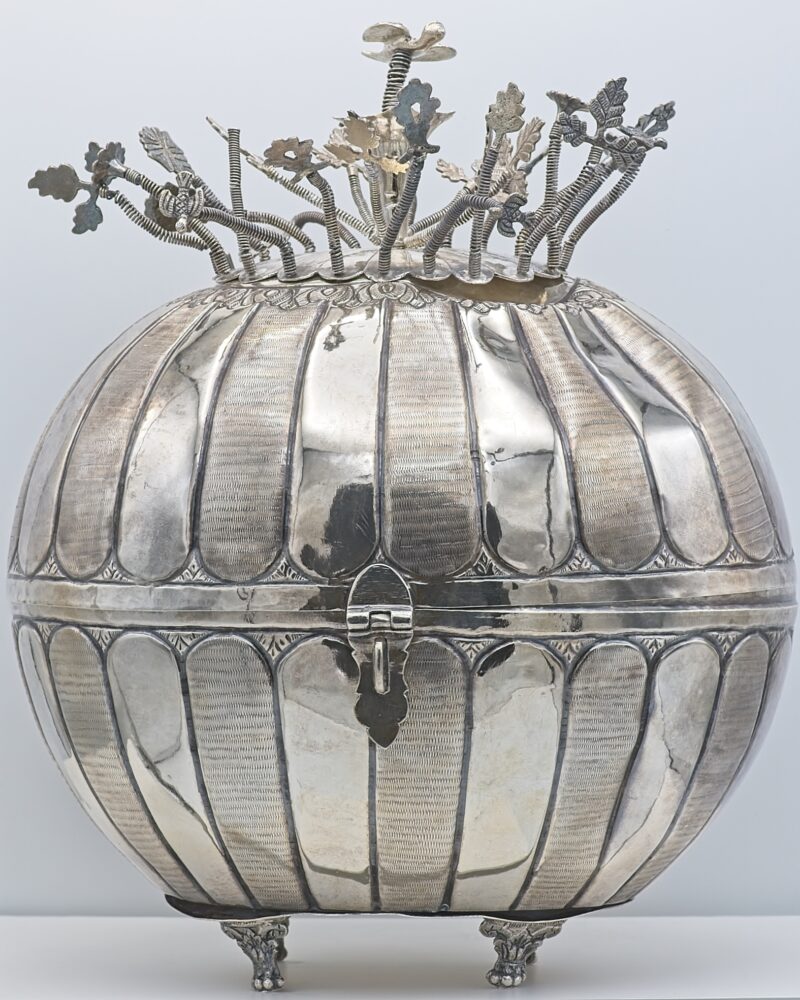
(52) Fruit Shape Container F1, Iraq, 20 century, ca 1920. Iraqi Jewish silversmiths, silver.
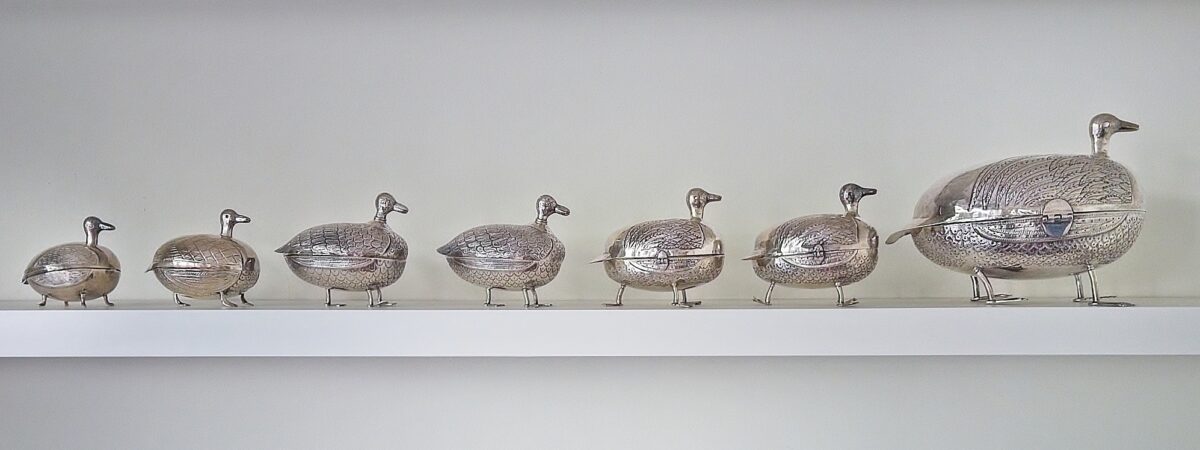
(53) Duck Shape Containers D1 – D7, Iraq, 20 century, ca 1920. Iraqi Jewish silversmiths, silver.
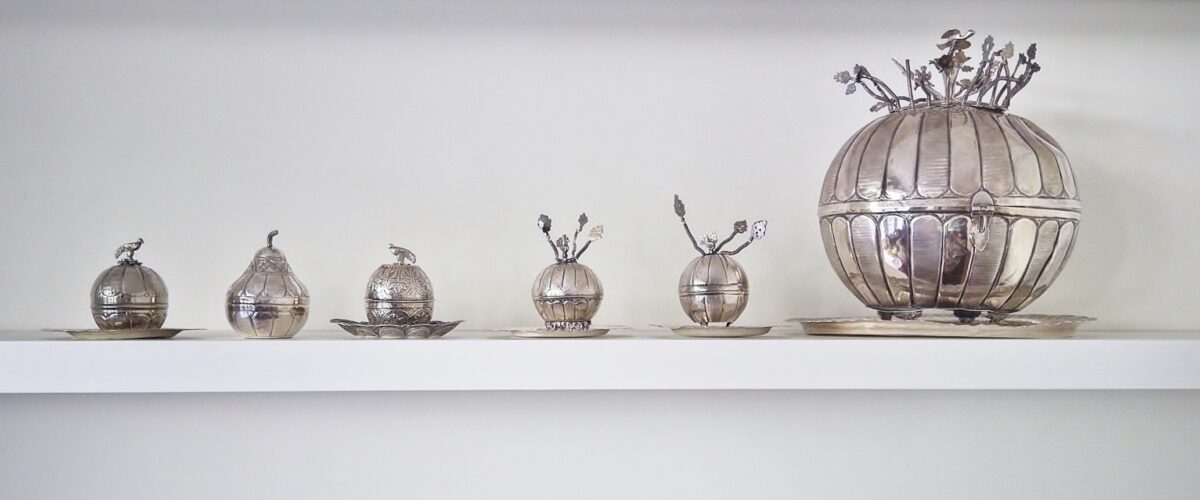
(54) Fruit Shape Containers F1 – F6. Iraq, 20 Century, ca 1920. Iraqi Jewish Silversmiths, Silver.
Containers varied in size and shape resembling fruits and birds. They hold smaller items used in the hammam.
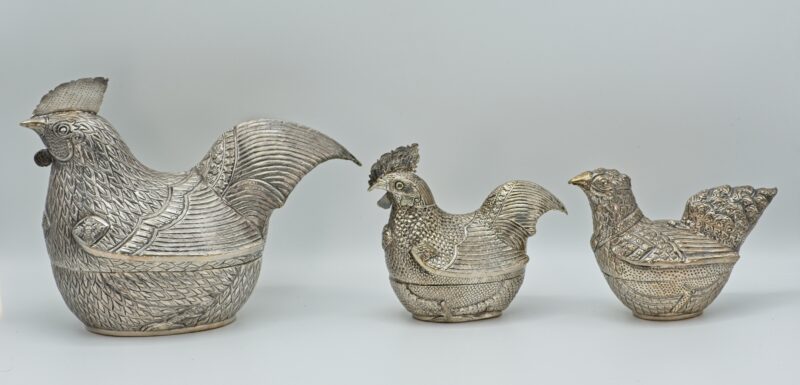
(52) Roosters R1 – R3, Thailand, 20th century, ca 1980, Asian silversmiths, silver.
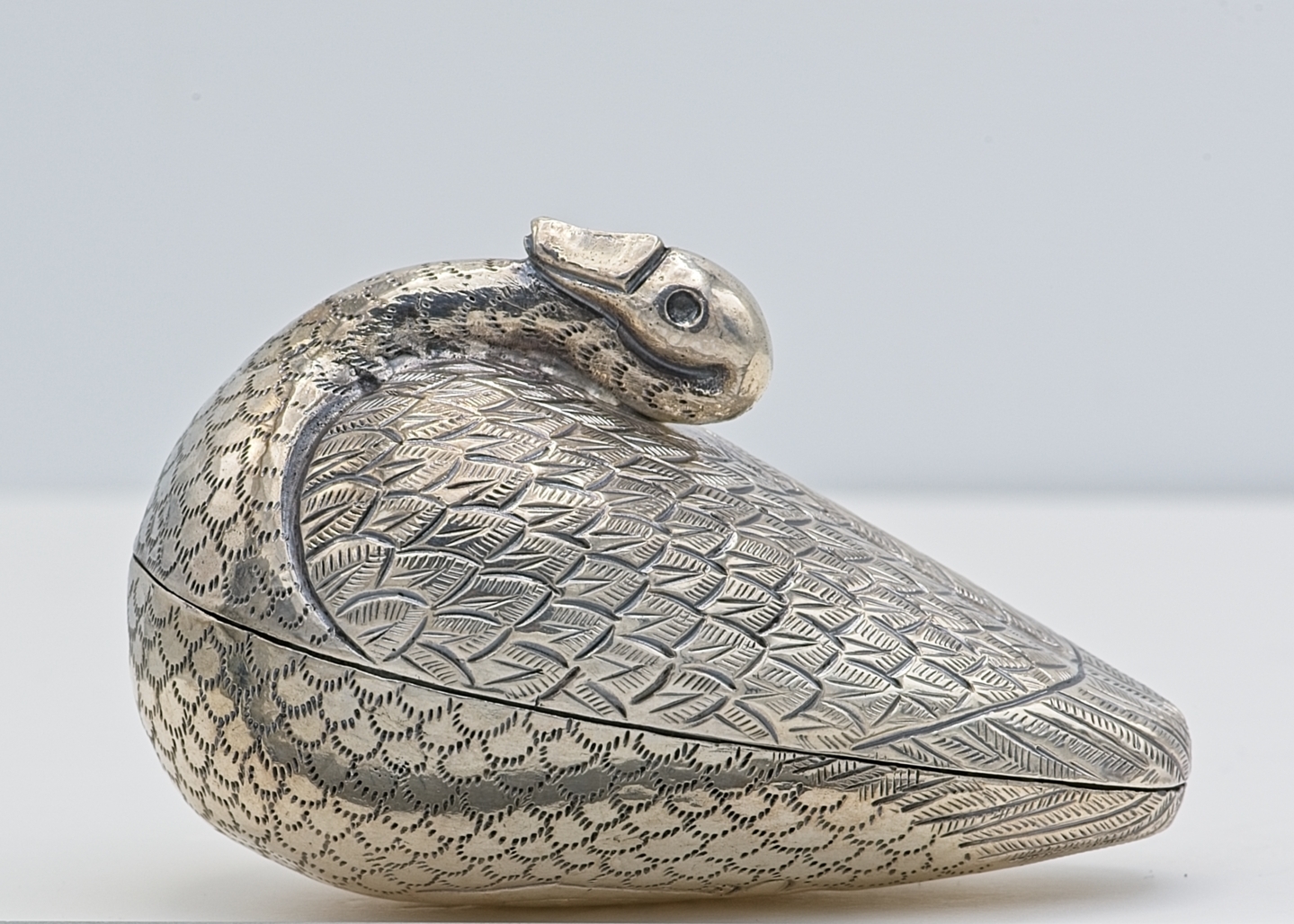
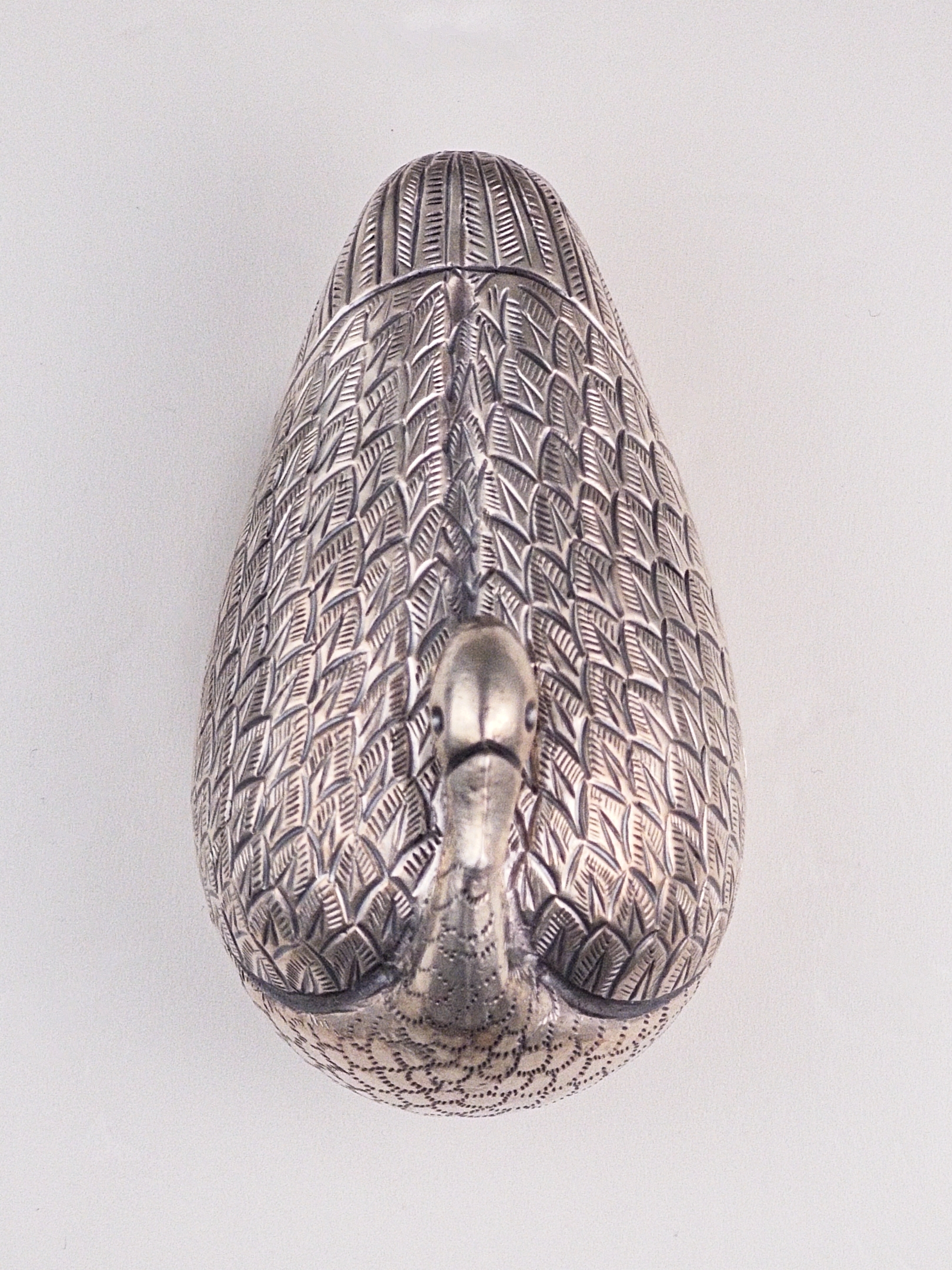
(55) Geese G1, side and top. Thailand, 20th century, ca 1980, Asian silversmiths, silver.
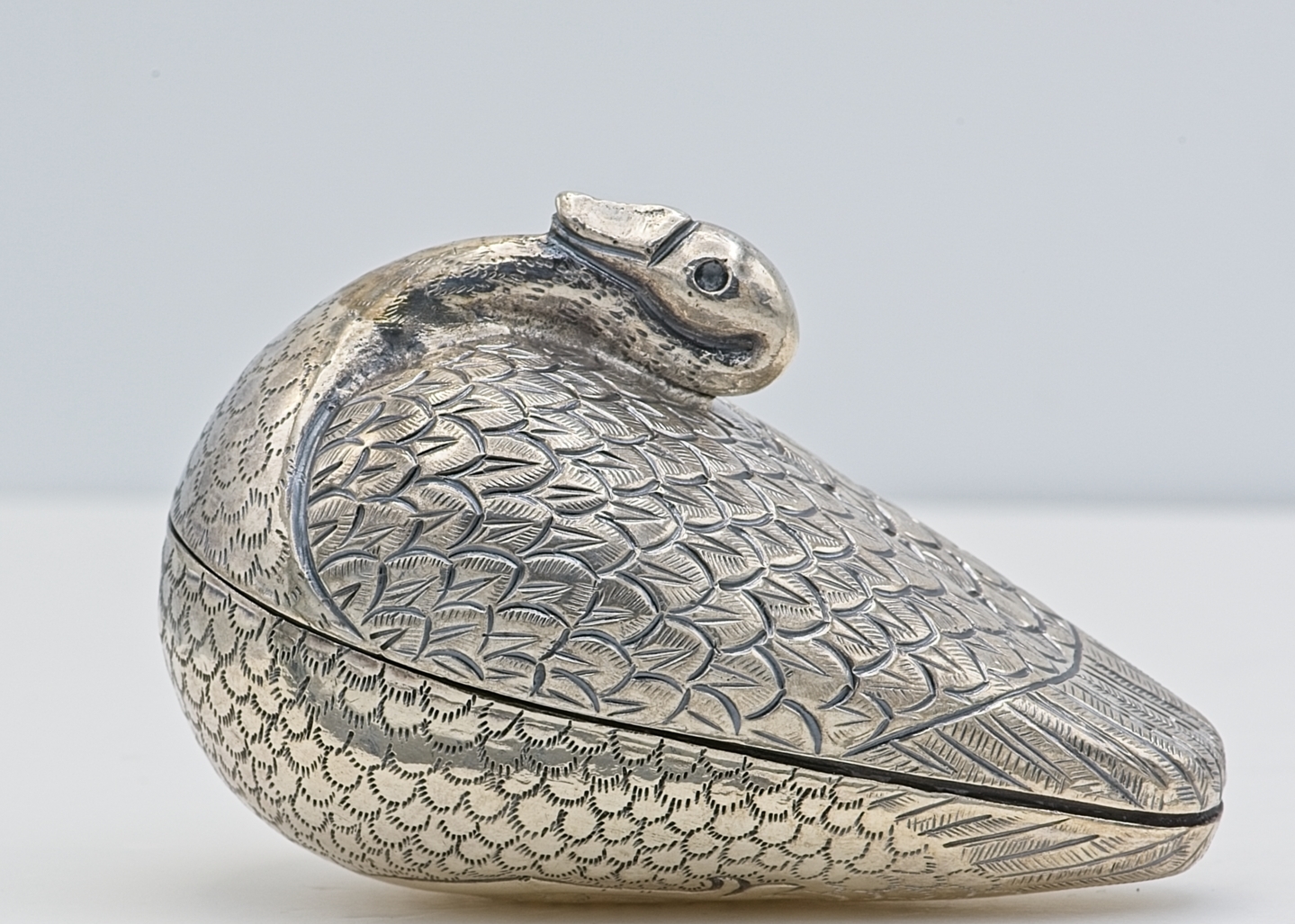
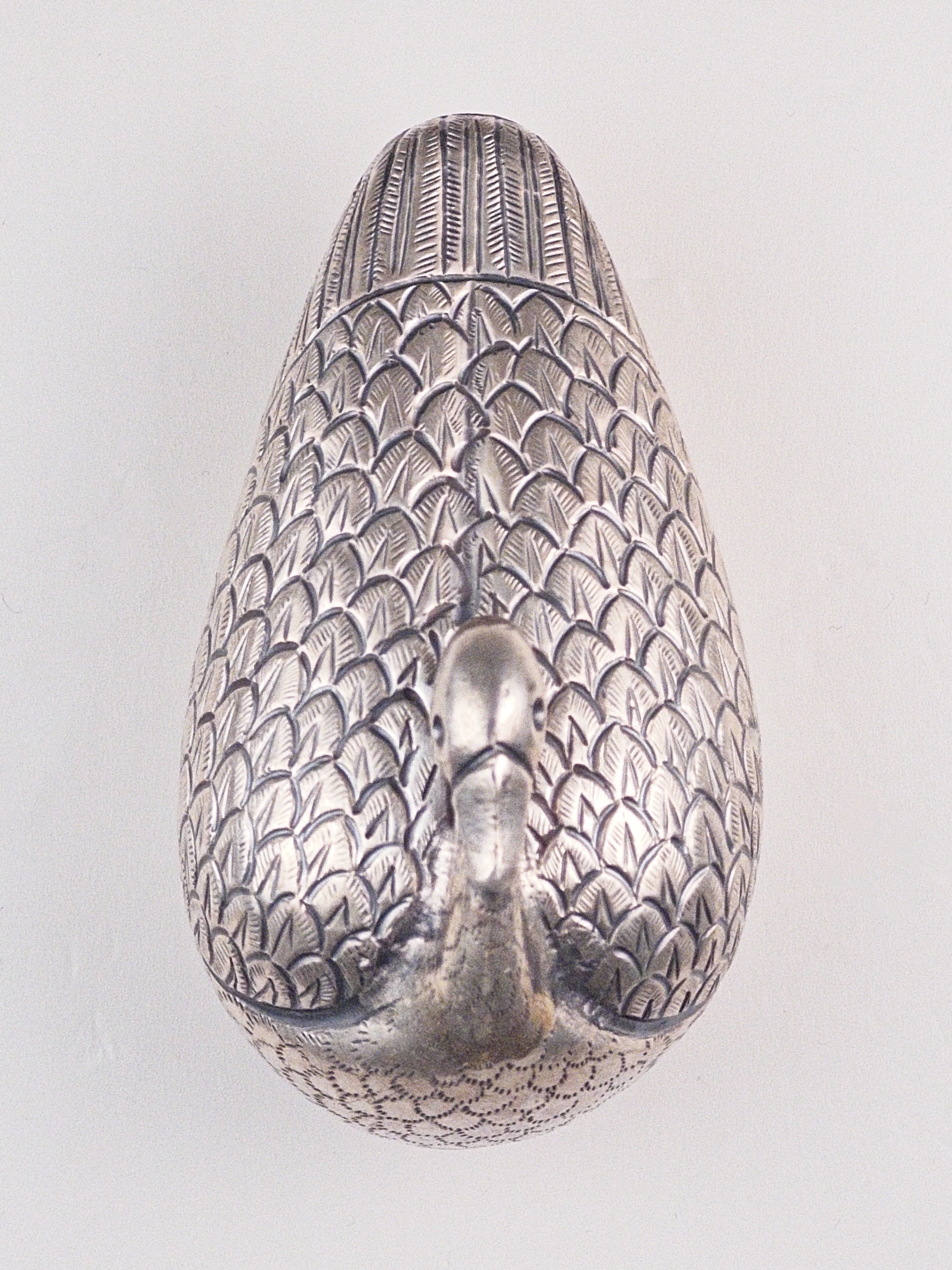
(56) Geese G2, side and top. Thailand, 20th century, ca 1980, Asian silversmiths, silver.
Common Foods and Snacks Women Took to the Hammam
In Iraq, visiting the hammam was often a social occasion, especially before weddings, holidays, or family celebrations. Because people spent several hours there, they brought food and refreshing drinks to enjoy together, turning the visit into a relaxed communal gathering. For brides or grooms to be, or during special family events, the offerings were more elaborate, with trays of sweets and fruits shared among all. Foods commonly brought were:
Fruits: Fresh fruits were a popular and refreshing snack to enjoy during or after the hammam visit, with choices including grapes, pomegranates, dates, figs, apples and pears, as well as melons and watermelon.
Nuts and Seeds: A variety of nuts and seeds were enjoyed for their flavor and energy, including almonds, pistachios, walnuts, sunflower seeds, and local Iraqi nuts such as sisi, bttum, and habat khathra (green seeds), and dried hummus qthami.
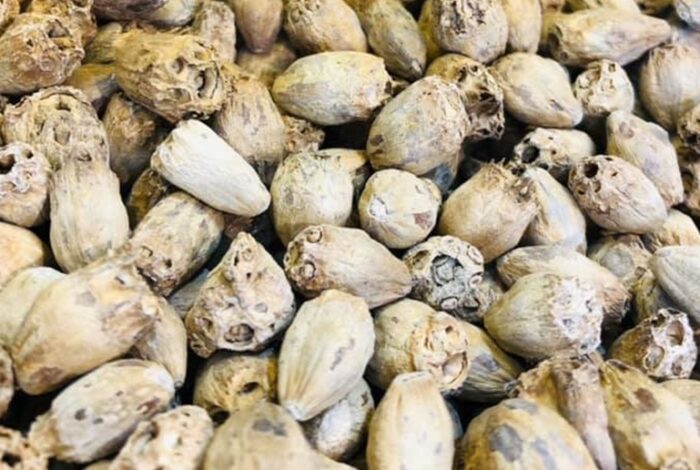
(57 ) Sisi

(58 ) Bttum
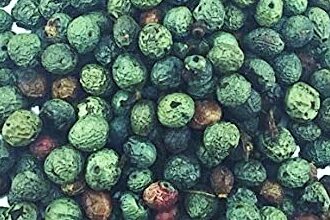
(59 ) Hebbat Khathra (Bttum with skin).

(60 ) Qthami
Pastries and Sweets: Sweet treats were especially common during celebratory visits, including baklava, a rich layered pastry filled with nuts and soaked in syrup or honey; ma’amoul, traditional shortbread pastries filled with dates, nuts, or figs; halva, a dense sweet made from sesame paste (tahini) sometimes mixed with pistachios or chocolate; and knafeh, a dessert made with shredded filo pastry, cheese, and sweet syrup often enjoyed during special gatherings.
Bread and Savory Snacks: Simple breads were often paired with light, savory accompaniments such as soft cheeses like labneh or white cheese, olives, hummus, and baba ghanoush.
Herbal Teas: Warm or aromatic teas were enjoyed for comfort and relaxation, with popular infusions including mint tea often sweetened with sugar, anise tea, chamomile, and teas infused with rosewater or orange blossom water.
Fruit Juices: Freshly squeezed juices helped guests stay hydrated in the heat of the hammam, with popular options including lemonade made from fresh lemons, water, and sugar; pomegranate juice, which was tart, sweet, and rich in antioxidants; tamarind juice, known for its sweet and tangy flavor; and sherbet (sharbat), a sweet, refreshing drink made from fruits, flowers, or herbs and often flavored with rosewater, orange blossom water, or pomegranate, especially popular during the summer.
Water: Staying hydrated was essential, so plain water was always brought along. Sometimes it was infused with mint or cucumber for a refreshing taste

(61) Fruit Platter F1, Iraq, 20 century 1920, Iraqi Jewish silversmiths, silver.
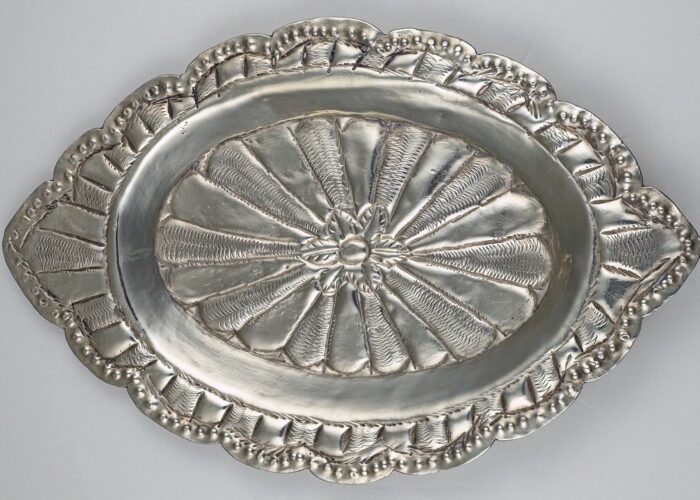
(62) Fruit Platter F5. Iraq, 20 century 1920, Iraqi Jewish silversmiths, Silver.
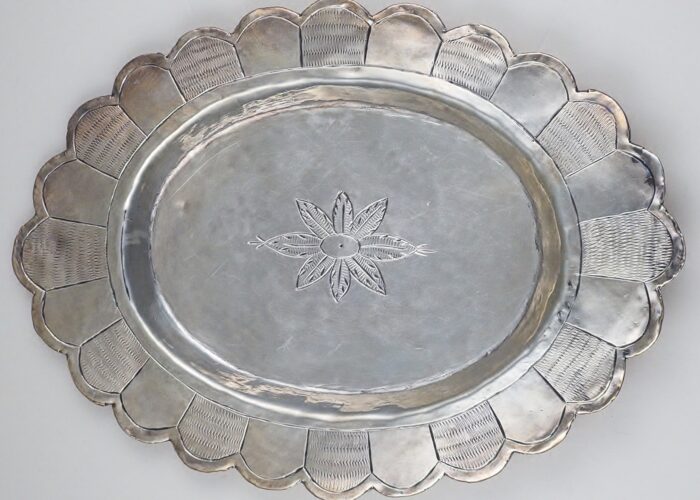
(63) Fruit Platter F6, Iraq, 20 century 1920, Iraqi Jewish silversmiths, silver.
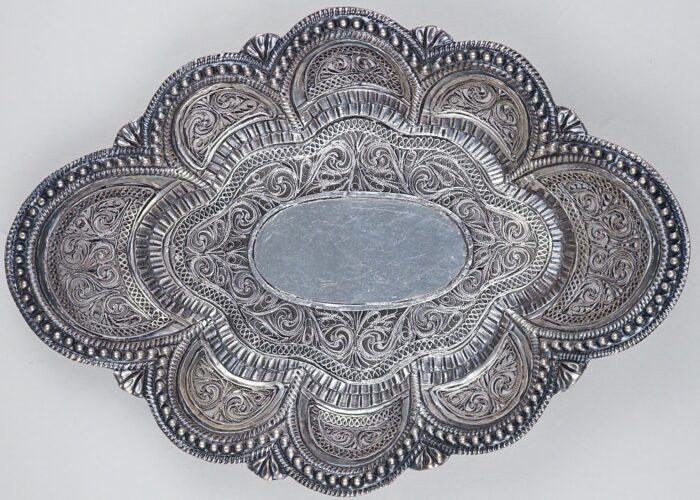
(64) Platter P1. Syria, Aleppo, 20th century, ca 1940, Armenian Syrian silversmiths, silver.
Hammam Al-A’ris Rituals
There is a long standing tradition in Iraq for grooms to undergo special grooming rituals at the hammam before their wedding, known as Hammam al‑aris (the Groom’s Bath). This marks the groom’s final preparation for marriage and includes shaving and cleansing.
Grooms wore a silk shawl or wrap (see images 13 and 14) tied around the waist or draped over the shoulders during the ritual. The use of silk was primary ceremonial to signifies the elevated groom’s status.
The groom would typically have his beard and head shaved by a barber (hajjam). The shaving kit included: Straight razor: A finely crafted razor was used to shave the groom’s facial hair and head; Shaving soap or cream: A rich lather, often made with natural soap, was applied to the groom’s face before shaving; Comb and scissors: For trimming facial hair and grooming the beard.
After shaving, the groom would often wrap his head in a turban or a clean white cloth to protect his freshly shaven scalp. Following the shave, he underwent a deep exfoliation using a scrub mitt applied by a Dellak. This was then followed by a massage with perfumed oil, rosewater, sandalwood, amber, or oud (fragrant wood commonly used in Middle Eastern perfumes).
In some traditions, in certain regions of Iraq, a small amount of henna was applied to the groom’s hands and feet. For grooms, henna symbolized protection and blessing.
After the bath and grooming rituals, the groom typically dressed in new clothing purchased specifically for the wedding. This often included a fine silk or linen robe, and in some cases, the robe was a gift from the bride’s family.
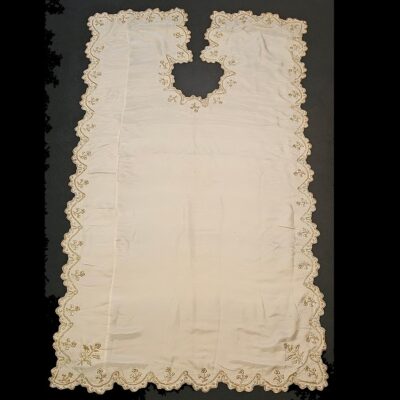
(65) Silk Robe, Iraq, 20th century, ca.1930s-1940s, silk and gold gilt thread.
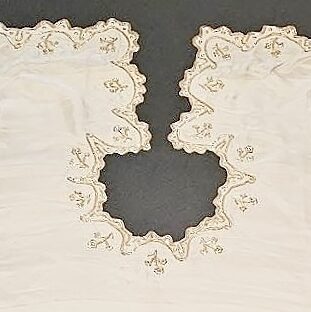
(66) Silk Robe, detail, Iraq, 20th century, ca.1930s-1940s, silk and gold gilt thread.

(67) Buqcha, (Private Collection- Nadia Tobia) Iraq, Mosul, 20th century 1914, silk and silver gilt thread). The arabic text translates to “Happy Marriage Ibrahim” Ibrahim Akrawi is Aysar Akrawi uncle and Nadia Tobia grandfather.
Decline and Preservation
In the modern era, the role of the hammam in everyday life has declined, largely due to the availability of private bathrooms and modern plumbing and new spa experiences and environments. However, in places like Damascus and Aleppo in Syria and parts of Baghdad in Iraq, traditional hammam have persisted as a nostalgic and cultural experience, with some being repurposed for tourists.
The Syrian Civil War and the Iraq War have threatened the survival of many of these historic bathhouses, the destruction of heritage sites has put several centuries-old hammam at risk, although efforts to preserve and restore these bathhouses continue in some regions. The cultural memory of the hammam, however, remains strong in both countries.
.
Acknowledgment
Thank you to Ghadeer Khayyat for her unwavering support over the past 20 years in research, data collection, and organization.
Experts consulted Barbara Porter, Louis Kutya, Mohammad Baghdadi, Ruth Bletzinger.
Photography of exhibited items by Marc Gregory unless mentioned.
Bibliography
- UNESCO, World Heritage, Website, Home page. https://www.unesco.org/en/world-heritage
- Mohammed S. J. Al Baghdadi “History of Iraqi Silver. Its major craftsmen and their work”, 2017.
NB
- Item captions consist of: item name, ID number, country / city of origin, date, maker/artist, material.
- All items illustrated in this article are from the “Aysar Akrawi Private Collection” unless indicated. Copyright reserved.
About Aysar Akrawi,
Aysar is now retired, but her engagement with matters of cultural heritage continues to be a core part of her life. Prior to her role as Executive Director at Petra National Trust, she held several positions in Amman, Jordan, including Managing Director for Administration and Airport Services at Arab Wings Executive Jet Services, Director at Queen Noor Civil Aviation Training College, and Project Director for the Marfaq Project (a joint initiative by USAID, Catholic Relief Services, and Jordan’s Ministry of Social Development to establish small income-generating businesses for rural women). She also authored an English-language guidebook on Jordan and Syria, commissioned by the Touring Club Italiano.
More articles by same author:
