THE IRAQI COOKIE, KLEICHA, AND THE SEARCH FOR IDENTITY
Nawal Nasrallah, food historian, food writer, English literature scholar. USA.
November 2026
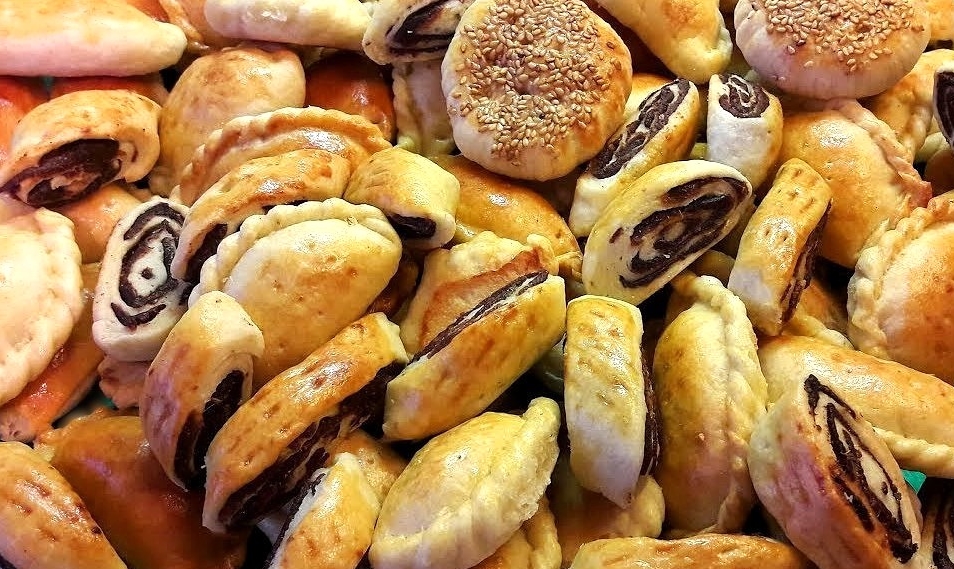
All Iraqis, irrespective of region, ethnicity, or religion, look to kleicha as their national cookie; no feast, religious or otherwise, is complete without it. The name designates an assortment of pastries made from the same aromatic dough, filled and shaped in various ways. Traditionally stuffed with a fragrant nut-sugar mixture or sweet dates, kleicha takes on a beautiful variety of forms. Some are shaped into half-moons and crescents with delicately twisted edges, while others are pressed into intricately carved wooden molds to create decorated discs. The dough can also be rolled and sliced—similar to Fig Newtons—or simply cut into thins. Whatever the shape, each bite is redolent with an enticing symphony of aromas and lingering flavors. Moderately sweet and never greasy, kleicha is intentionally dry, offering a pleasantly brittle and satisfying crunch.
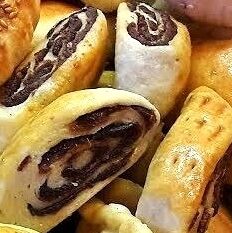
Fig 1)
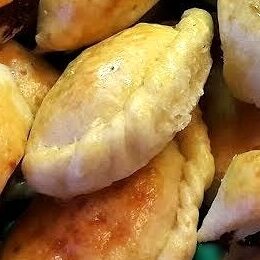
Fig 2)
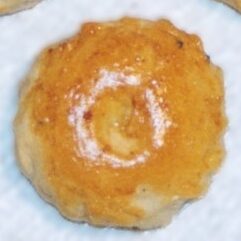
Fig 3)
Muslims prepare kleicha for two major religious feasts: ʿĪd al-Fitr, celebrating the end of Ramadan, which begins with the sighting of the new crescent moon; and ʿĪd al-Aḍḥā, celebrating the completion of the Hajj pilgrimage rites in Mecca. Iraqi Christians bake kleicha for Christmas and Easter Sunday, celebrating the birth and resurrection of Christ. Until the mid-20th century, when a thriving community of Jews still lived in Iraq, kleicha was baked for the joyous festival of Purim, which occurs on the 14th day of Adar (usually in March). They typically called them baba bi-tamigh (date-filled discs)—stuffed with dates, the dough is flattened into a thin round and pricked and then traditionally topped with sesame seeds.
In My Mother’s Kitchen, Making Kleicha
Kleicha was usually made at home in massive quantities. The cookies were either baked in the tannūr—a domed, wood-burning clay oven—or sent to the neighborhood bakery, then stored away in covered wicker baskets. I fondly remember how my mother prepared us for the big kleicha day, which always took place just a few days before the ʿĪd. “Making it any earlier is risky,” she used to reason. “By the time the ʿĪd arrives, there won’t be any left!”
Baking these cookies required everyone to pitch in. The dough was assembled in a massive bowl called a njāna. The method resembles making pie dough but demands heavy kneading. We youngsters would hang around, completely mesmerized by the process and intoxicated by the aromas. The white flour was mixed with an enticing spice blend called ḥawāyij (literally ‘the required ingredients’). While cardamom took center stage, cinnamon, and the seeds of anise, fennel, and nigella were added in smaller amounts, balanced with a pinch of salt. Fragrant, warm dihin ḥurr (animal ghee) was poured over the flour, and the mixture was rubbed between our hands until it resembled coarse breadcrumbs. Next came warm water and a little yeast, followed by rigorous kneading until the dough became a massive, smooth ball.
While the dough rose, we prepared the fillings. The most popular was coarsely pounded walnuts, mixed with sugar and cardamom and splashed with rosewater. For the date filling, the dates had to be pitted first. This low-skill task was assigned to us kids, though we were strictly cautioned against sampling the inventory on the job! Once pitted, the dates were mashed over a gentle fire with ghee, toasted sesame seeds, and spices like cinnamon, cardamom, rosewater, and coriander.
Stuffing and shaping the cookies was handed over to the grownups, as it required true expertise. The nut-filled varieties were shaped into half-moons or crescents with deftly twisted edges. Meanwhile, the date cookies were rolled into plump balls and pressed into a concave wooden mold carved with beautiful geometric designs, known simply as qālab al-kleicha. To expedite the process, some batches were rolled out and sliced like Fig Newtons—convenient, perhaps, but certainly nothing to be proud of!
The real fun began after the fillings were spent and it was finally time to make the plain kleicha thins, called khfefiyyāt. The leftover dough was rolled thin, and we would cut out plain, round cookies using an istikān—a small, thin-glass teacup. We youngsters were also free to craft free-form shapes. Before baking, we decorated these unfilled cookies with geometric indents using the blunt edge of a knife, the prongs of a fork, or the tip of a large antique key.
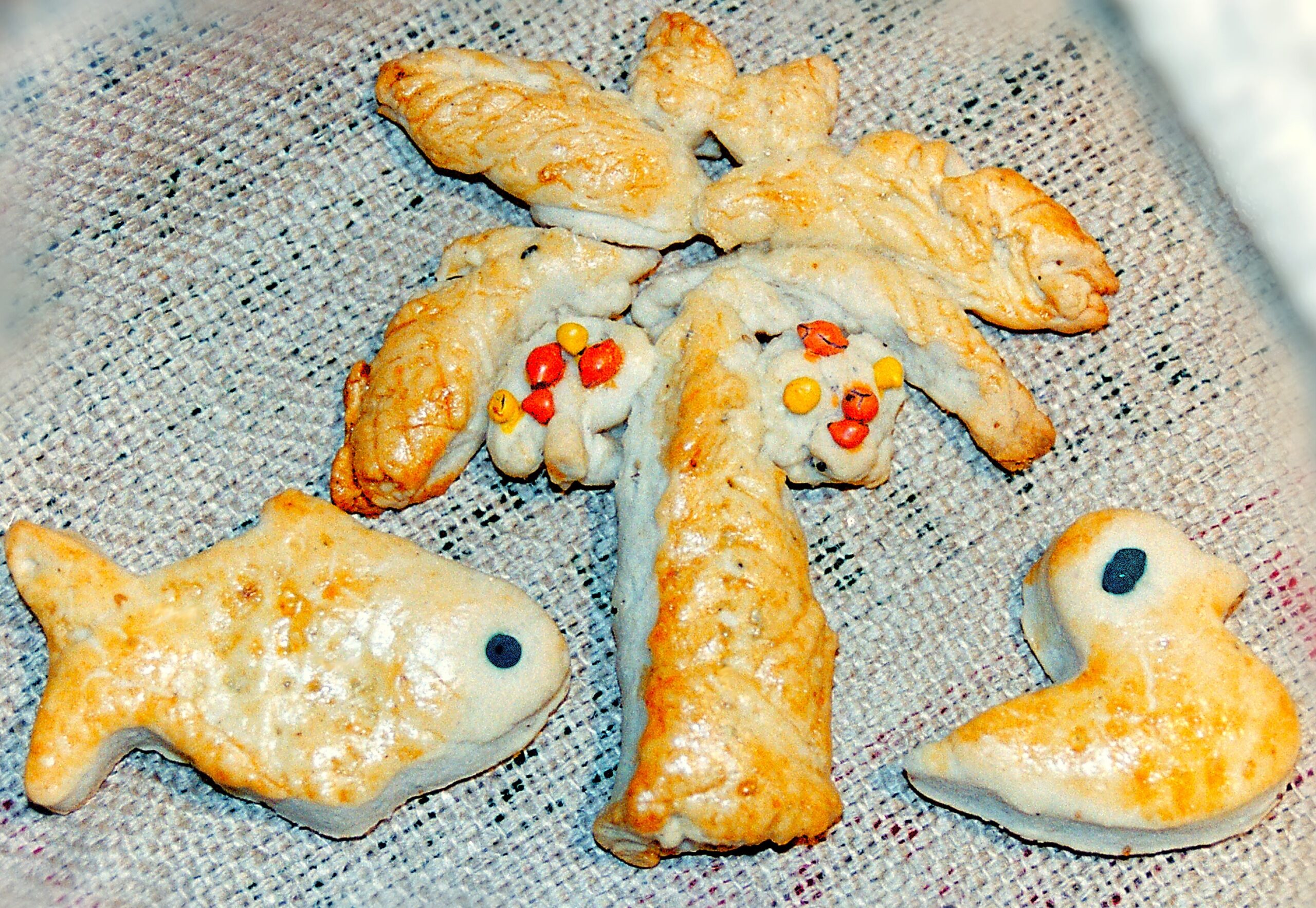
Fig 4)
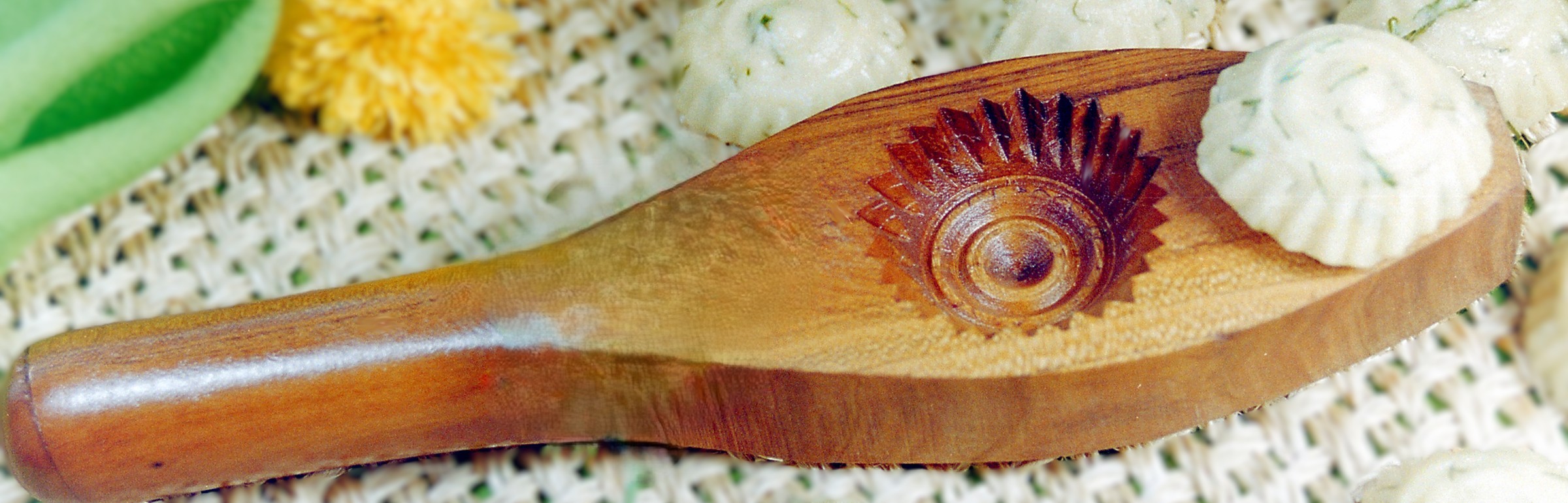
Fig 4)
When baking time arrived, huge trays were sent to the neighborhood bakery along with several eggs for a glossy glaze. Once baked to perfection and cooled, the cookies were transferred to massive wicker baskets, covered with beautifully embroidered muslin cloths, and stashed high out of children’s reach. For the following week or so, we would happily gorge ourselves on these delicious treats.
But times have changed. With smaller families and the convenience of home ovens, people now bake smaller quantities year-round, while still keeping the tradition alive for religious feasts. Families also make sure to send a newly wedded daughter—still a novice in the kitchen—to her new home with a respectable stock of kleicha to offer her guests. And because kleicha travels so well, it remains the perfect provisional food for travelers and picnics.
Given how deeply these cookies are engrained in our social and religious lives, I find it puzzling that we are so in the dark about their origins. It is astonishing how little we know about how kleicha came to be associated with religious festivals, let alone what its name means. Our elders may reminisce about generations of mothers and grandmothers baking it, but even the sharpest memories cannot take us beyond the nineteenth century.
To bridge this historical void, my search for the identity of the Iraqi national cookie led me to the conviction that many traditional Old World holiday pastries are related in varying degrees. Ultimately, they share the same ancestors—the ancient Mesopotamians. Here is my argument.
A Sweet with Many Relatives
Levantines maʿmūl
Looking for potential “relatives” outside its native region, I discovered that in neighboring Arab countries like the Levant, strikingly similar cookies are quite common. These round treats, stuffed with nuts or dates and pressed into wooden molds, are traditionally prepared for religious festivals by Muslims and Orthodox Christians alike. However, the Levantines call them maʿmūl (literally “well made”).
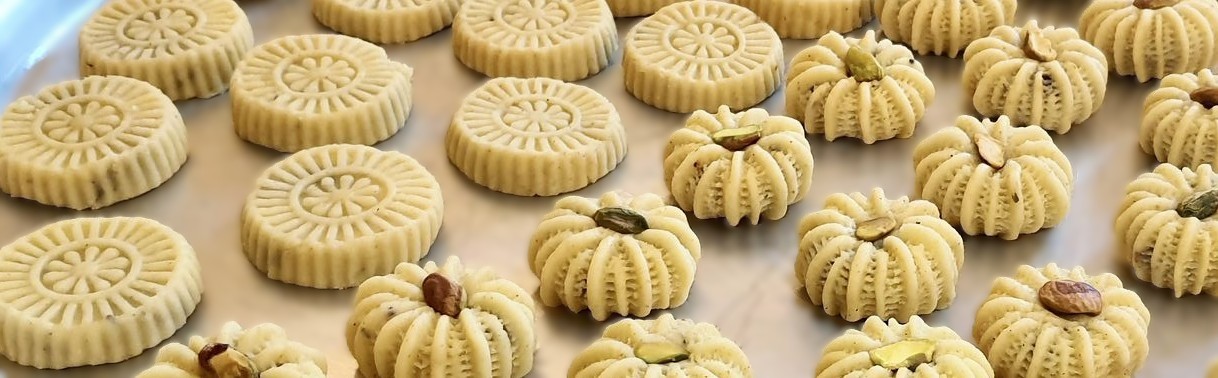
Fig 5) Kubbat Halab.
Saudi Arabia Kleicha
In the Gulf countries and Saudi Arabia, an adapted version of the cookie exists under the same name. In al-Qaseem, a city in central Saudi Arabia, kleicha is made using the rendered hump fat of a young camel and filled with honey. In this case, the connection is easy to trace. Iraqi pilgrims traveling to Mecca via the Darb Zubayda—the historic caravan road running between Basra and Mecca—likely spread the word about the cookie along their journey.
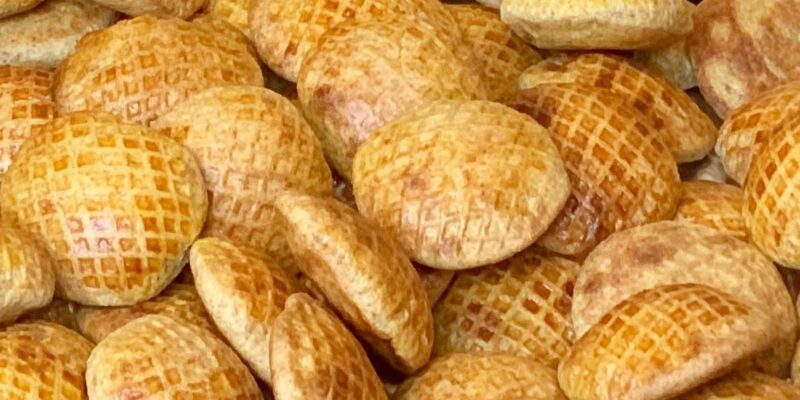
Fig 5)
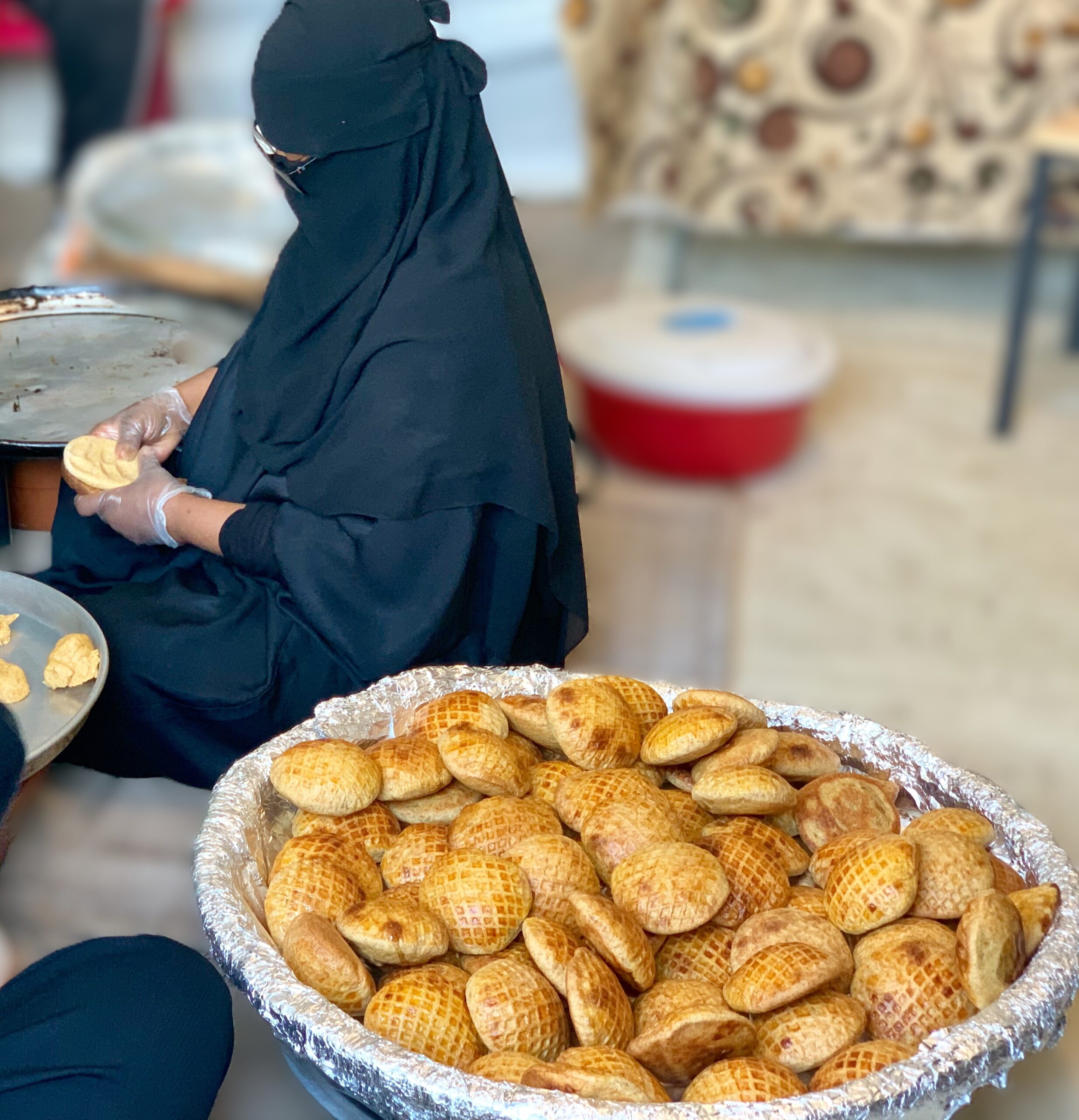
Fig 6)
Iranian Koloocheh
A few years ago, an Iranian friend sampling my kleicha for the first time surprised me by noting how much they reminded him of the cookies his mother used to bake. He mentioned they call them kloocheh. I rushed to Steingass’s Persian-English Dictionary for confirmation, and sure enough, the entry for kuleech (or its variant, guleecha) described it as a “small round buttery cake” and the “disc or body of the sun or moon.”
These two definitions linking the small, round cakes to the sun and moon are highly significant. We must keep in mind that kleicha, traditionally shaped into discs and crescents, celebrates a Muslim feast heralded by the appearance of the new moon, as well as Christian Easter, which typically falls on the first Sunday after the first full moon following March 20.
East European Kolach or Kulish
When my Russian friend made a special sweet, yeasted pastry—tall and round—for Easter, I was instantly struck by its name: kulich. To my ears, it sounded unmistakably like our kleicha, though to my taste buds, it was much closer to churek, a slightly sweetened yeasted pastry traditionally shaped like a wheel with a cross-like double axis. In Iraq, churek is bought fresh from bakeries and enjoyed year-round. I later learned that my friend’s kulich is one of the most traditional Easter breads baked across Eastern Europe. The Bulgarians, for instance, call it kolach, but they traditionally shape it into a ring or a wheel, making it look exactly like our churek without the cross. Linguists claim that the name kolach or kulich is of Slavic origin, closely tied to the bread’s round shape, as kolo means “circle.” The etymological affinity between this, the Persian kloocheh, and our own kleicha seems undeniable.
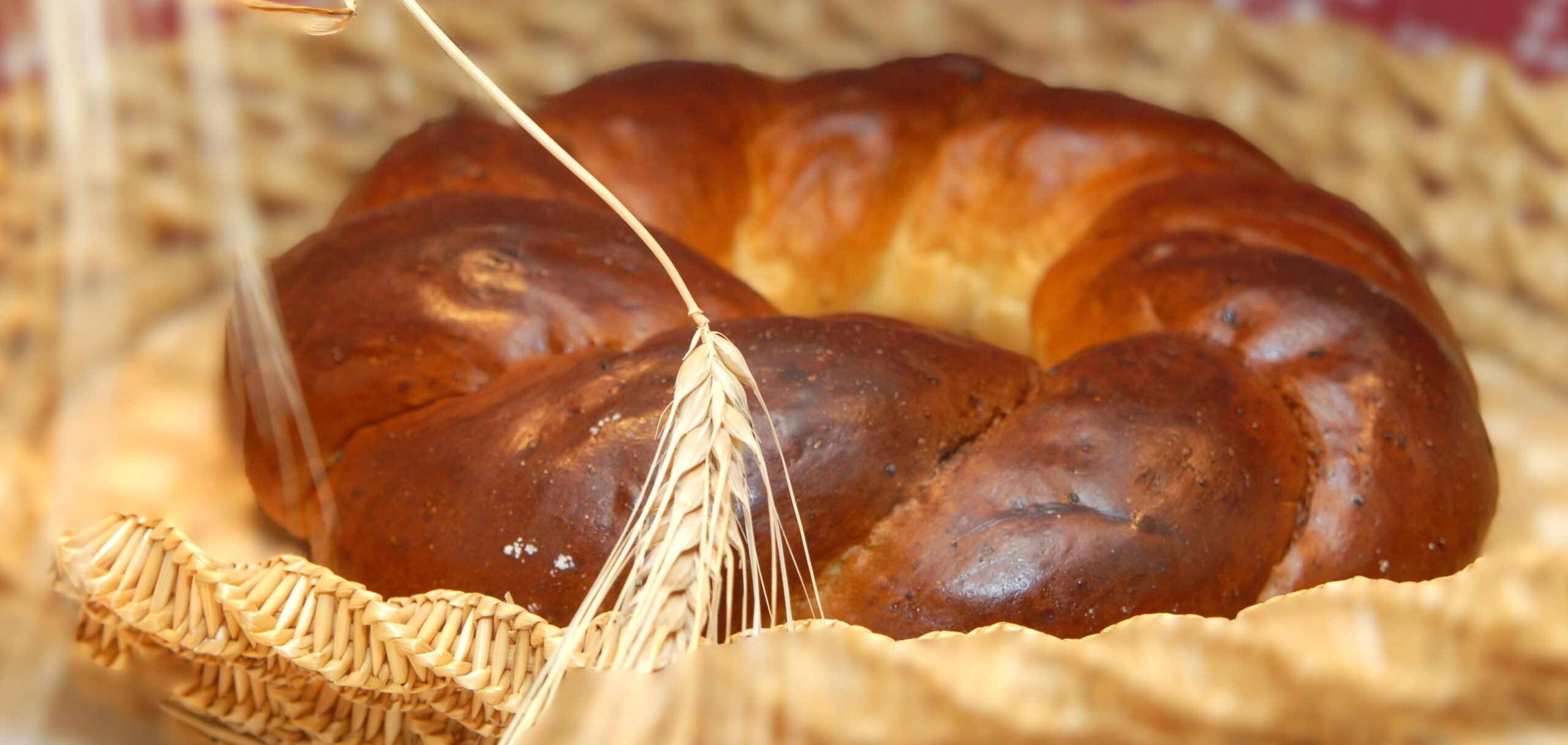
Fig 7)
Jewish Challah
Interestingly, the Russian kulich is often compared to the Jewish challah, a traditional bread eaten on the Sabbath and other major holidays. For the Sabbath, this yeasted bread is typically braided. For Purim, an oversized, elaborately braided challah is baked. For Rosh Hashanah (the Jewish New Year), however, the challah is made round. This circular shape is said to symbolize the yearly cycle and the wheel of time, which aligns perfectly with one of the historical meanings of the word challah: round.
Iraqi Jewish Baba’bit Tamigh
Meanwhile, Iraqi Jews traditionally make date-filled kleicha for Purim, calling it baʿbaʿ bit-tamigh—a name that beautifully describes its rounded shape.
Tsoureki, Choreg and Paskalya
A traditional Easter braided bread similar to challah is also made by the Greeks and Cypriots, who call it tsoureki, and the Armenians, who call it choreg. In Turkey, the bread is known as paskalya çöregi; it is consumed year-round by Christians and Muslims alike, even though its name belies its Christian origin. The etymological affinity between these variations and the wheel-like Iraqi churek is undeniable.
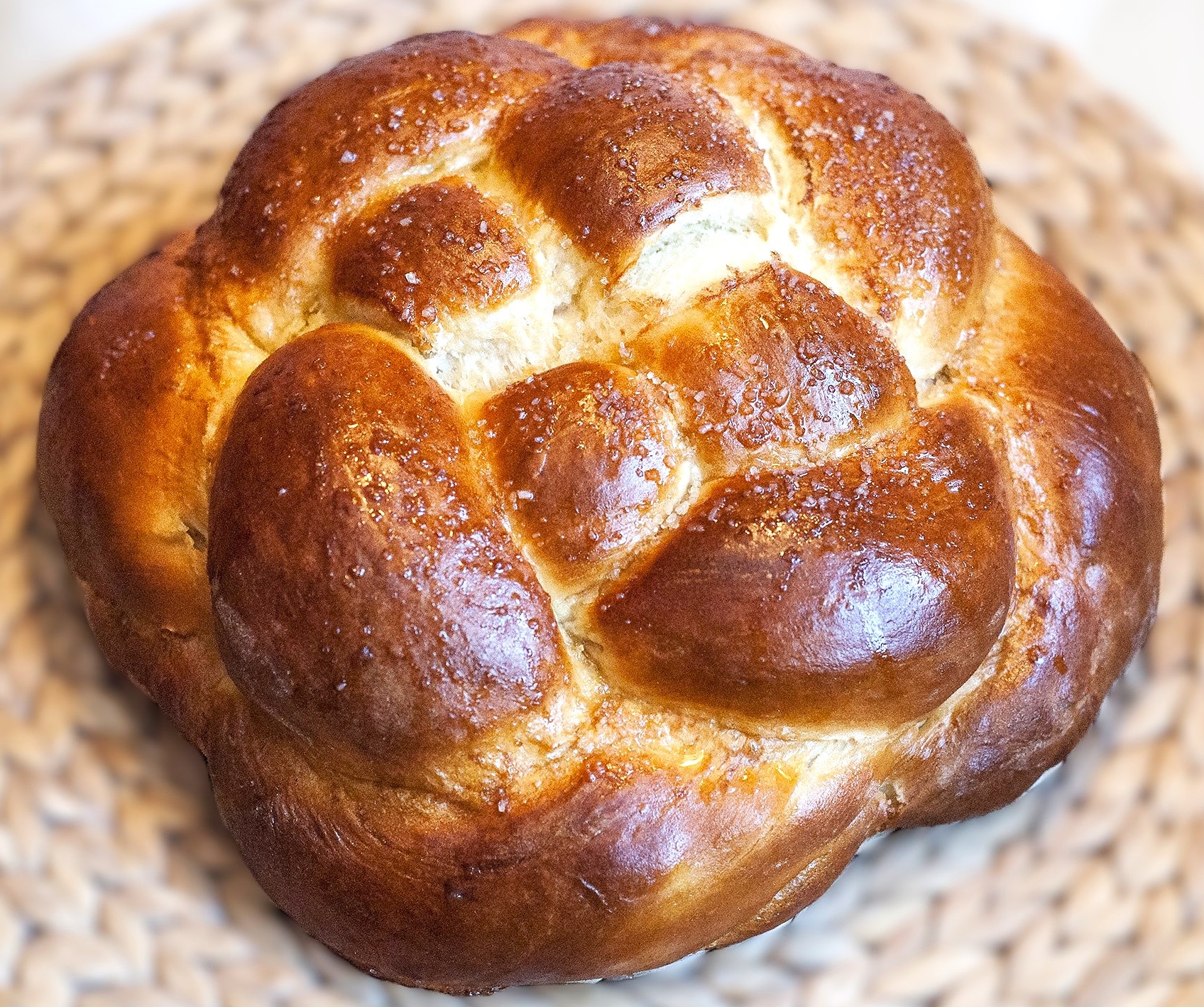
Fig 8)
Kleicha in Classical Arabic Sources
So far, the contemporary threads mentioned above point to a unifying link: the round shape of the cookie and a clear affinity in nomenclature. Now, let us see if the past offers any further clues.
Looking for older citations of kleicha in classical Arabic literature, Ibn Battuta, in his famous 14th-century travelogue, mentioned being offered kalījā in Khwarazm, a Persian province located in modern-day Uzbekistan. He explained that these were pastries kneaded with samn (ghee), indicating it was a rich pastry.
The earliest occurrences of kleicha in medieval cookbooks reveal how the recipe evolved over time:
- The 10th-century Baghdadi Kitāb al-Ṭabīkh by al-Warrāq called it khushkanānaj (“dry bread”). Bakers would roll the dough into a tongue-like shape, stuff it, fold it over, and bake it in the tannūr (clay oven). They made crescents that resembled new moons, as well as round ones with twisted edges that looked like half-moons. They also made a fancy stuffed version. The recipe directs the cook to line a concave mold (qālab) carved with decorative shapes with a flattened disc. The cavity was then filled with a sugar-nut stuffing, and covered and sealed with another flattened disc. This specific variety was called raghūnīn.
- In the 13th-century Aleppian Al-Wuṣla ilā l-ḥabīb by Ibn al-ʿAdīm, the stuffed dough was pressed into a mold called qālab al-kalījā. The cookie itself was referred to as irnīn.
- The 13th-century Kitāb al-Ṭabīkh by al-Baghdadi gives recipes for both varieties: the free-form khushkanānaj and the molded qālab version, which he also called irnīn.
- In the 14th-century Egyptian cookbook Kanz al-Fawāʾid, a recipe used a round cookie cutter, described as being shaped like a kalījā, to stamp the dough into flat, perfect circles.
These medieval cookies were immensely popular. Much like today, they were shaped into crescents to mimic the new moon heralding the end of fasting and were exchanged as gifts among relatives and friends.
While the free-form khushkanānaj is a Persian loan word plainly meaning “dry bread,” and raghūnīn likely translates to “the luxurious ones,” the name irnīn is incredibly obscure. It cannot be found in any Arabic dictionaries, medieval or modern alike. Yet its true origin could harken back to ancient Mesopotamia. As we learn from the Epic of Gilgamesh, Irnīni is an ancient title for the goddess Ishtar. Meaning “sweet-smelling Lady,” the name perfectly reflects her divine home—a sacred forest rich with fragrant cedar.
Kleicha Rooted in Mesopotamian Rituals
Discovering that the medieval name irnīn associated the cookie with Ishtar was a true “eureka moment” for me.
Why, of course! The threads that had hitherto seemed only loosely connected suddenly fell into perfect order. It is within Ishtar’s spring festivities and rituals that we find our most definitive clues.
This famous Akkadian goddess was known as Inanna (“Lady of Heaven”) in Sumerian mythology. She reigned as the goddess of love, war, sexuality, and human fertility, with an identity deeply intertwined with the moon. Interestingly, she was also revered as the goddess of grains—a connection that beautifully explains why ancient women would knead dough to bake cakes in her honour.
Furthermore, because of her mythic journey to the underworld to retrieve her shepherd-husband Dumuzi (the biblical Tammuz), she was intertwined with the mysteries of death and rebirth.
Her vibrant spring festivals celebrated the return of life to the earth, triumphantly announced by the first new moon of the season around late March or early April.
In celebration of Ishtar and the New Year, sacred pastries were baked as holy offerings. Sweets were crafted in palace and temple kitchens, as well as by professional artisans in local bazaars. The bakeries attached to temples specialised in making these sacred, rich pastries, using only the finest luxury ingredients: fine wheat flour, date syrup, pure honey, butter, sesame seeds, fragrant sesame oil, and rosewater. Consumed in massive numbers during religious festivals, these treats were made both large and small, and were formed into various shapes like rings, crescents, and ears. Among these ancient temple treats, we are lucky to have specific descriptions of cookies mentioned explicitly by name: qullupu.
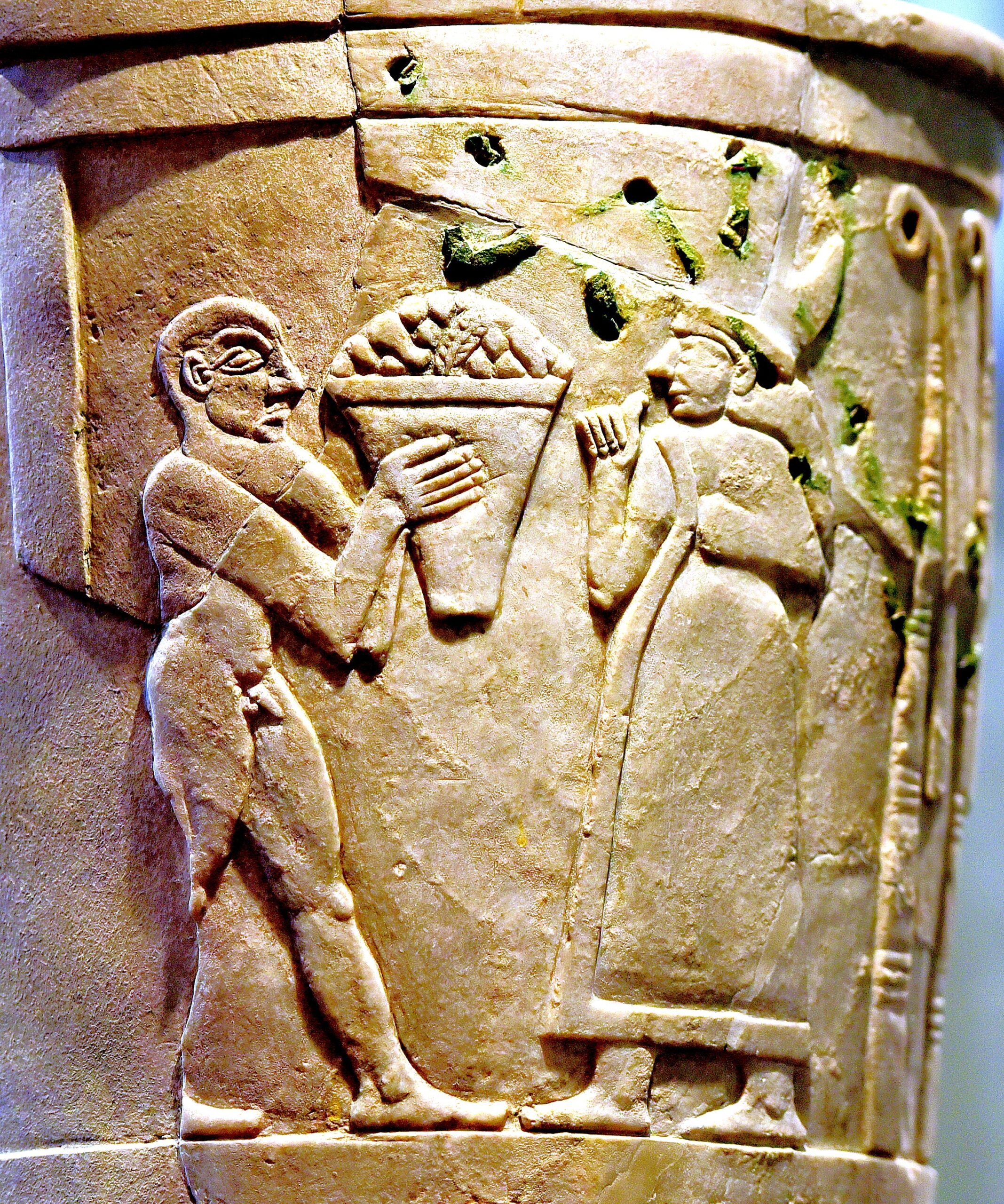
Fig 9)
To see how closely this ancient ritual sweet mirrors the ones we still enjoy, consider how the pieces fit together:
Linguistics
To begin with, the linguistic footprint of qullupu is unmistakable. The name derives from the Semitic roots kll and kly (“to complete”) and kull (“whole”). In light of this, the Slavic root kolo (“circular”)—which we saw earlier in the Russian kulich and Jewish challah—likely derived from this ancient Semitic root. Similarly, the same connection may be said for the Persian kuleej (“large cake”), kuleecha (“disc of the sun or moon”), the Iraqi kleicha, and, of course, the kalījā mold of medieval times.
Incidentally, with so much historical emphasis placed on the cookie mold across ancient, medieval, and modern times, I am tempted to suggest that the name qullupu might not just come from its roundness, but also from its function: the qālab (“mold”). However, no Sumerian or Akkadian dictionaries explicitly support this theory just yet.
Ishtar fame and spread.
Back to Ishtar: her fame ultimately spread far and wide, yielding prominent Phoenician, Syrian, and Canaanite counterparts. Consequently, her rituals were adopted and adapted across the ancient Old World. Carried along early migratory and trade routes, these traditions stretched from northern Europe all the way to China’s autumn harvest moon celebrations, where communities still bake round yuebing (mooncakes) to honor the moon.
Celebrations and spring
Babylonian spring celebrations of rebirth traditionally called for the baking of qullupu pastries. Like qullupu, kleicha and similar pastries are rooted in diverse cultural traditions and are prepared for celebrations and feasts, many of which take place in the spring.
Shape and form
Across all these traditions and communities, the appearance of the moon remains absolutely crucial in determining the arrival of these sacred days. And what better way to celebrate these festive milestones than by baking and exchanging sweet-smelling kleicha? Whether shaped like crescents, half-moons, or full discs, these pastries beautifully depict the changing phases of the night sky, just as they did thousands of years ago in ancient Mesopotamia—the true cradle of these timeless cookies.
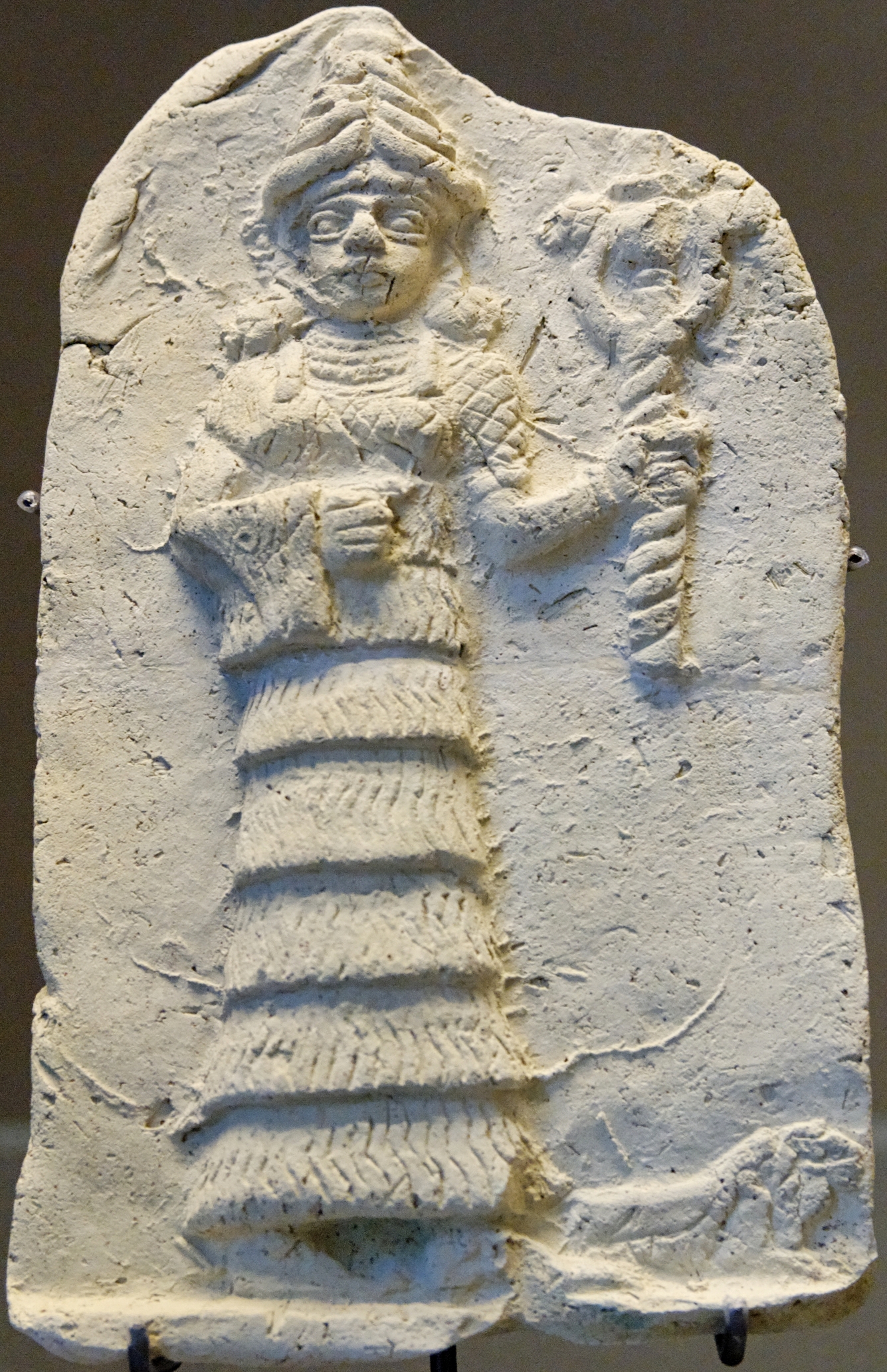
Fig 10)
“Discovering that the medieval name irnīn associated the cookie with Ishtar was a true “eureka moment” for me.” Nawal Nassrallah
All copyrights reserved.
Notes:
This post is a modified version of an article that originally appeared in published here with permission.
Photography:
Opening Image:
Bibliography :
About Nawal Nasrallah,
Nawal Nasrallah, an award-winning independent scholar, has published books and articles on the history and culture of Arab food, with a particular interest in translating medieval Arabic cookbooks into English. Her works include “Delights from the Garden of Eden“, on Iraqi cuisine and its history; “Dates: A Global History“; and English translations of “Annals of the Caliphs’ Kitchens” from Baghdad, “Treasure Trove of Benefits and Variety at the Table” from Egypt, and “Best of Delectable Foods and Dishes and Smorgasbords of Andalusi and Maghribi Dishes“ from Al-Andalus.
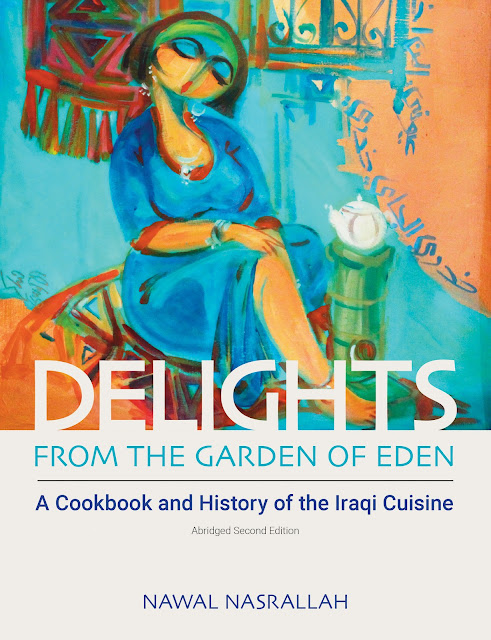
Fig 8) Book cover, illustration by Shakir Alousi.

More articles by same author: