
The Parrot and the Kubba
Nawal Nasrallah, food historian, food writer, English literature scholar. USA.
July 2026
This is the story of a man who had an amazingly intelligent parrot. Once, he invited friends to dinner, and his wife prepared a feast, the crown jewels of which were the impressively huge bulgur discs of kubbat Mosul, flat and thin, stuffed with a flavorful mix of meat and onions. In order to cool them off a little, she spread them out on large trays and put them in the middle of the yard outside the house. It so happened that kubba was the parrot’s favorite food, and, when he saw the discs thus spread, he could not resist the temptation of sampling it. But since he did not want the wife to notice that one piece was missing, he decided to take one bite from each kubba, thus unintentionally spoiling the whole lot.
When the parrot’s deed (or misdeed) was discovered, his master was so angry with him that he plucked every single feather on his head, to teach him a lesson he would never forget. The parrot was very much hurt and cried bitterly at the loss of his beautiful plumes. After a while, he flew to the dining room where the guests were eating and was consoled to see a bald fellow-sufferer among them. So he alighted on the man’s shoulder, saying, “Poor man, have you also eaten kubba?”
The impressively huge bulgur discs of kubbat Mosul, flat and thin, stuffed with a flavorful mix of meat and onions.
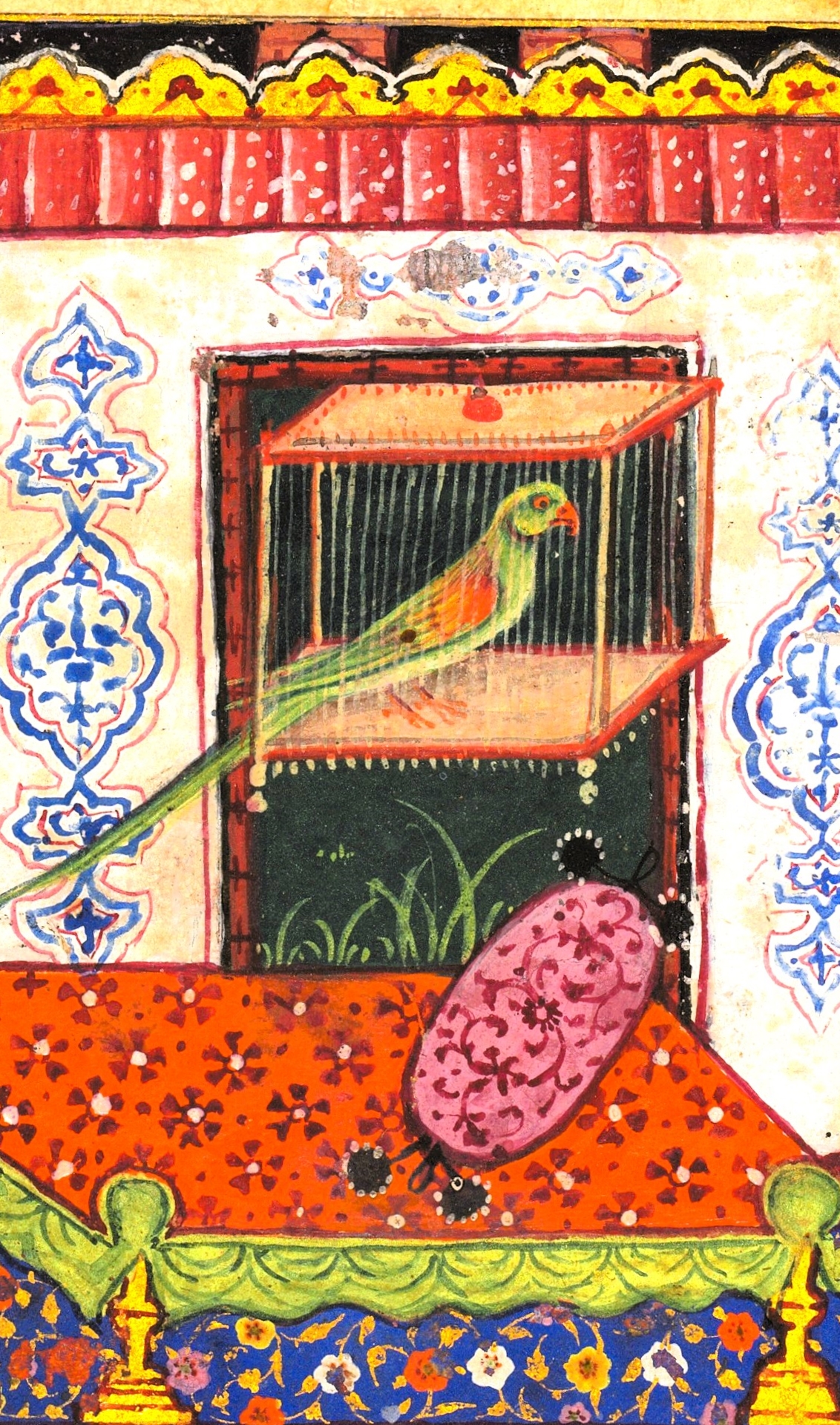
Fig 1) Tuti-Nama (Tales of a Parrot), c. 1560, The Cleveland Museum of Art. (public domain).
Who would blame the parrot for hankering after kubba? The most delicious of foods, and yet the most labor-intensive and time-consuming. Such elaborate cooking techniques of stuffing food with food have a long history in the Middle East, beginning with the ancient civilizations that flourished in that region.
Ancient records in the form of recipes written on cuneiform tablets that go back to Babylonian times of around 1700 BC have preserved an exquisite recipe for a bird pie, at the end of which it instructed the cook to cover the filled pastry with its crust (it was baked separately) and carry it thus to the table. We can imagine the diners delight at the discovery of what was in it.
Stuffing food with food have a long history in the Middle East, beginning with the ancient civilizations that flourished in that region.
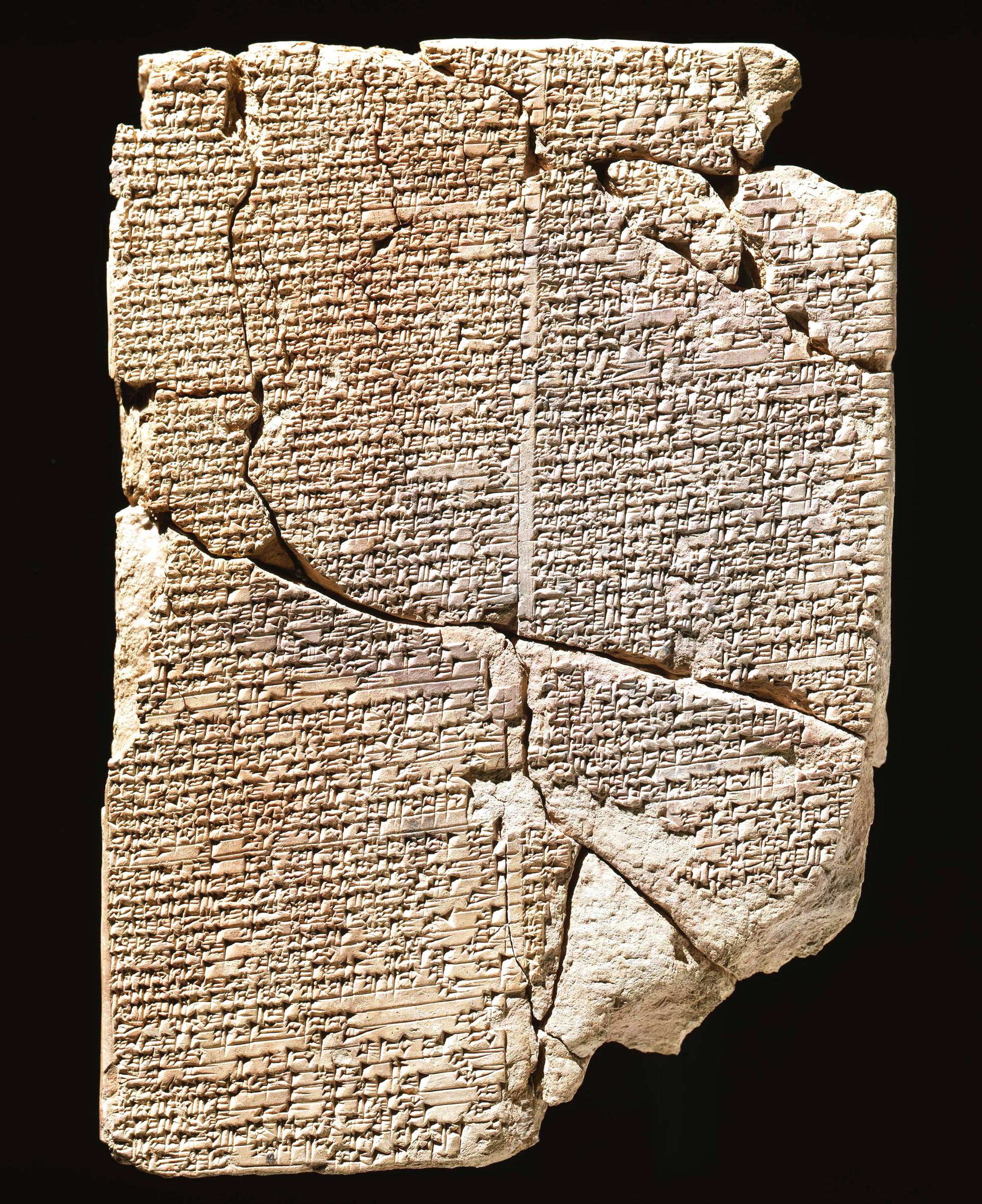
Fig 2) Babylonian culinary tablet 8958 for bird pie recipes, c. 1700 BCE, (©) Yale Babylonian collection. (public domain).
Fast forward to the medieval times and a host of such dishes were still in the making, as evidenced in the Arabic cookbooks that survive from that period, especially the ones that hailed from Baghdad. In fact, the beginnings of today’s art of making the stuffed foods of kubba, of which the parrot’s favorite is just one kind, can be traced back to these medieval kitchens, where the much-loved meatballs were called kubeb (singular kubba). Besides the plain ones, some were given several playful twists by stuffing them with other ingredients, thus turning them into little balls of delightful surprises, like our modern ones.
The recipes reflected the cooks’ showmanship and love for intrigue in dishes given names like makhfiyya (hidden): to make it, whole cooked egg-yolks were enclosed in a spicy paste of ground meat and then shaped into balls. In a rutabiyya dish (literally ‘cooked with dates’), a paste of ground meat was formed into date-like elongated balls, which were stuffed with peeled almonds, and then simmered in broth.
When served, the dish was garnished with real dates filled with almonds, to further confuse the diners. In another dish called bunduqiyya (i.e., like hazelnuts), a paste of seasoned ground meat was shaped into small balls, as small as hazelnuts, filled with mashed cooked chickpeas and then simmered in broth.
Eggplants and gourds were their favorite stuffed vegetables, ranging from madfūna (buried) of meat-stuffed cored-out vegetables “buried” in sauce, to the mahshi (stuffed) of cored out eggplants, stuffed with meat, and then simmered in sauce and served arranged on a platter with their calyxes on, “as if nothing has been done to them,” (Fig 3), the recipe playfully comments.
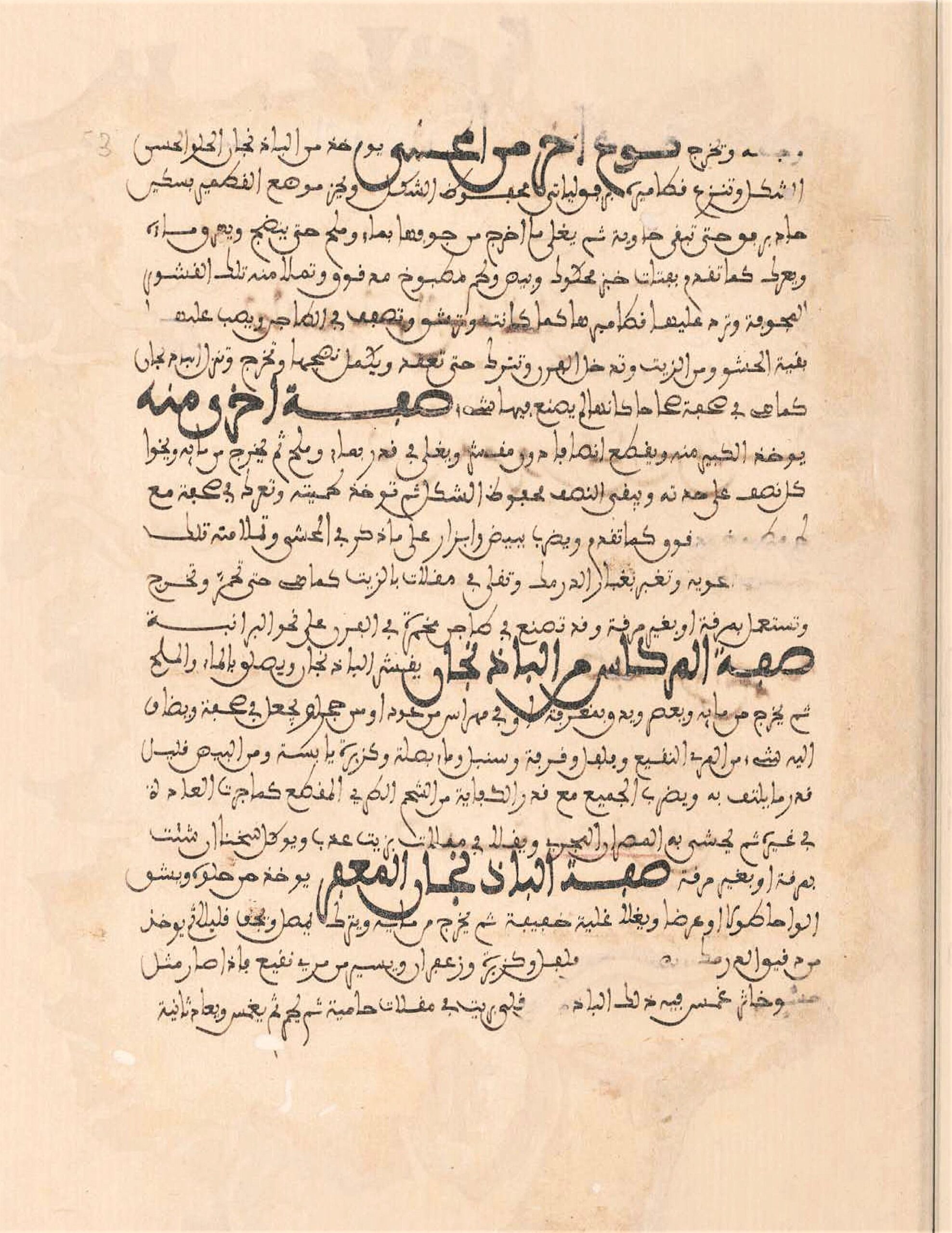
Fig 3) Recipe for stuffed eggplants, fol. 53r from MS Arabe 7009 of the thirteenth-century Andaslusi. cookbook Anawa' al-Saydala fi Alwan al-At'ima. ( أنواع الصيدلة في ألوان الأطعمة ) . (©) BNF (public domain).
Kubbat Halab is an Iraqi specialty:
Over time, all such foods, more or less, evolved into today’s popular fares of dolma, mahshi, and kubba or kibbi as the Levantines call it and more. Granted, all stuffed foods require a certain level of culinary expertise, but the large flat discs of kubbat Mosul, which the parrot ruined, are the most challenging. Therefore, I have chosen a less demanding variety to make: kubbat Halab, the fragrant egg-like balls of rice dough stuffed with an exquisite meat filling.
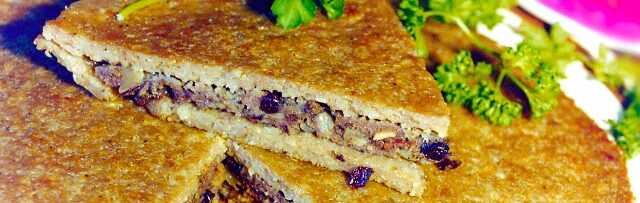
Fig 4) Kubbat Mosul ready to eat.
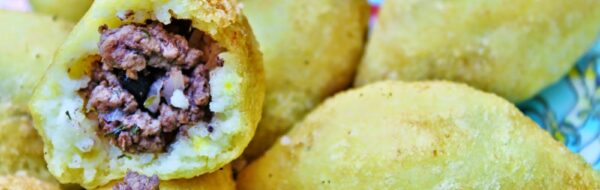
Fig 5) Kubbat Halab.
Kubbat Halab is an Iraqi specialty; a delicacy usually reserved for festive occasions and elegant presentations. Although the name kubbat Halab associates it with the Syrian city of Aleppo, to my knowledge, no other Arab country prepares it as we do. I once made it for friends from Aleppo, and they said they have not seen anything like it before. I have learnt from an Iraqi friend of a possible reason for calling it so. According to her story, wives of men traveling between Baghdad and Aleppo for trading purposes in pre-modern times used to make this type of kubba as a provision for their husbands, so that they would still be able to enjoy their beloved daily staple of rice while on the road to Aleppo, and so it started to be called kubbat Halab.
Making kubbat Halab, the crisp and golden balls of delight:
(22-24 pieces)
Notes to heed: Making the dough for kubbat Halab might prove to be rather tricky at the start, so you need to watch for two things:
1) The best choice of rice would be a variety that tends to be a little on the sticky side, such as jasmine rice. Some people choose to add beaten egg to the dough as a binder, but this will soften the texture, and the kubba will thus lose its characteristic crunchiness.
2) Let the rice boil gently in a large amount of salted water and watch it and test the grains for doneness as directed. Undercook the grains and they will not bind into dough, overcook them and they will be a ruined mush.
Preparing the filling:
1½ pounds lean ground meat (I use beef)
2 tablespoons oil
2 medium onions (about 9 oz), finely chopped
1½ teaspoons salt
½ teaspoon black pepper
½ teaspoon allspice
½ teaspoon baharat spice mix (may use Indian garam masala)
¼ teaspoon chili pepper
¼ cup chopped parsley
¼ cup slivered and toasted almonds
¼ cup currants or raisins
Heat the oil in a big skillet and cook the ground meat, stirring occasionally, and breaking down any lumps with the back of a spoon. When moisture almost evaporates, add the onion and stir until transparent, 10 to 15 minutes, total. Add the rest of the ingredients in the last five minutes of cooking and fold gently. Set aside to cool off.
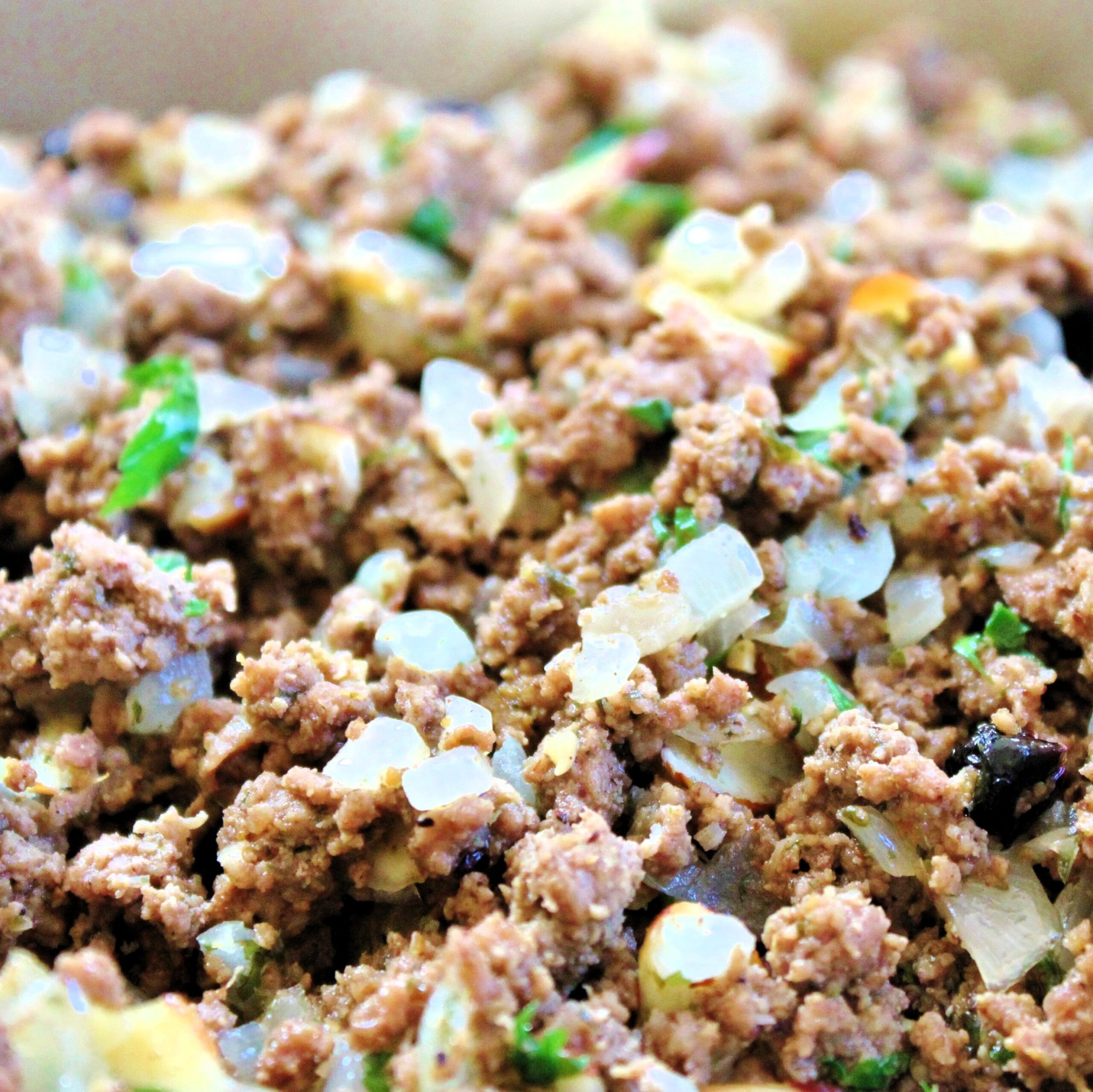
Fig 6) Kubba stuffing.
Preparing the rice dough:
2 cups (1 pound) rice, washed, soaked for 30 minutes, then drained
10 cups water
2 teaspoons salt
¼ teaspoon turmeric or saffron
½ teaspoon cinnamon or a small cinnamon stick
¼ cup cornstarch
Oil for frying (such as canola)
Bring water to a boil in a medium pot. Add the drained rice along with salt, saffron or turmeric, and cinnamon. Give the pot a stir and bring it back to a boil. Reduce heat to medium and let the rice boil gently in the partially covered pot, gently stirring twice or thrice. The rice grains should be cooked for about 15 minutes. Start testing after the first 10 minutes of cooking: take a few grains and eat them, they should be cooked but still intact, not chewy, and not mushy. Do not let rice overcook.
Strain the rice in a metal colander. Put the colander with the rice in it back into the pot and cover it with the lid. Set it aside until it is cool enough to handle. Transfer the rice to a big bowl and discard the cinnamon stick if used. Sprinkle cornstarch on the rice and knead it with slightly moistened hands until mixture is combined into dough.
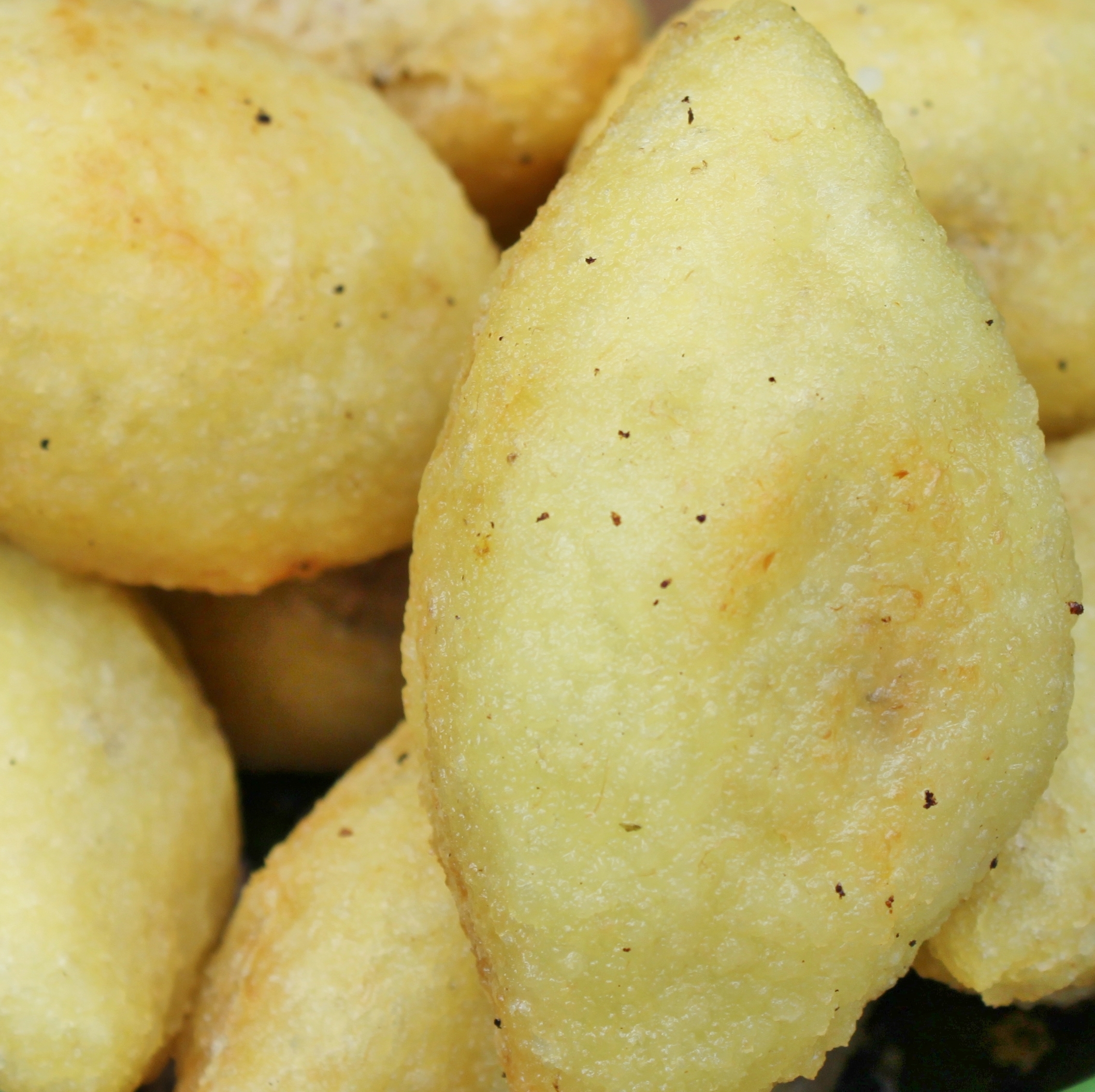
Fig 7) Kubbat Halab.
When offered, the kubba pieces must be whole; let your guests discover what’s hidden inside them, to their amusement and delight.
All copyrights reserved.
Notes:
Article previously published in Arab Lit Quartely, Summer, 2022, vol. 5, issue 2 (120-6).
Photography:
Unless stated, images by Nawal Nasrallah.
Opening Image:
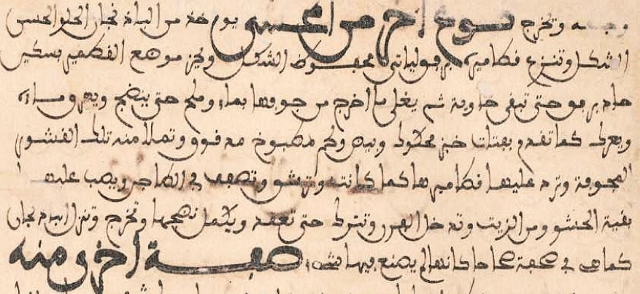
(Part of Image) Recipe for stuffed eggplants, fol. 53r from MS Arabe 7009 of the thirteenth-century Andaslusi cookbook Anawa’ al-Saydala fi Alwan al-At’ima ( اﻷطعمة ألوان ﻓﻲ الصيدلة أنواع ), where the first recipe dealing with stuffed eggplants ends with, “as if nothing has been done to them,” (©) BNF (public domain).
About Nawal Nasrallah,
Nawal Nasrallah, an award-winning independent scholar, has published books and articles on the history and culture of Arab food, with a particular interest in translating medieval Arabic cookbooks into English. Her works include “Delights from the Garden of Eden“, on Iraqi cuisine and its history; “Dates: A Global History“; and English translations of “Annals of the Caliphs’ Kitchens” from Baghdad, “Treasure Trove of Benefits and Variety at the Table” from Egypt, and “Best of Delectable Foods and Dishes and Smorgasbords of Andalusi and Maghribi Dishes“ from Al-Andalus.
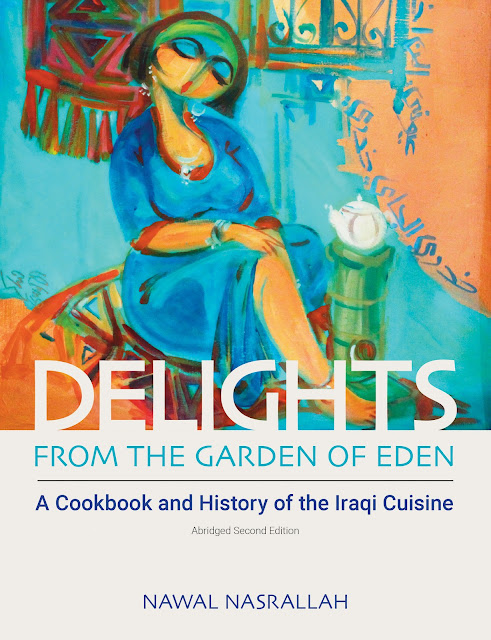
Fig 8) Book cover, illustration by Shakir Alousi.
