
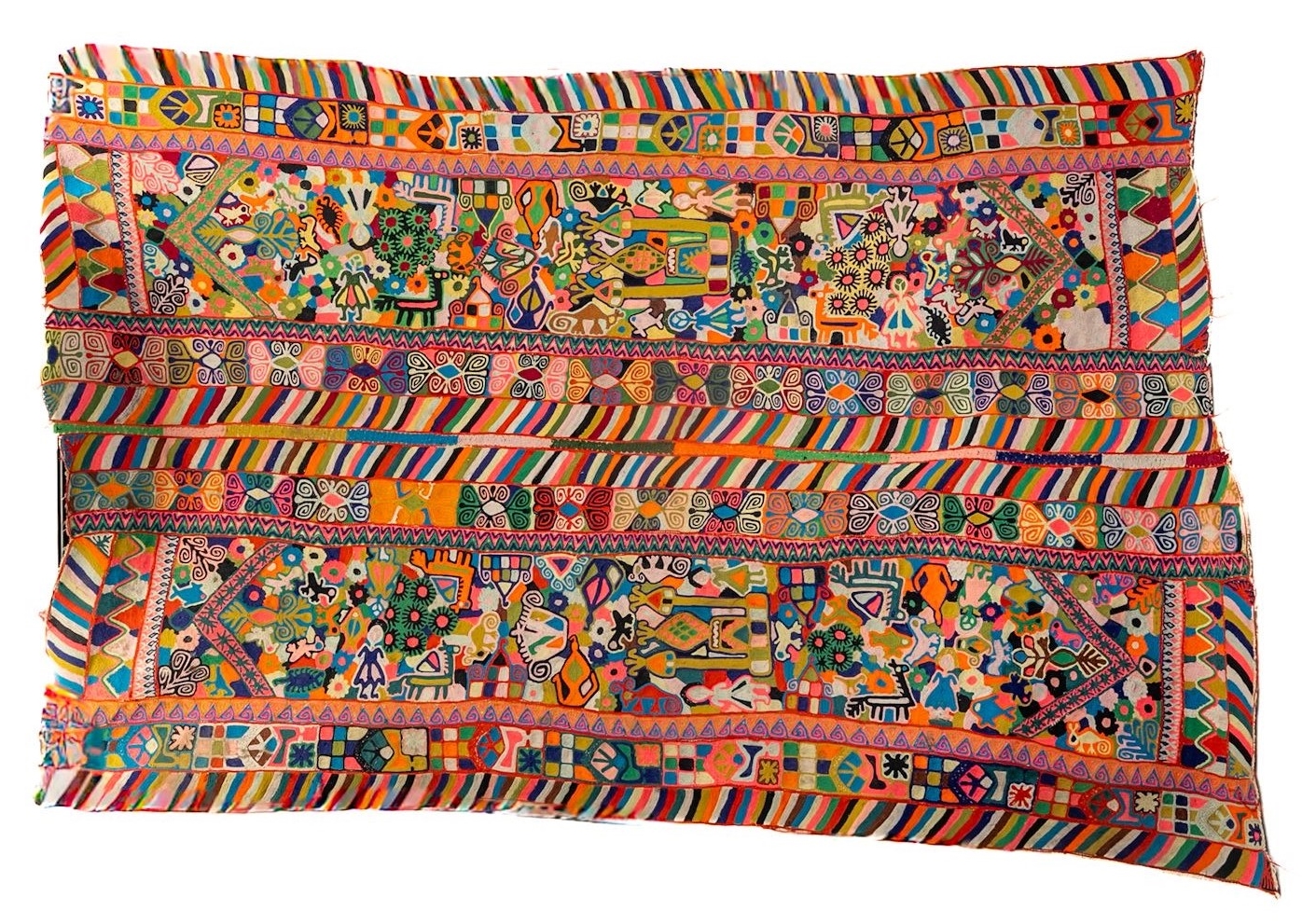
Izar Zakia
Hussein Ali Hussein Aoun Al-Mutawa, great grandson of Zakia bit Hassoun
February 2026
Izar Zakia was made in the 1940s by my father’s grandmother, Zakia bint Hassoun (1920–2010), a master in weaving and embroidery and the wife of Jabbar Ali Al-Hathaf. The work originated under the guidance of her mother in law Bibi Hammadi (1906–1964), in the Al-Hathaf workshop, owned and operated by Bibi Hammadi and her husband, Ali Al-Hathaf.
Al-Hathaf workshop was located in the area of Samawa a city in the southern part of Iraq. Most of the izars, bearing the high quality symbol and the workshop’s distinctive mark were produced there.
The word izar literally means “garment” or “covering,” a term that reflects its many uses. Traditionally, it was woven especially for a bride, which is why it is sometimes called a wedding blanket. An izar serves multiple purposes: it can protect and wrap valuable items in a bride’s trousseau, such as clothing, jewellery, and precious textiles, can be used as a floor covering or rug, hung on walls, or function as a barrier or partition within a house or a tent. Because of these protective roles, its design is rich with symbols believed to safeguard the home and its inhabitants from harm.
This particular izar was made by the Marsh Arabs the Maʻdan of southern Iraq. The Maʻdan izar is especially known for its distinctive chain-stitch embroidery. This bold, colorful, and symbolically expressive stitch work reflects the life, environment, and cultural identity of the Marsh Arabs, making the piece both a striking example of their artistry and a vivid embodiment of the spirit of the marshes.

Al-Hathaf izar workshop in Samawa in 2026. The property has been unoccupied for many years. Image : Hussein Ali Al-Matawa.
Zakia story
The story of this craft traces back to Bibi Hammadi, the earliest known figure remembered by relatives. She was the owner of the workshop from which these pieces were exported across the world. She taught weaving and embrofery according to her own principles and precise techniques, passing this art to the next generation of women in the family.
She taught this art to her daughter in law, Zakia bint Hassoun, wife of Jabbar Ali Al‑Hathaf, and her cousin’s wife, Zakia Mahdi, wife of Abdul‑Hathaf, two women who shared not only a name but also exceptional skill. Each had her own signature mark, and a friendly rivalry grew between them over who could create the most beautiful izar.
Every girl in the family traditionally received her own izar for her wedding day. However, due to the wars and conflicts that struck the region, production was interrupted, many izars were lost, and others were exported abroad.
Despite this, Zakia bint Hassoun, my father’s grandmother, ensured that this particular piece was never sold or exported. It was considered the family’s “royal” version, inherited from the great Bibi herself. When my grandmother, Zahra Al‑Hathaf, married, she did not receive her izar because she had emigrated with my grandfather to Kuwait in 1960, leaving her wedding izar behind in Samawa, Iraq. She finally received it decades later, at her eldest son’s wedding in 1989, after the Iran‑Iraq War and just before the Iraq‑Kuwait War.
My father’s grandfather, Jabbar Al‑Hathaf, personally delivered it overland, emphasizing that it was never intended for sale but was a family heirloom meant to be preserved for generations. Along with the rug, he brought two old gold bracelets known as hayoul, inlaid with turquoise stones. The rug also features a unique backing material symbolizing the workshop’s mark, embroidered with gold thread.

Zahra Al‑Hathaf with her Izar, made by Zakia bint Hassoun her mother.

The author Hussain Ali Al-Matawa with Izar Zakia.
The making of Izar Zakia
This rug called Alyazr (the plural of izar) stands apart from other woven pieces because it is constructed as two facing panels that are intentionally not identical. One panel extends slightly longer than the other, a feature characteristic of authentic antique rugs, which rarely display perfectly uniform edges. For a piece to be considered original and truly worthy of the name izar, it must have been created specifically for a marsh‑wedding ceremony, an established cultural tradition. Such a rug embodies that ritual and differs fundamentally from other textiles made for insulation, covering, or transporting belongings.
As for its size and dimensions, it is also distinguished from all the rugs of this art. It is 1.67 meters wide and 2.60 meters long, which also makes it different in size from all other rugs.
The materials used were primarily wool, mainly from local sheep, spun and prepared, and in rare cases, water buffalo wool. Traditional natural dyes were used, derived from plants and animals, such as red from madder root, blue from indigo, and yellow from saffron or onion peels. Black, white, and brown were the natural colors of the wool.
Spinning was a simple hand-spinning process using tools like the spindle and weaving. The rugs were weaved with the help of family members in the workshop and then embroidered, creating the the varies creative designs. techniques.
The loom used was usually a simple horizontal loom placed on the ground, easily transportable and suitable for semi-nomadic life.The stitches type was often the asymmetrical chain stitch. Stitches density (number of stiches per square inch or cm) was an indicator of the quality of the piece and the level of detail within it, a good quality had approximately between 6 to 7 stitches per cm.
Design symbols and motifs
Izar Zakia is regarded as the ancestral piece within a lineage of twelve other high‑quality rugs. Those related izars bear the symbols of the same workshop and remain within the family, yet each differs subtly from this one. Izar Zakia serves as the primary and most complete reference for the entire group, both in its symbolic language and in its marshland artistic tradition.
The more richly a rug expresses the civilization that produced it through its symbols, details, and narrative elements, the more distinctive its character becomes and the greater its cultural value. A richly detailed izar becomes a record of memory, preserving for future generations the nearly vanished way of life of the marsh communities.
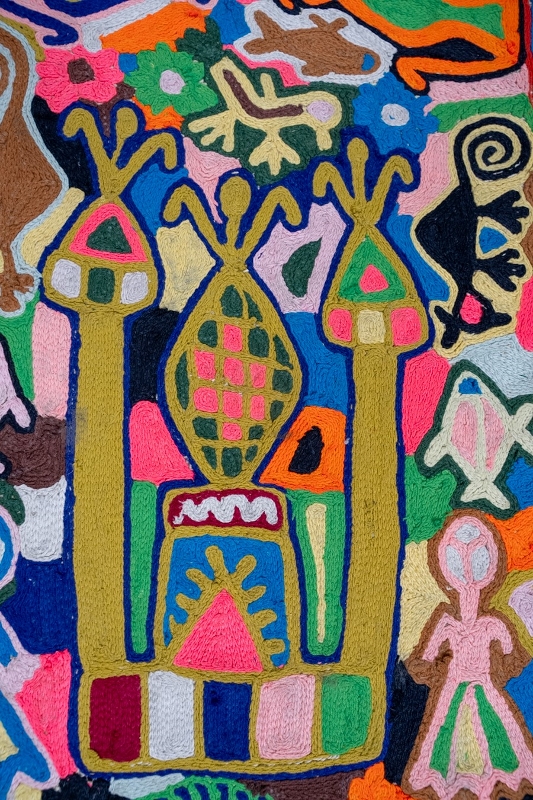
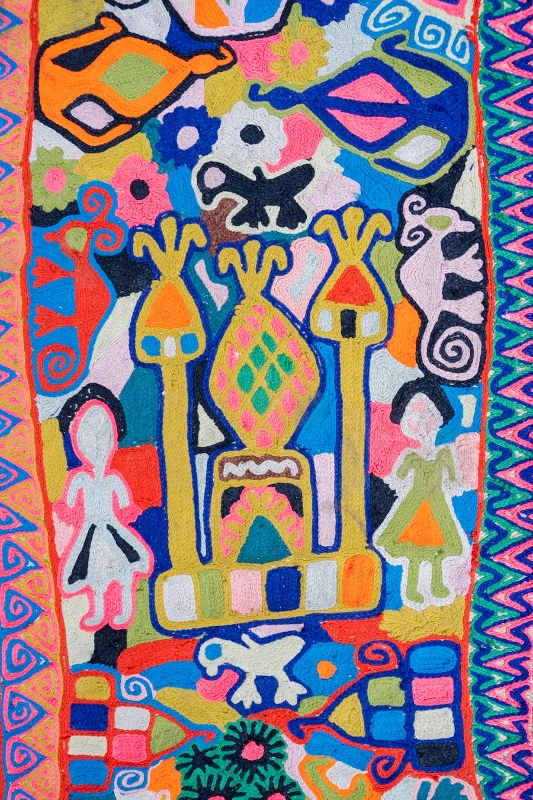
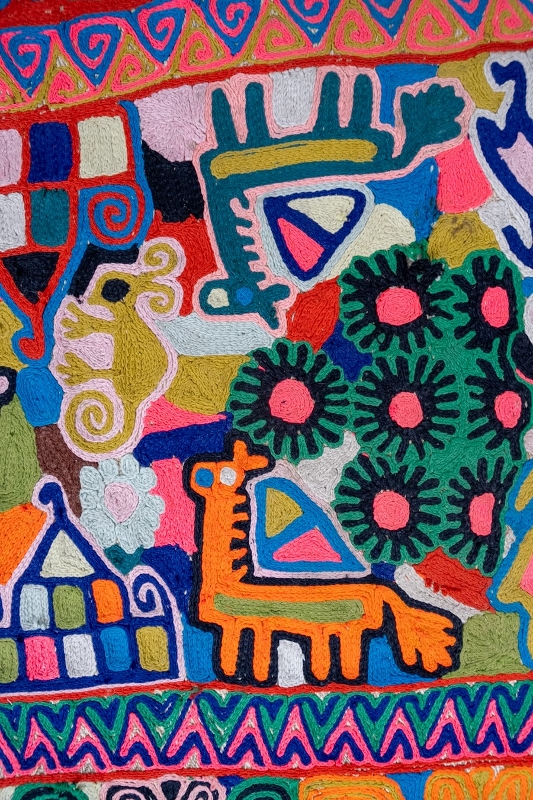


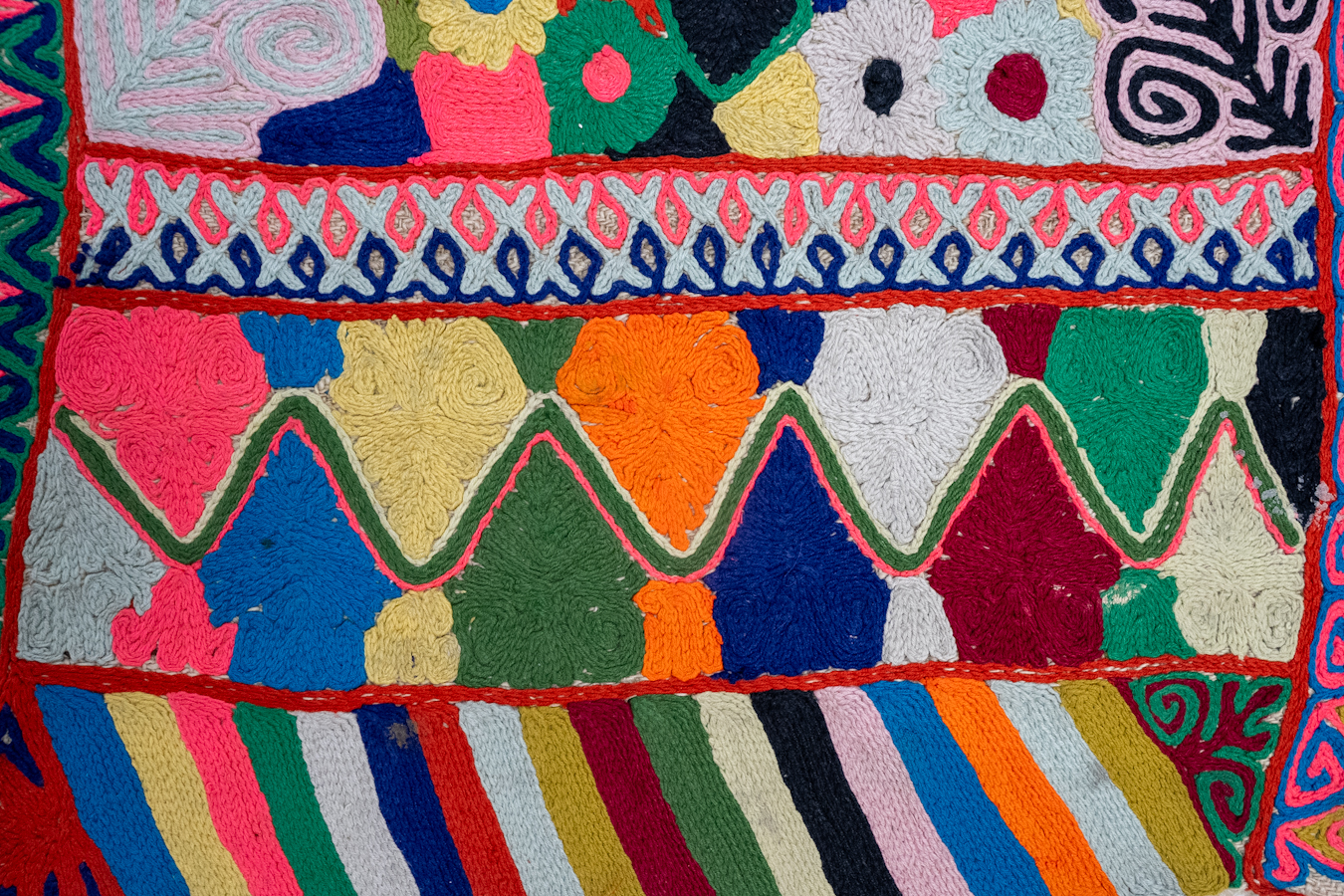
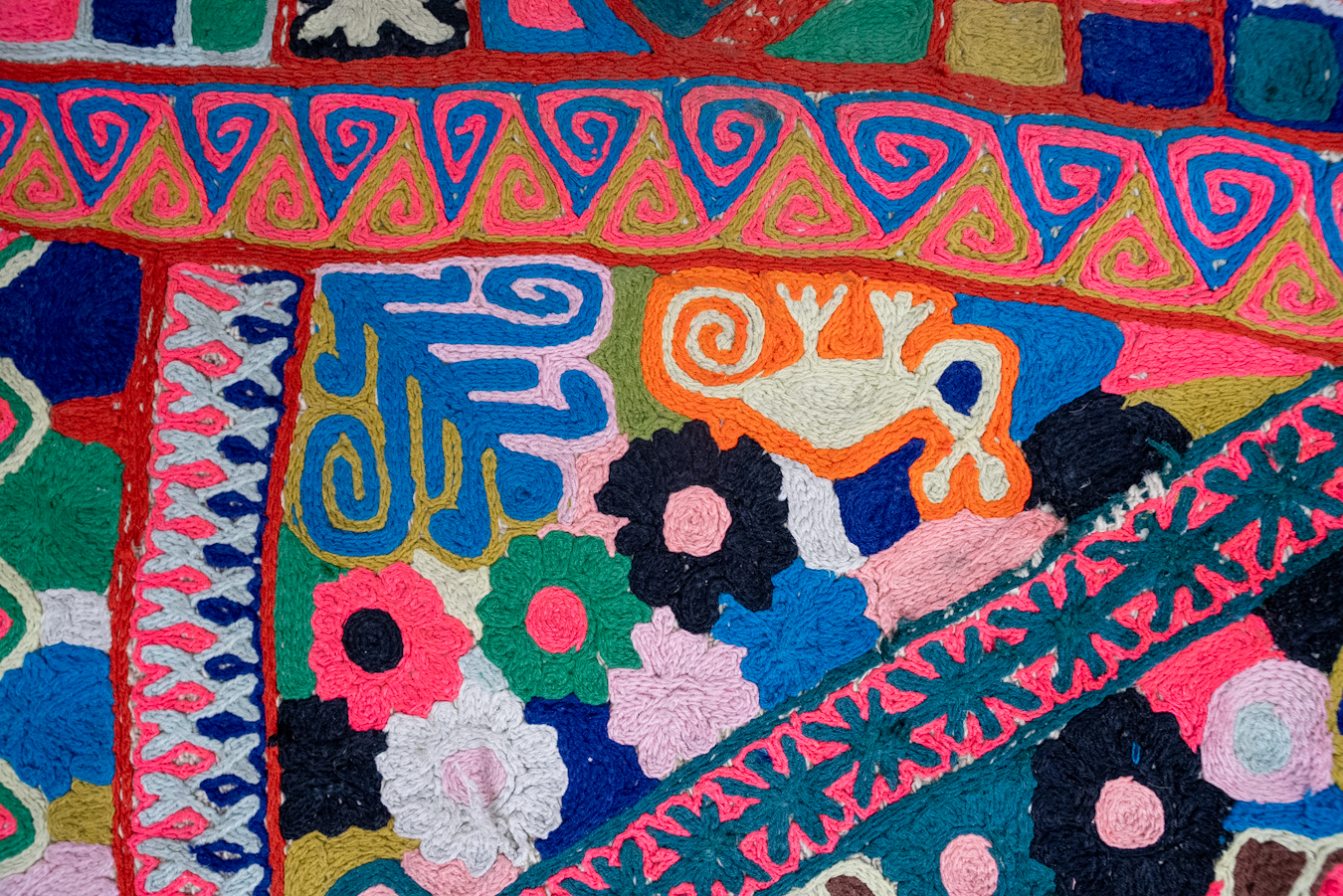
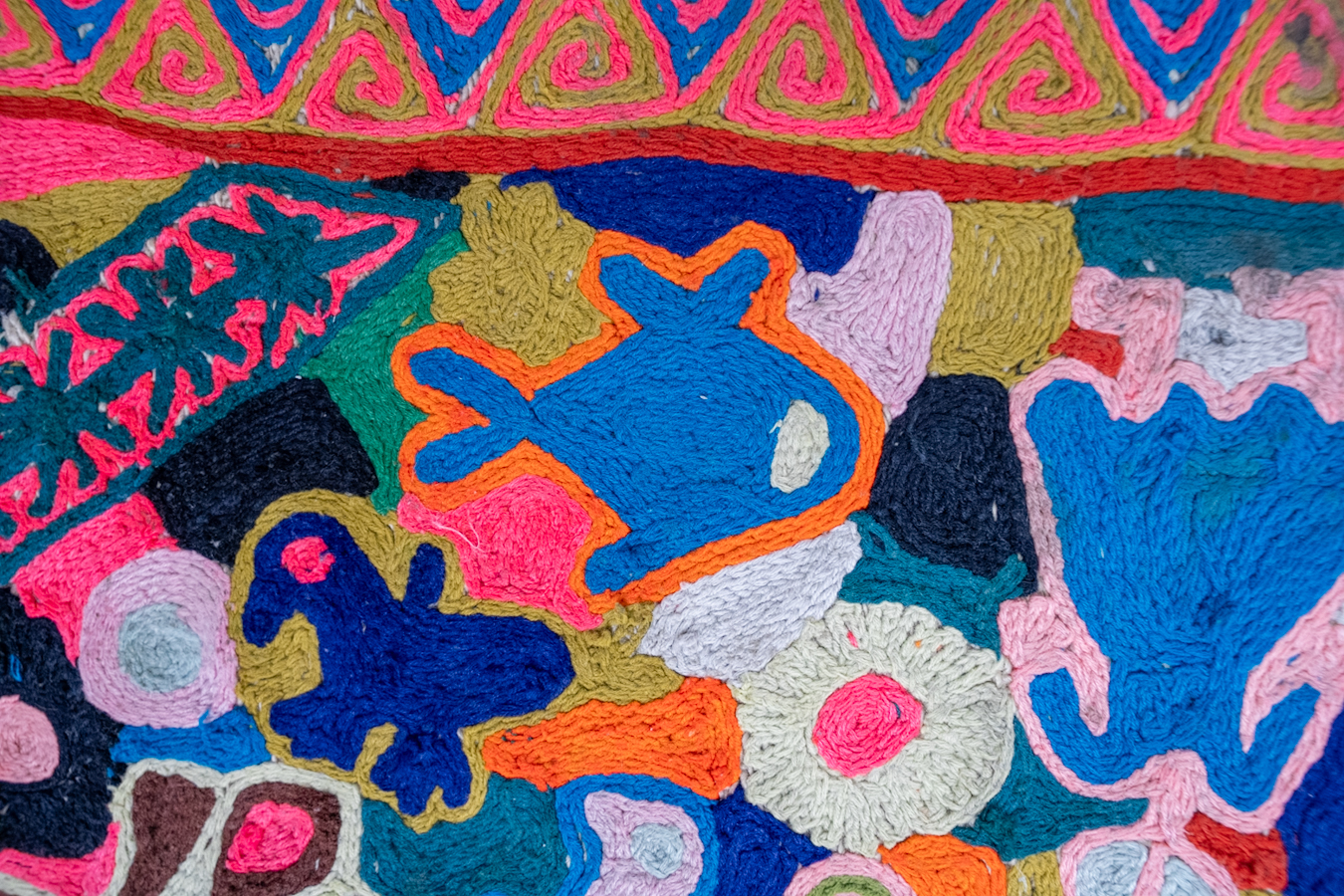
The rugs bear the workshop’s symbols, preserved by the family and passed down through generations. Through the many designs woven into each piece, it becomes clear that Izar Zakia, more than any other weaver, expresses the essence of the marshland environment, the rhythms of daily life, and the protective beliefs of her community.
Her designs are influenced by the mother–daughter relationship and its protective traditions; the natural environments, including the various plantations and animals living in the surroundings; man‑made structures; and the region’s vast historical references that extend far beyond its borders. All of these elements come together beautifully through repeated geometric patterns and spiral motifs.
These symbols appear through a series of motifs and signs, sometimes even hiding messages and secrets within their playful designs.
- Shrines and mosques ; Representing the community’s religious identity and spiritual devotion.
- Anzud (Anzu): A mythological lion‑headed eagle associated with storms, strength, and divine protection.
- Moshekhshu; A mythical hybrid creature with the scaled body and neck of a dragon, the forelegs of a lion, the hind legs of an eagle, horns, a long neck, and sometimes a scorpion’s tail. It symbolizes overwhelming divine power and protective dominance.
- Tree of Life: A precisely symmetrical tree—often a palm or a geometric form—sometimes depicted with a king or deity at its center and flanked by mythical beings such as Lamassu or soldiers. It represents immortality, renewal, fertility, and the connection between heaven (branches) and earth (roots). Thousands of Sumerian, Akkadian, and Assyrian cylinder seals feature this central tree motif.
- Ankh (Key of Life): A hieroglyphic symbol of eternal life, rebirth, and the continuity of both divine and earthly existence. Although Egyptian in origin, it appears in broader Near Eastern symbolic traditions.
- Eight pointed star (Ishtar/Inanna): The emblem of the Sumerian goddess of love, beauty, fertility, war, and protection.
- Winged Sun Disk: A solar emblem, often containing a deity at its center. It symbolizes the sun god, justice, truth, and divine protection. It was frequently placed above royal thrones to signify the king’s legitimacy and divine favor.
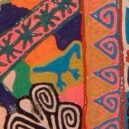
- Scorpion: The scorpion is a widespread and ancient motif in carpets and kilims. In regions with marshes, where real scorpions posed a genuine and sometimes deadly threat, the symbol functioned as a protective amulet. It was believed to guard the weaver and the household from evil, and envy.
Traditionally, the motif appears in groups of five. This number carries deep resonance in Islamic cultures: the Five Pillars of Islam, the five fingers of the protective hand associated with Ali or Fatima, the five daily prayers, and the Five People of the Cloak.
Across these meanings, the number five consistently symbolizes protection, devotion, and spiritual grounding. In this particular izar, four scorpions are clearly visible. The fifth, however, is deliberately concealed, woven into the design so subtly that it remains hidden until the secret is revealed.
- Lamps and Faces: A secretive tale, passed from one generation to the next, speaks of two faces with big ears and four lamps woven into the intricate patterns of Izar Zakia. Tucked among the many motifs is a fifth orange lamp, rendered in a single color. Elders say this “silent lamp” conceals the presence of the fifth scorpion.
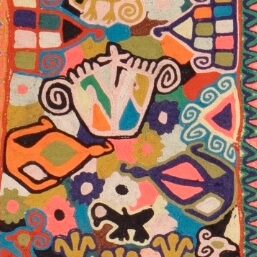
Two lamps and a face
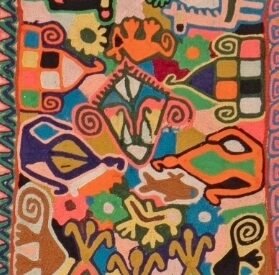
Two lamps and a face
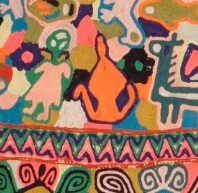
The fifth silent lamp
“After all I have studied and witnessed, I have not encountered anything so rich, so powerful, and so authentically reflective of this tradition in this specific art form. ” Hussein Al-Matawa
Inspirations
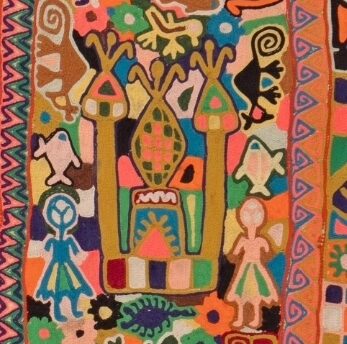
Mosque, mother and daughter
Bird / Anzud Anzu
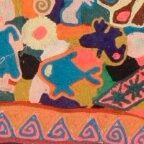
Fish
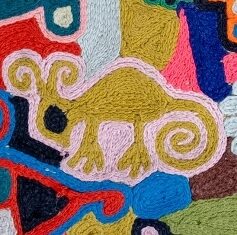
Type of Lyzard (sahliya)
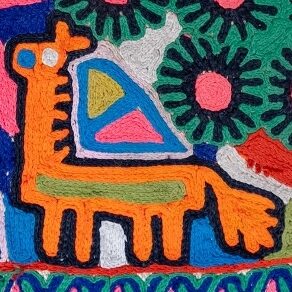
Muskekhshu
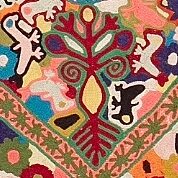
Tree of life
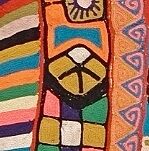
Ankh key of life
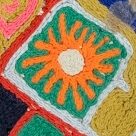
Sun disk
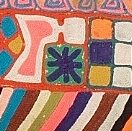
Eight pointed star Innana Ishtar
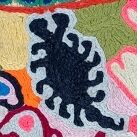
Scorpion (Aqrab)
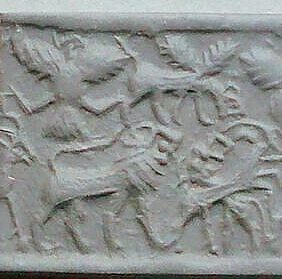
a) Reference to Anzud

b) Reference to Moshekhshu.
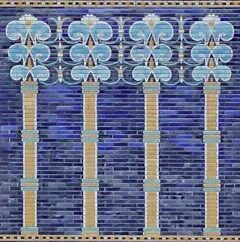
c) Reference to tree motifs
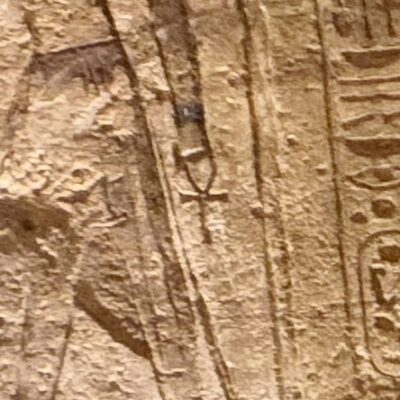
d) Reference to key of life on wall relief.
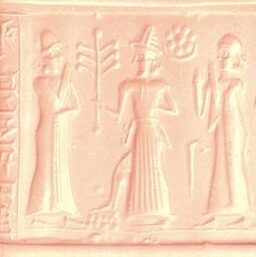
e) Reference to a sun disk in a cylindrical seal.
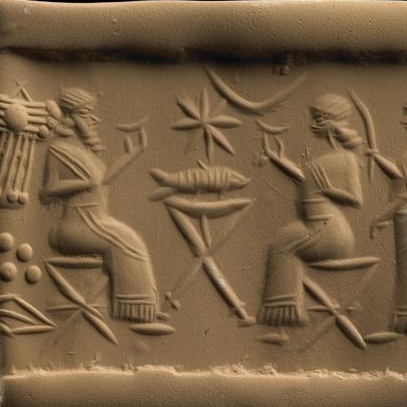
f) Reference to a eight pointed star in a cylindrical seal.
Image sources:
a) Detail from, Cylinder seal, -2500 / -2340 (Dynastique archaïque IIIB), Museum number AO 4763 ; CCO A. 40, Département des Antiquités orientales, Louvre.
b) Detail from, Ishtar Gate (3rd construction phase), 7th-6th century BC, Babylon © Staatliche Museen zu Berlin, Vorderasiatisches Museum / Olaf M. Teßmer.
c) Detail from, Part of the reconstructed throne room facade from the royal palace, Babylon, time of King Nebuchadnezzar II (604–562 BC) © Staatliche Museen zu Berlin, Vorderasiatisches Museum / Olaf M. Teßmer; CC NC-BY-SA.
d) Detail from inside Abu Sembil temple in Egypt, image source FEEFAA org.
e) Deatial from, Cylinder seal, Museum number 21123, Old Babylonian 2000BC-1600BC, south of Iraq. © The Trustees of the British Museum.
f) Detail from, Cylinder Seal, Museum number 89770, Late Babylonian (indicated with?), first millennium BC, South of Iraq. © The Trustees of the British Museum.
Cultural Erosion
Since the 1990s, the production of izar has steadily diminished. During this period, the Ma’adan communities of the southern region of Iraq gradually departed, driven by wars, political, social, and economic pressures that reshaped the area. Their displacement led to a wide diaspora, with many resettling in neighboring countries, as well as in Sweden, North America, and other parts of the world.
When a community is dispersed across multiple countries under refugee conditions, the intricate knowledge systems that sustain its cultural practices are traditionally passed from mother to daughter are disrupted. As a result, the continuity of Ma’adan weaving and other cultural traditions becomes increasingly difficult to maintain.
Efforts have been undertaken to document and revive this valuable traditional craft of weaving Izars. Although the process is gradual, initiatives continue to focus on teaching the new generation, restoring, preserving, and promoting the weaving traditions of southern Iraq. These efforts are often integrated into broader cultural programs aimed at revitalizing the heritage of the Mesopotamian Marshes and supporting the empowerment of local women.
All copyrights reserved for information and images provided by Hussein Al-Matawa in this article.
Photographer:
Mohammad Al-Mathkour
Bibliography
-
- Al-Hathaf, Zahra, daughter of Zakia bint Hassoun, memories, 2026.
- Al-Hathaf, Hussein, Zakia bint Hassoun youngest son, currently living in Sweden, memories 2026
- Al-Mutawa, Hussein, grandson of Zakia Al-Hathaf, memories, 2026
- Salim, Rashad, the future is unwritten: Rashad Salim Arch re- imagined, by the united nations, Google Arts.
- Thesiger, Wilfred, The Arab Marshes, 1985, Collins, first published in 1965.
- Bahrani, Zainab, Art of Mesopotamia,Thames & Hudson 2016.
- Ilg, Maya and Stockli, Annamarie, Embroidered Wedding Blankets of Southern Iraq. FEEFAA org, 2023.
Opening Image
Izar Zakia in full
About Hussein Ali Hussein Aoun Al-Mutawa ,
The first and eldest grandson of Zahra Jabbar Al-Hathaf, and the custodian and owner of Izar Zakia, entrusted by the family to preserve and document this artistic and cultural heritage. A history researcher and a lover of the arts in general.
A professional bodybuilder in the World Bodybuilding Federation and a champion in three other sports: Jiu-Jitsu, handball, and the 400-meter sprint. A real estate property accountant in the State of Kuwait.