
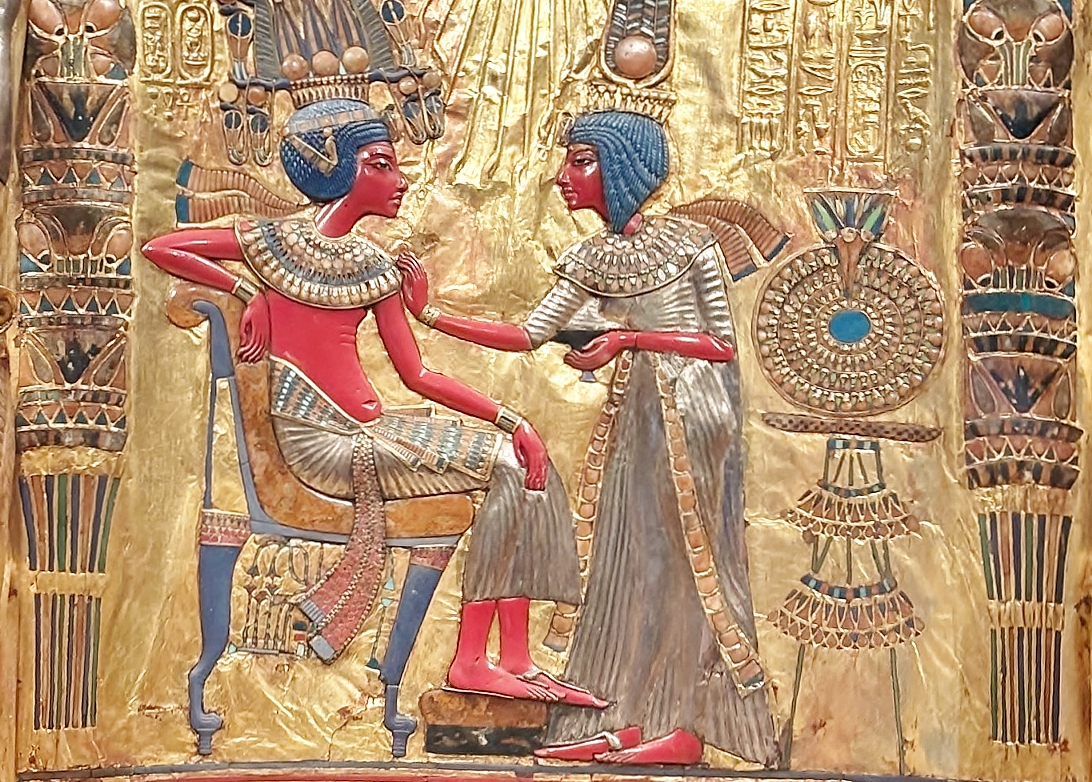
Tutankhamun and His Golden Treasures at the Grand Egyptian Museum
Amani Shafie, Egyptologist, freelancer tourist guide in Egypt.
April 2026
Every time I guide visitors through the Grand Egyptian Museum, I witness the same reaction: a quiet sense of awe as we approach the golden treasures of Tutankhamun. Even for me, seeing them so often, the brilliance of the gold, the craftsmanship, and the story of the young king never fade into routine. These treasures do not simply belong to the past—they feel alive, carrying with them the mystery and beauty of ancient Egypt.
How great you are Egypt always bringing us proud and glory to tell about. Never giving up taking pictures with these gorgeous treasures of his majesty.
‘The moment never loses its magic, emotion meet in a way that continues to inspire both visitors and those of us who tell the story.’ Amani Shafie.
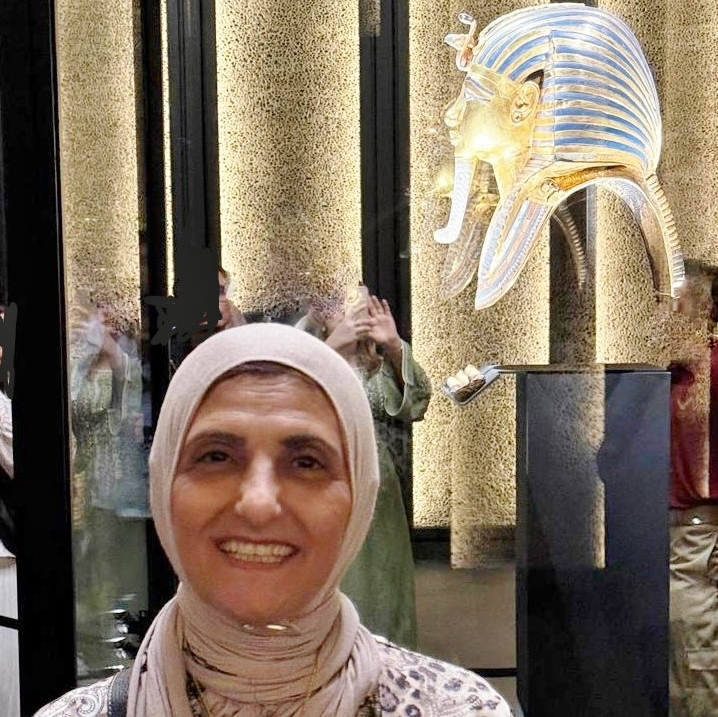
Fig 1) Amani Shafi at the Grand Egyptian Museum.
The story of Tutankhamun, often called the “Boy King,” is one of the most fascinating chapters in ancient Egyptian history. Although his reign was short and relatively unremarkable politically, his legacy became immortal due to the discovery of his nearly intact tomb in 1922. Today, his extraordinary treasures—especially his golden artifacts—are among the most iconic symbols of ancient Egypt and are now displayed in an unprecedented way at the Grand Egyptian Museum (GEM) near the Giza Pyramids.
Who Was Tutankhamun?
Tutankhamun ruled Egypt during the 18th Dynasty of the New Kingdom, around 1332–1323 BCE. He became pharaoh at a very young age, likely around nine years old, and ruled for about a decade. His reign came shortly after the religious revolution of his father Akhenaten, who had attempted to replace traditional Egyptian polytheism with the worship of a single god, Aten.
Tutankhamun is believed to have restored the traditional religious practices, bringing back the worship of the God Amun in Luxor. This is reflected in his name: originally Tutankhaten (“Living Image of Aten”), he changed it to Tutankhamun (“Living Image of Amun”). Despite these efforts, his early death at around the age of 18 or 19 prevented him from leaving a major political or military legacy.
However, what makes Tutankhamun one of the most famous pharaohs in history is not his reign, but his tomb.
The Discovery of the Tomb
In 1922, British archaeologist Howard Carter discovered Tutankhamun’s tomb (KV62) in the Valley of the Kings. Unlike most royal tombs, which had been looted in antiquity, this tomb was largely intact. It contained over 5,398 objects, many of them made of gold, precious stones, and fine craftsmanship.
The discovery captured the world’s imagination and sparked a global fascination with ancient Egypt. For the first time, people could see the burial treasures of a pharaoh almost exactly as they had been placed over 3,000 years earlier.
At the Grand Egyptian Museum, within the Tutankhamun galleries, a panel was created to recognize the team involved in the discovery of the tomb. It also tells the story of a young boy, Hussein Abdul Rasoul, who was about 12 years old in 1922. While carrying a drink at the excavation site, Hussein dropped it and struck a stone. He then alerted Howard Carter, marking the first step toward the discovery of Tutankhamun’s tomb.
Fig 2 Hussain Abdul Rasoul, with his image as a young boy at the time of the tomb discovery, he is pictured wearing one of Tutankhamoun necklaces. Source of image: Egyptian Museum in Tahrir Square.
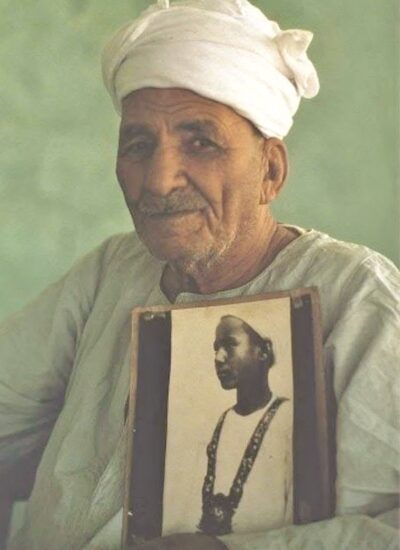
Fig 2) Hussain Abdul Rasoul
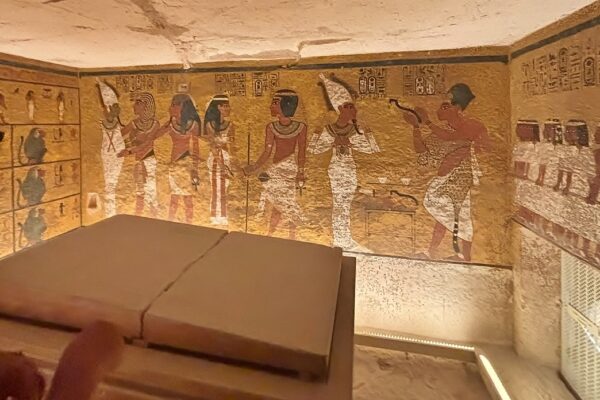
Fig3) Tutankhamun’s tomb (KV62) in the Valley of the Kings.
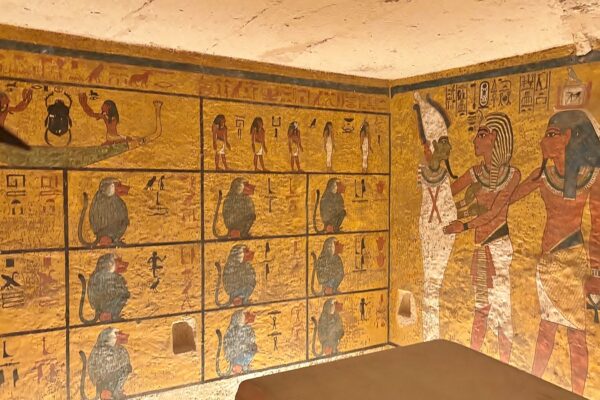
Fig 4) Tutankhamun’s tomb (KV62) in the Valley of the Kings.
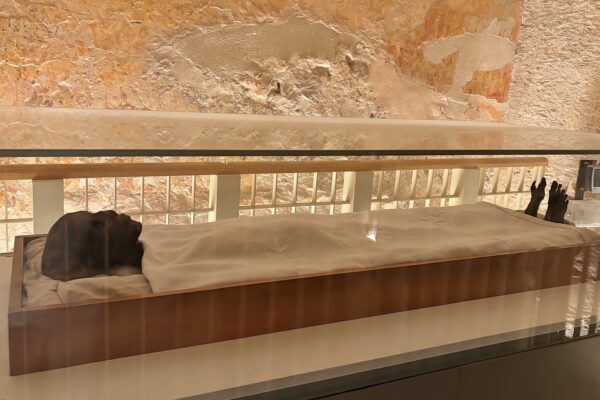
Fig 5) Tutankhamun’s mummy at tomb (KV62) in the Valley of the Kings.
The Golden Treasures of Tutankhamun
Tutankhamun’s treasures are remarkable not only for their quantity but also for their quality, symbolism, and artistic excellence. Gold, in ancient Egypt, was associated with the gods and eternity. It was believed to be the flesh of the gods, especially the sun god Ra, making it the perfect material for royal and funerary objects.

Fig 6) Diagram showing how each item was located at the time when Tutankhamun’s tomb was discovered. Source of image: Egyptian Museum in Tahrir Square.
The Golden Burial Mask
The most famous object from Tutankhamun’s tomb is his golden funerary mask. Weighing around 11 kg solid 24 karat gold and inlaid with semi-precious stones such as lapis lazuli, quartz, and obsidian, the mask represents the idealized face of the young king.
It was placed directly over the mummy’s head and shoulders, serving both as protection and as a means to ensure the king’s identity in the afterlife. The mask is a masterpiece of ancient craftsmanship and remains one of the most recognizable artifacts in the world.
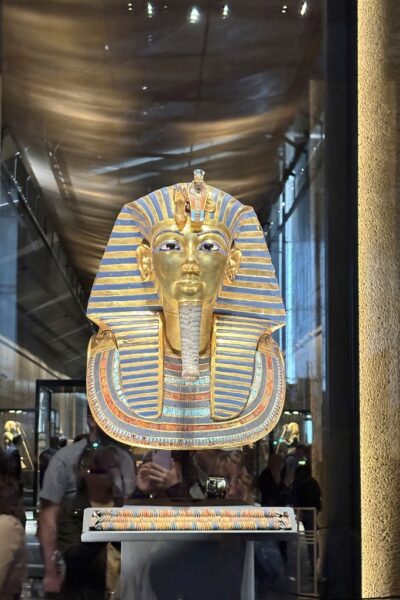
Fig 7) Golden Burial Mask, front view.
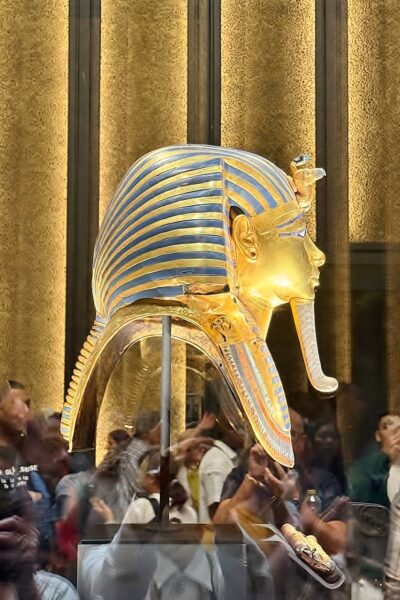
Fig 8) Golden Burial Mask, side view.
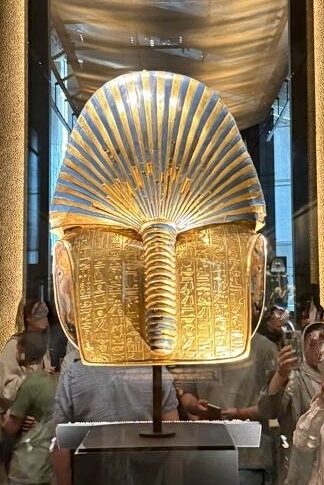
Fig 9) Golden Burial Mask, back view.
The Nested Coffins
Tutankhamun was buried inside three coffins, one inside the other. The innermost coffin is made of 24 karat solid gold weighing 110 kg. The outer coffins are made of gilded wood and decorated with intricate details and protective deities.
These coffins were placed inside a stone sarcophagus and surrounded by four large gilded shrines that filled the burial chamber.
A model of King Tutankhamun’s mummy was created to display the gold wrappings and the golden mask. More than 110 ornaments were found on the body, in addition to the crook and flail—symbols of royalty—the scarab symbolizing eternity, good luck, and resurrection, and two daggers belonging to the king, one made of solid gold and the other of iron.
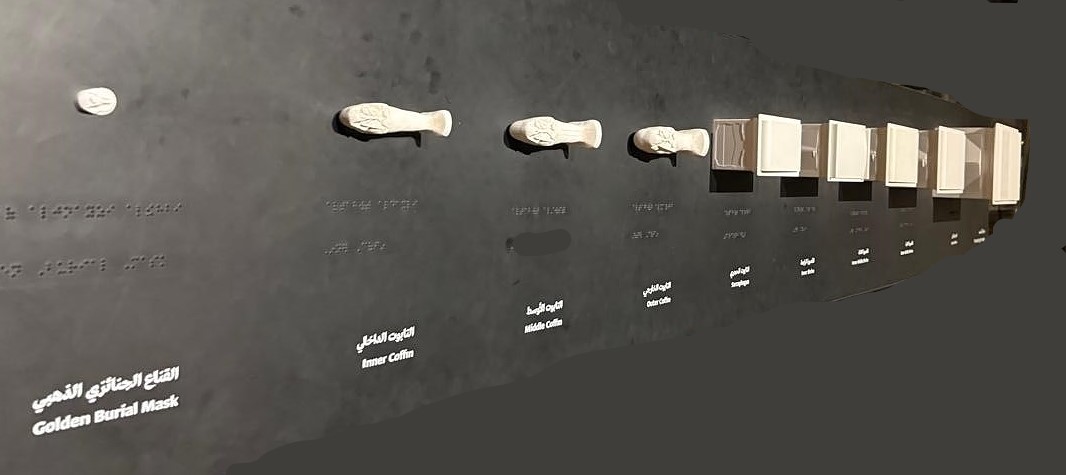
Fig 10) Digram as exhibited in GEM, shows in sequent, the golden burial mask (placed over the mummy), inner coffin, middle coffin , outer coffin, the coffins are contained in the sarcophagus carved from a solid block of quartzite and the lid is granite. followed by the four shrines.
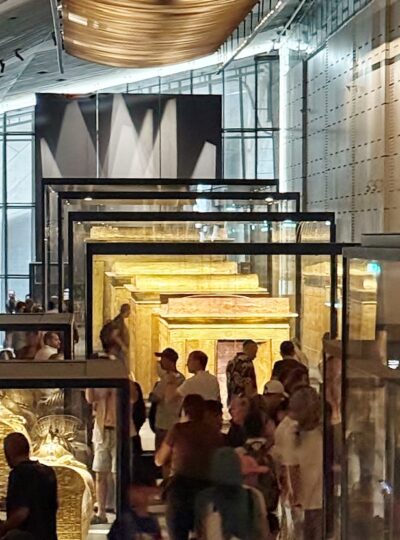
Fig 11) The four shrines as exhibited in the Grand Egyptian Museum.
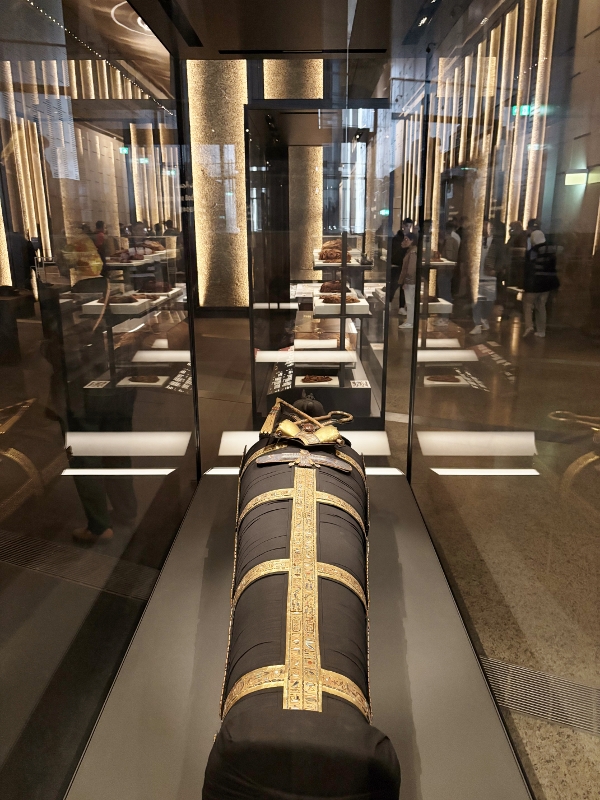
Fig 12) A model of King Tutankhamun’s mummy was created to display the gold belts that rapped the mummy and some of the ornaments.
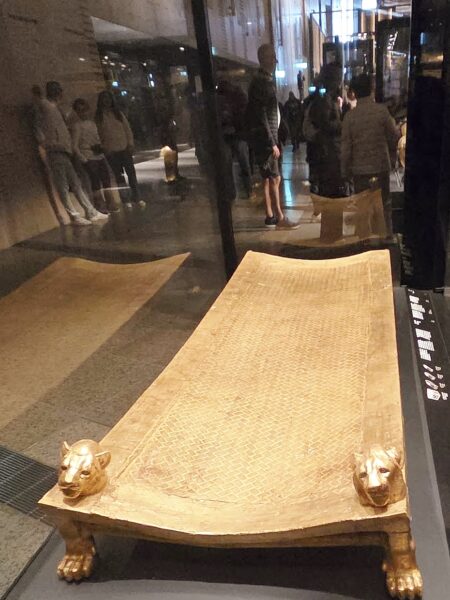
Fig 13) Lion headed bed, where the base of the three coffins (one inside the other) rested on.
Coffins
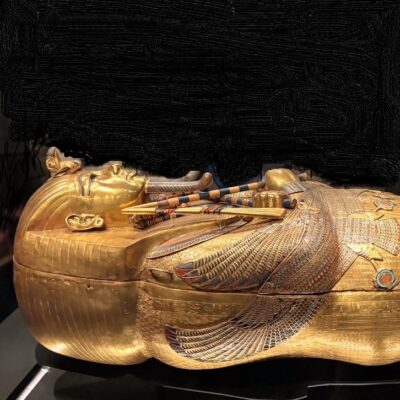
Fig 14) First Coffin, the innermost coffin. Made of solid gold weighing over100 kg.
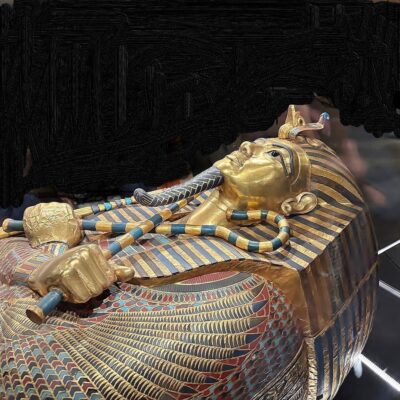
Fig 15) Second Coffin, the middle coffin. made of gilded wood and decorated with intricate details and protective deities.
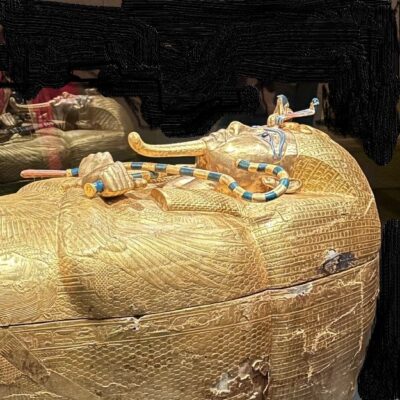
Fig 16) Third Coffin, the outer coffin.made of gilded wood and decorated with intricate details and protective deities.
Shrines
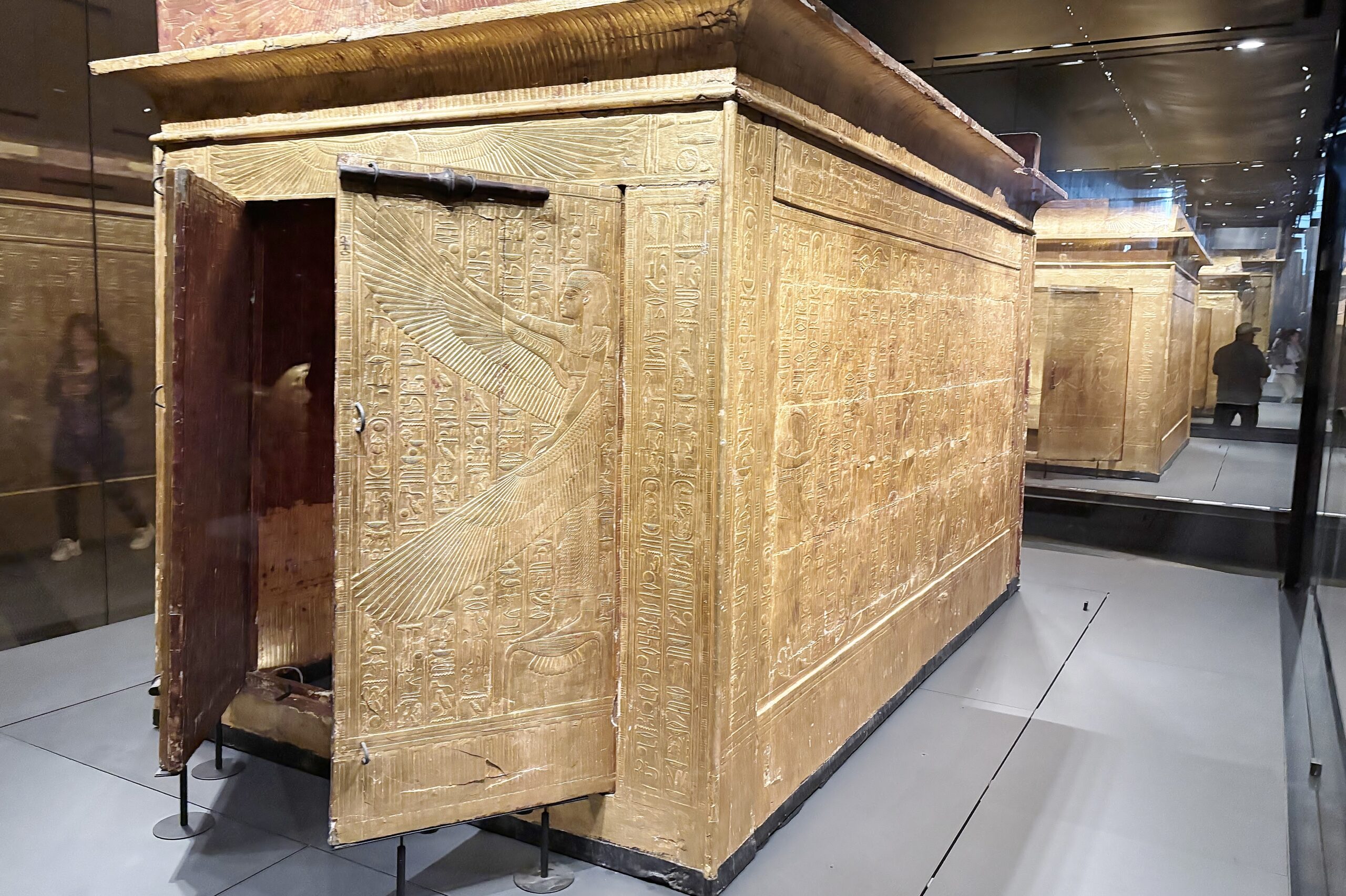
Fig 17) First shrine front view.
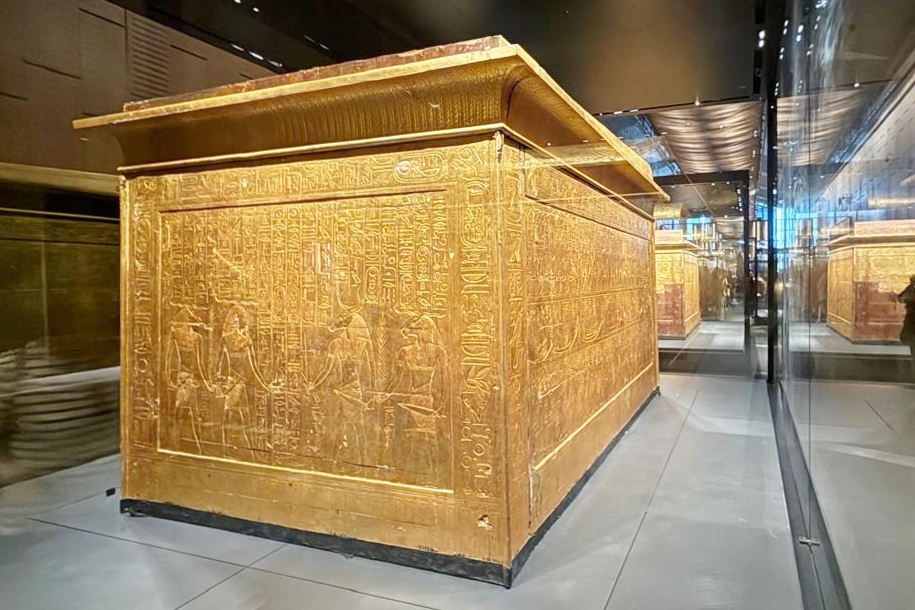
Fig 18) Third Shrine, Back View
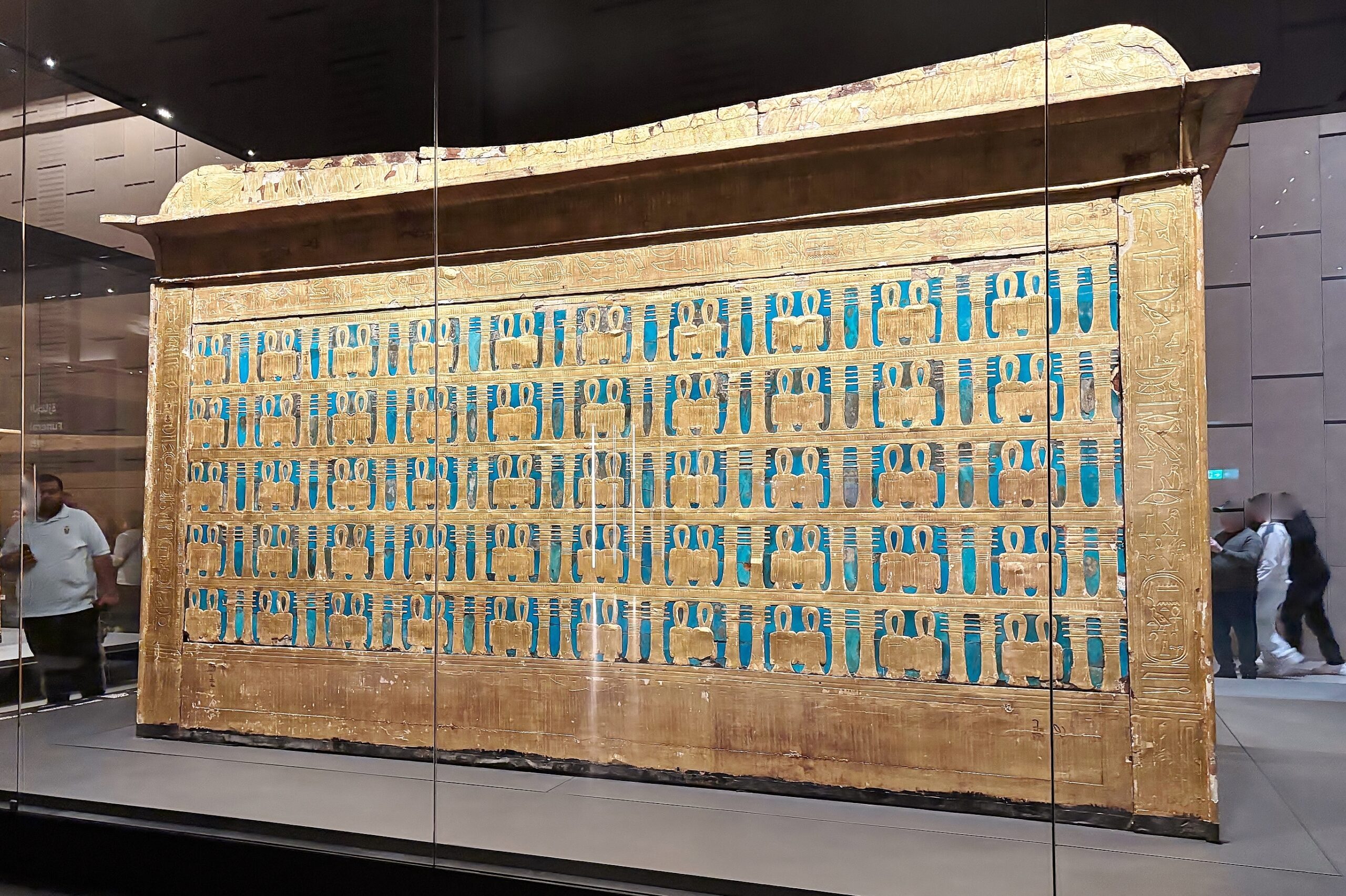
Fig 19) Forth Shrine , side view.
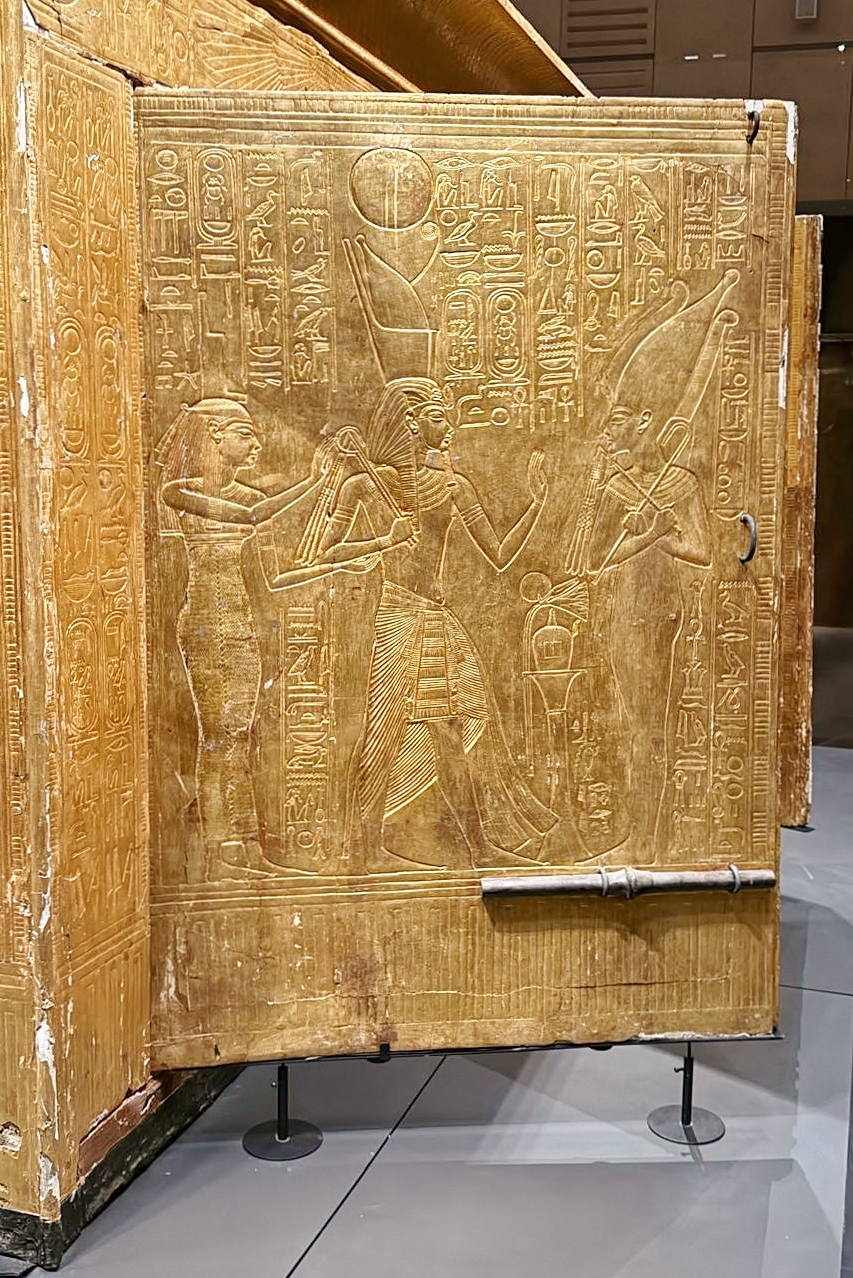
Fig 20) Third Shrine, front door partial view.
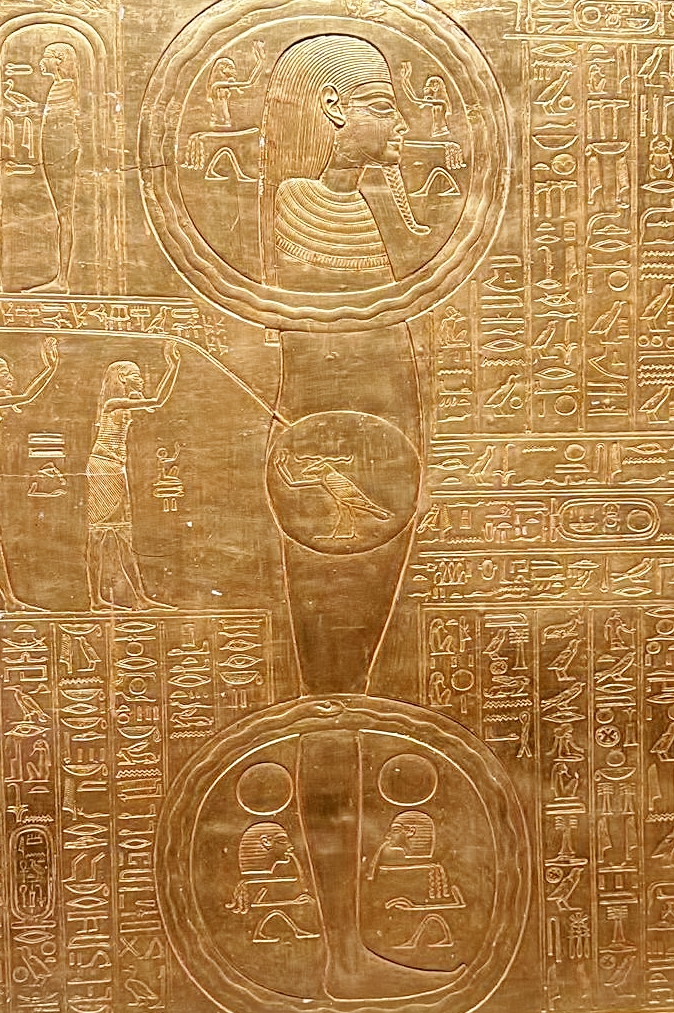
Fig 21) Third Shrine, side view detail.
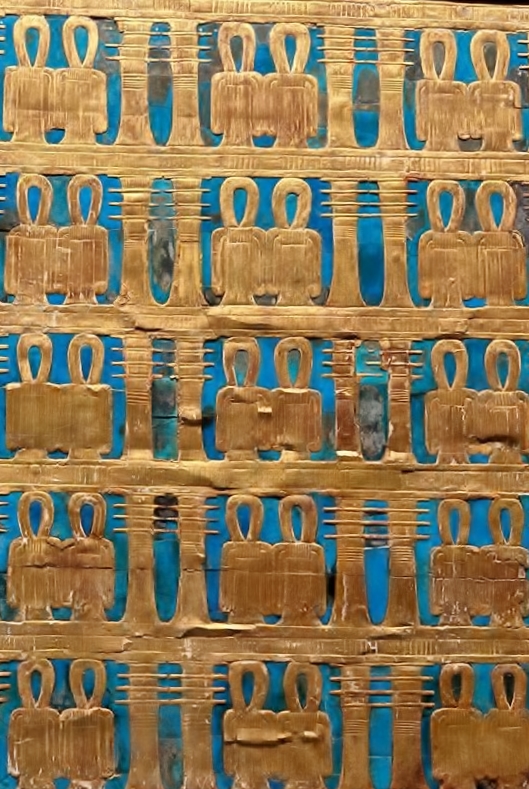
Fig 22) Forth Shrine, side view detail.
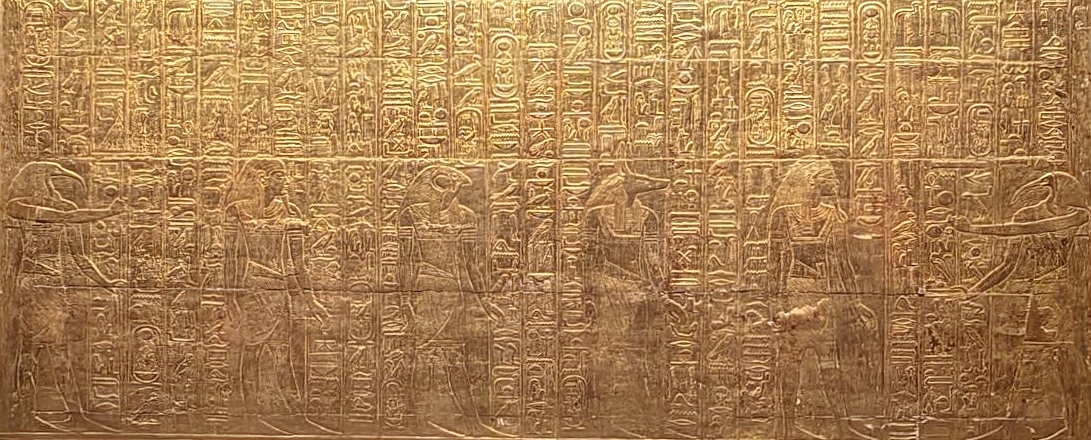
Fig 23) Second Shrine, side view detail.
The Golden Throne
Another extraordinary piece is Tutankhamun’s golden throne, decorated with scenes of the king and his queen, Ankhesenamun. The throne features delicate inlays of colored glass and precious stones and provides insight into royal life and artistic style during the Amarna period.
The main panel on the front of the backrest is a masterpiece of craftsmanship. The scene features the royal couple: King Tutankhamun and his wife, Ankhesenamun, the daughter of Queen Nefertiti. Originally named Ankhesenaaten, she changed her name to Ankheseamun when the kingdom returned to its traditional religion, worshiping the God Amun.
The queen is shown pouring perfume over the king’s shoulder. Both figures wear only one thong sandal, Tutankhamun on his left foot and Ankhesenamun on her right. This detail is often interpreted as a symbol of their equality as partners or as a representation of marriage.
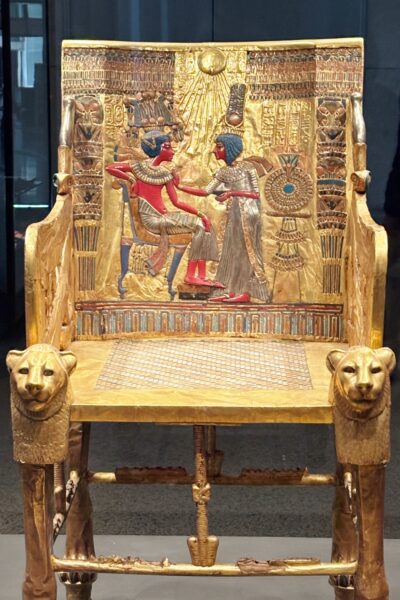
Fig 24) front view

Fig 25) Side view.
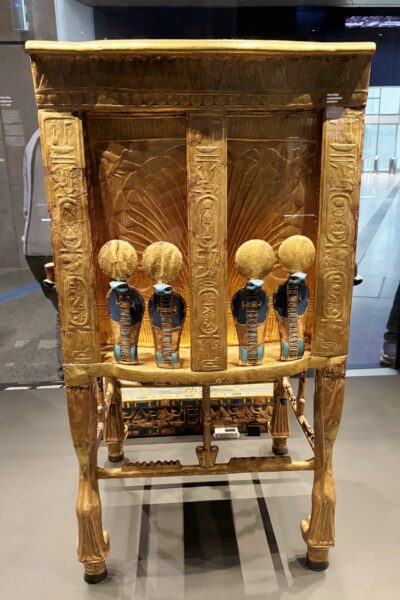
Fig 26) back view
Jewelry and Personal Items
The tomb also contained an immense collection of jewelry, including:
- Gold necklaces and pectorals
- Bracelets and rings
- Amulets for protection in the afterlife
Each piece was not only decorative but also carried symbolic and magical meanings, intended to protect the king on his journey to the afterlife.
Some jewelry items were found on Tutankhamun’s mummy, In addition to many more pieces of jewelry were discovered stored in boxes and chests throughout the various chambers of his tomb.
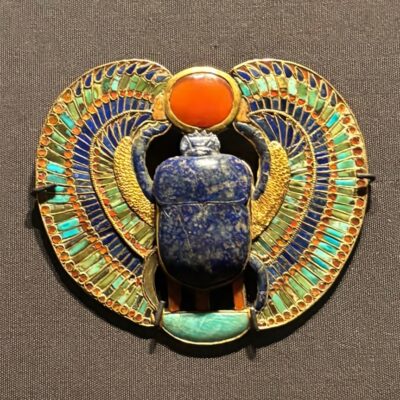
Fig) 27
Necklaces and Amulets
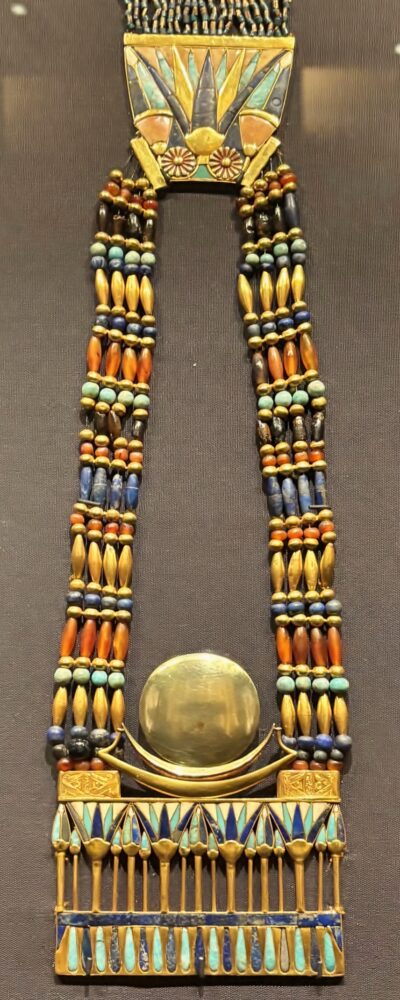
Fig 28)
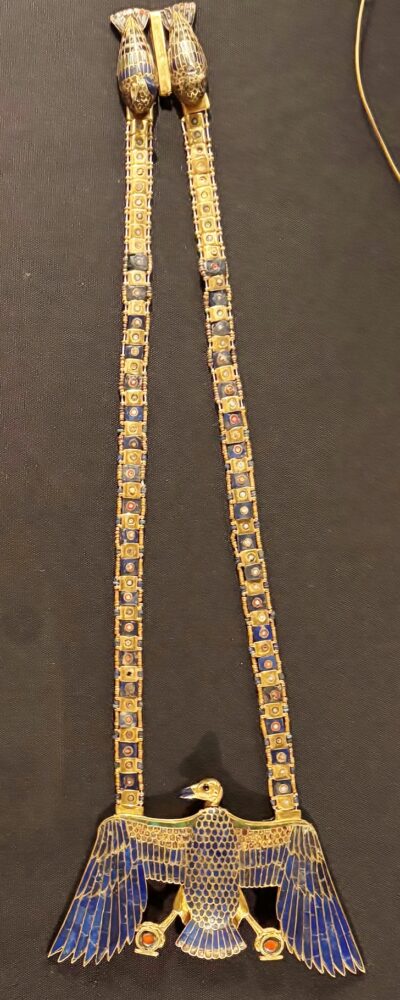
Fig 29)
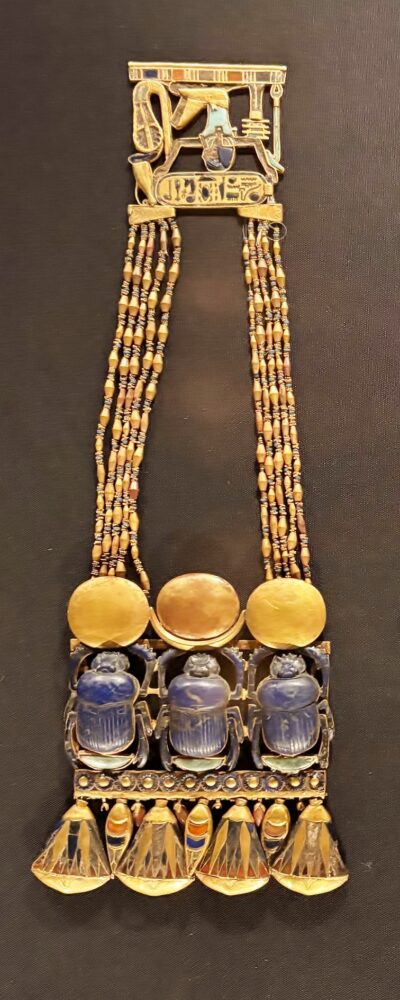
Fig 30)
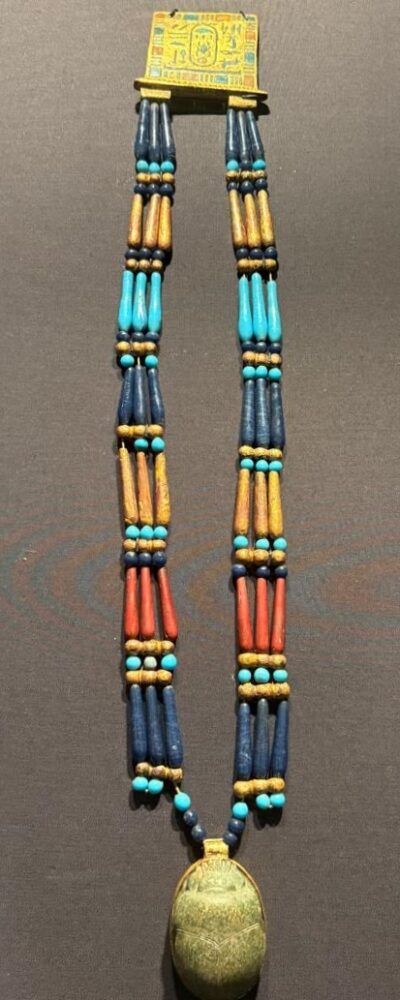
Fig 31)
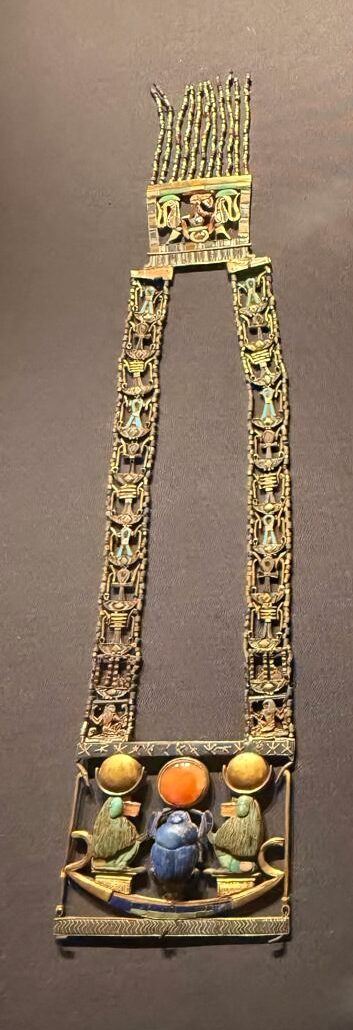
Fig 32)
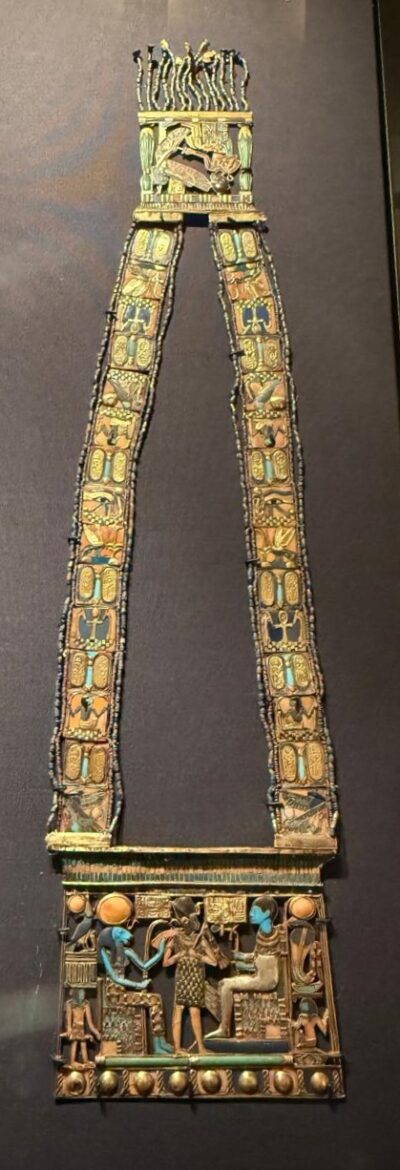
Fig 33)
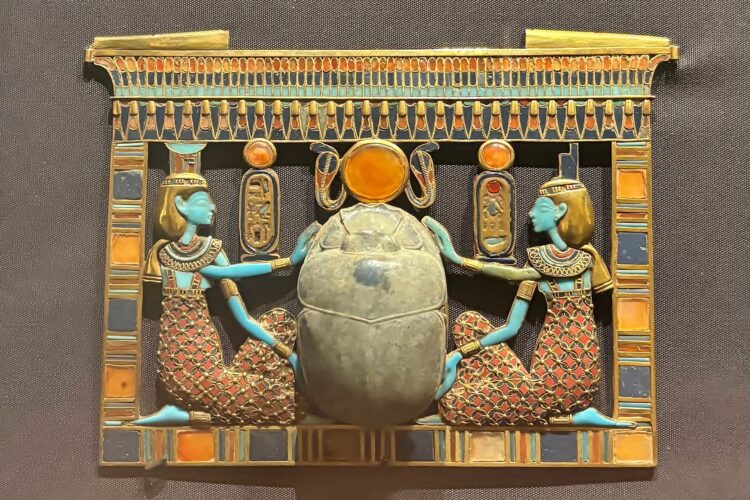
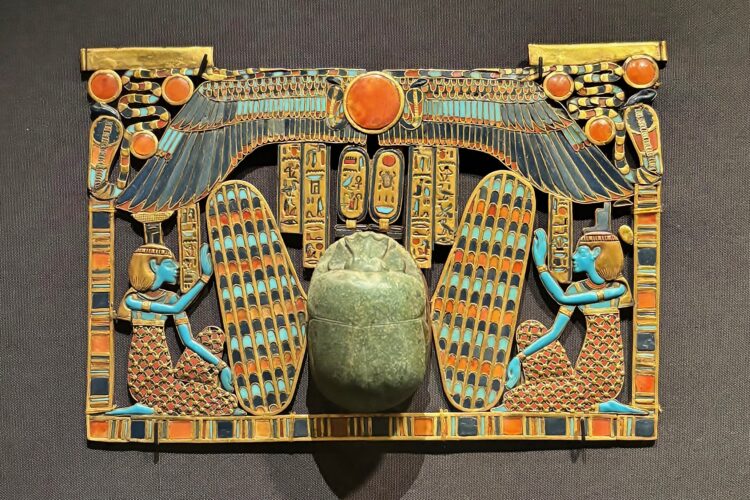
Fig 34, 35)
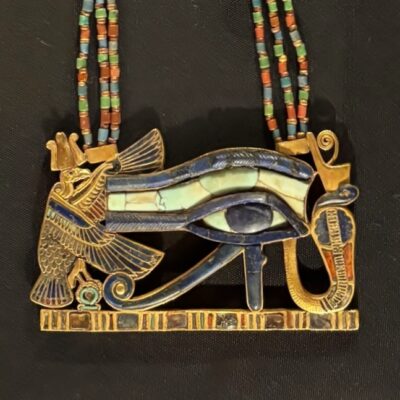
Fig 36)
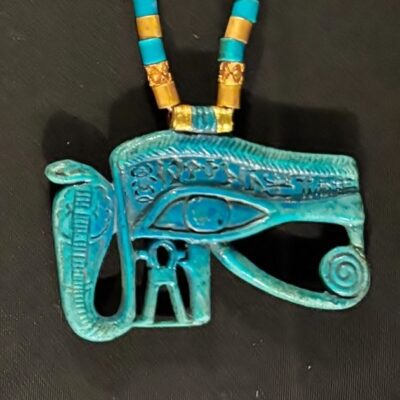
Fig 37)
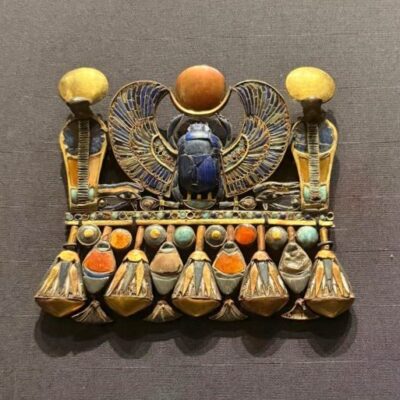
Fig 38)
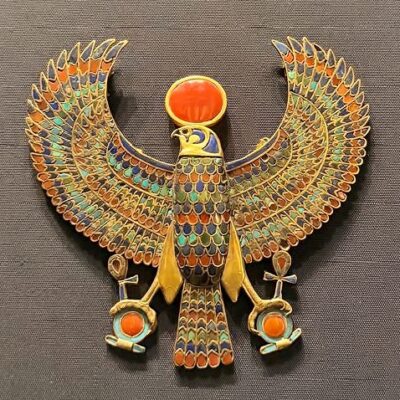
Fig 39)
Collars
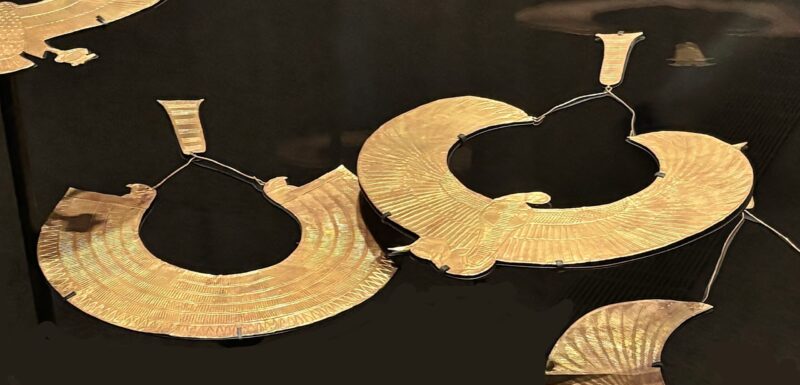
Fig 40)
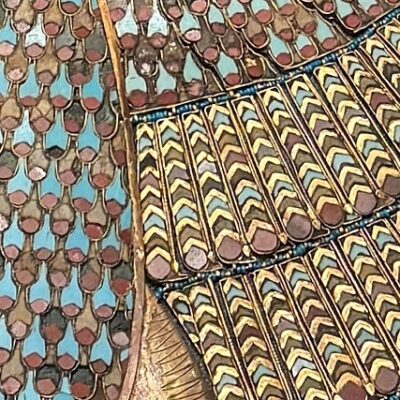
Fig 41)
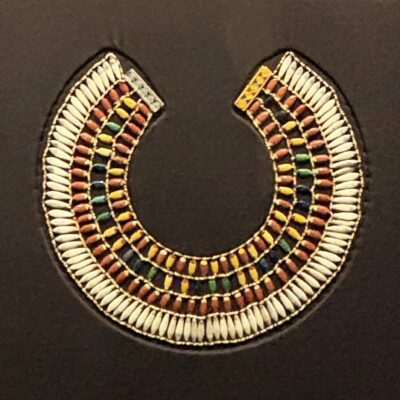
Fig 42)
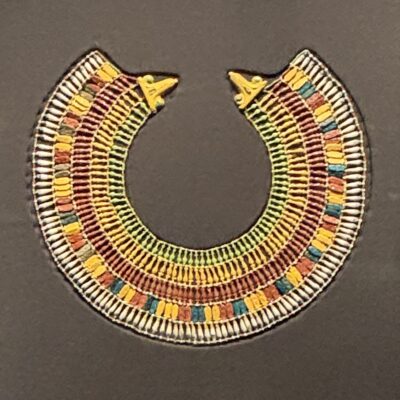
Fig 43)
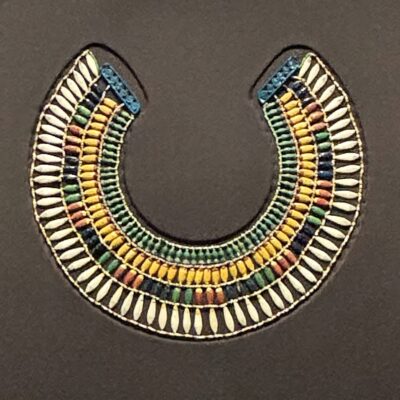
Fig 44)
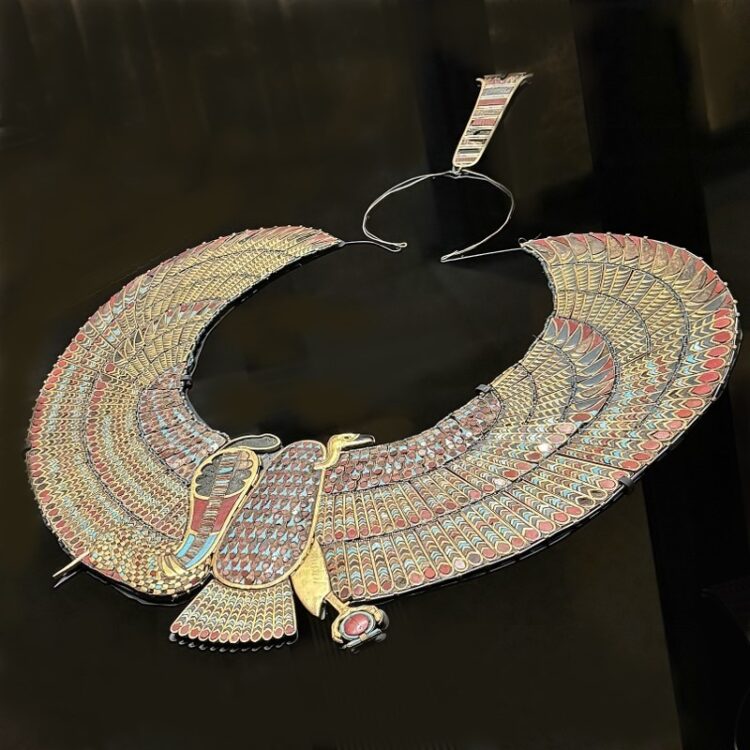
Fig 45)
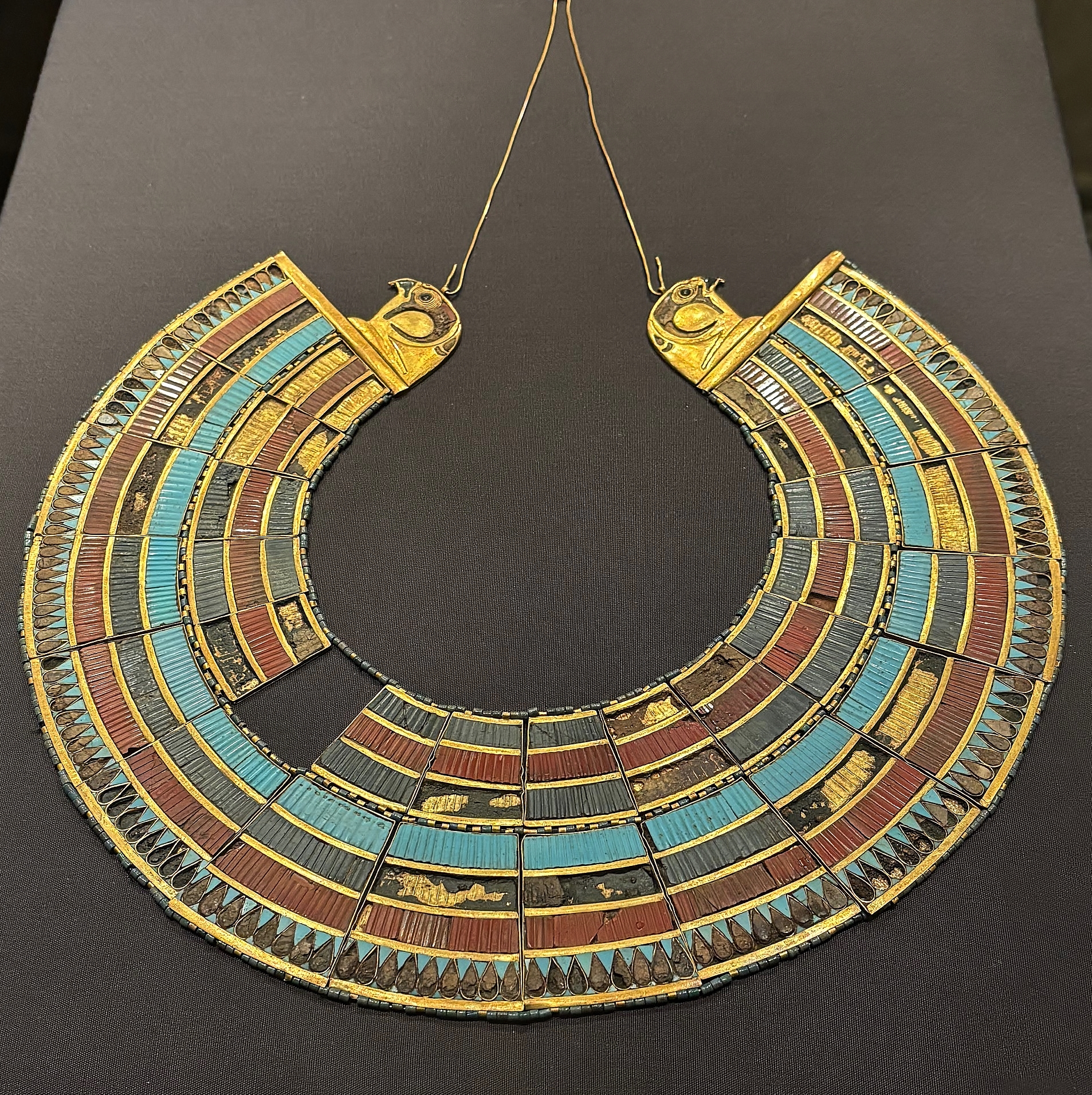
Fig 46)
The Royal Corset
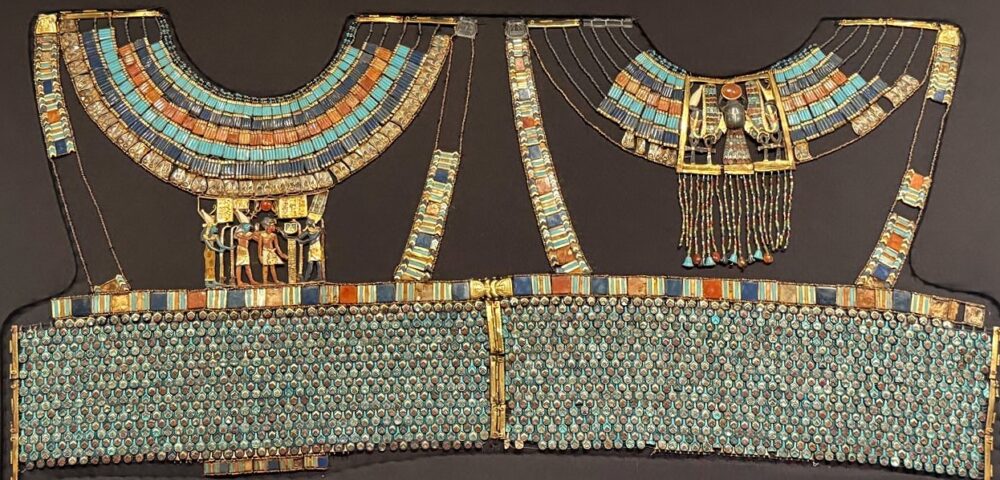
Fig 47)
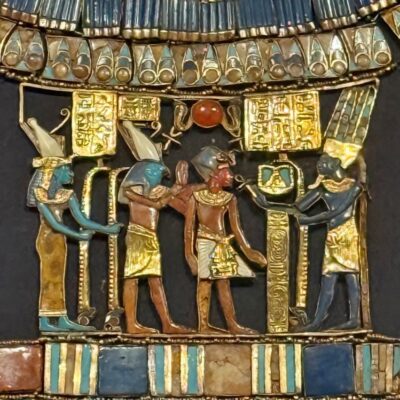
Fig 48)
Earrings
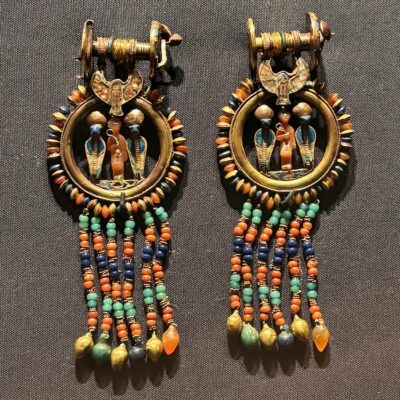
Fig 49)
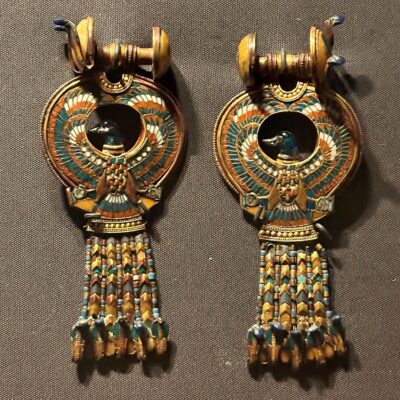
Fig 50)
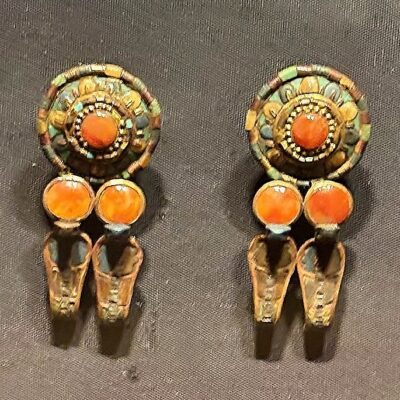
Fig 51)
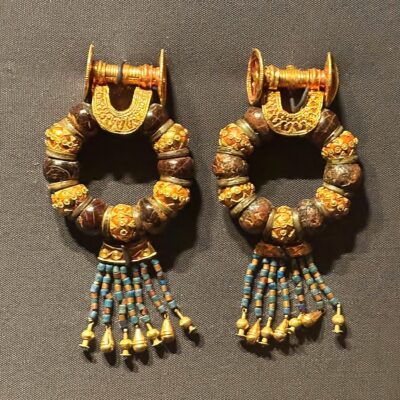
Fig 52)
Bracelets
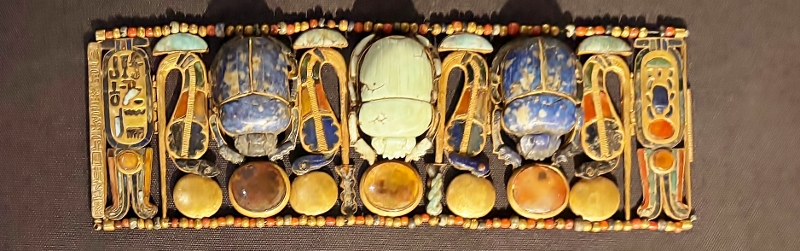
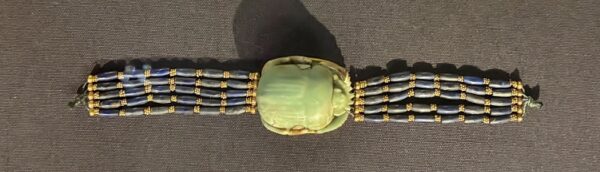
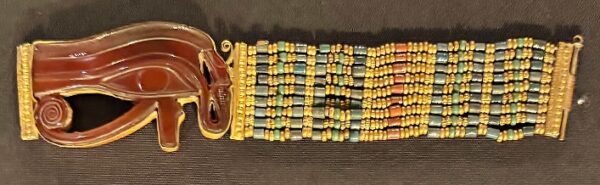
Fig 53, 54, 55)
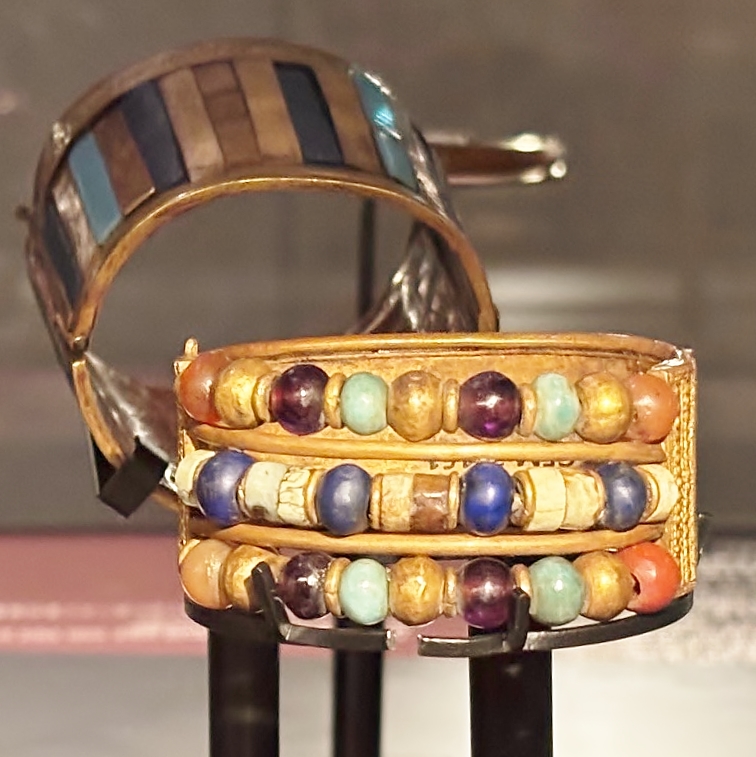
Fig 56)
Chariots and Daily Life Objects
Tutankhamun’s treasures were not limited to funerary items. They also included objects from his daily life:
- Six chariots
- Furniture such as beds, chairs, and boxes
- Weapons and hunting equipment
Many of these items were covered in gold leaf, combining functionality with divine symbolism.
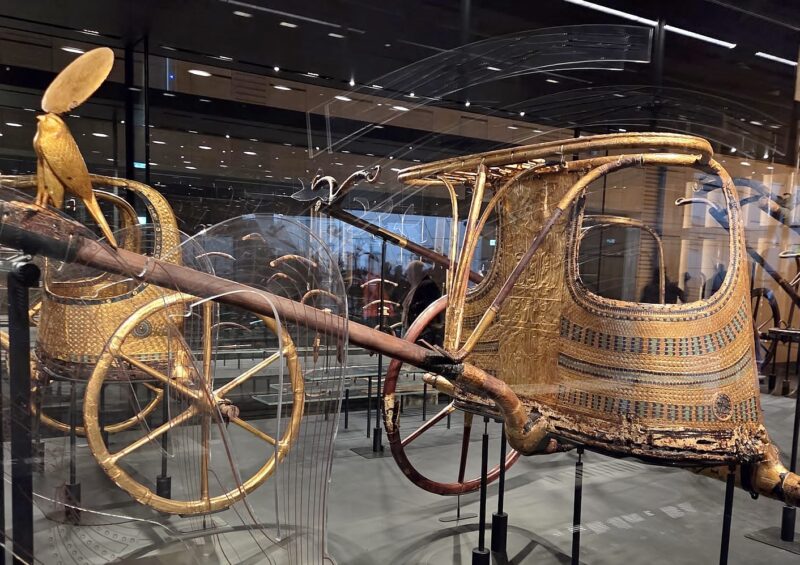
Fig 57) The Royal Chariot
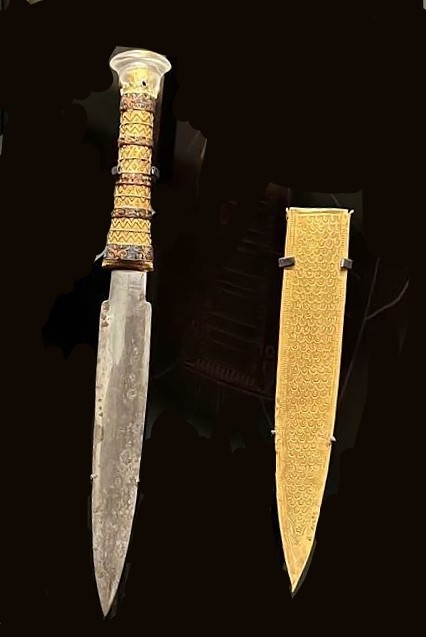
Fig 58) Meteoric Iron Dagger.
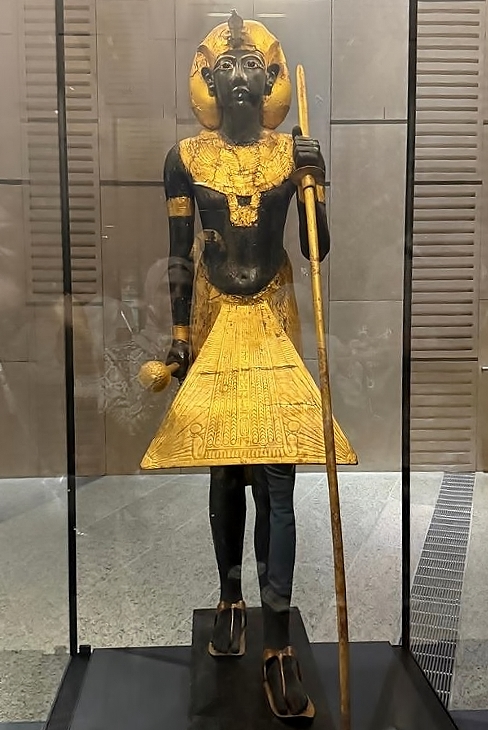
Fig 59) Guardian Statue.
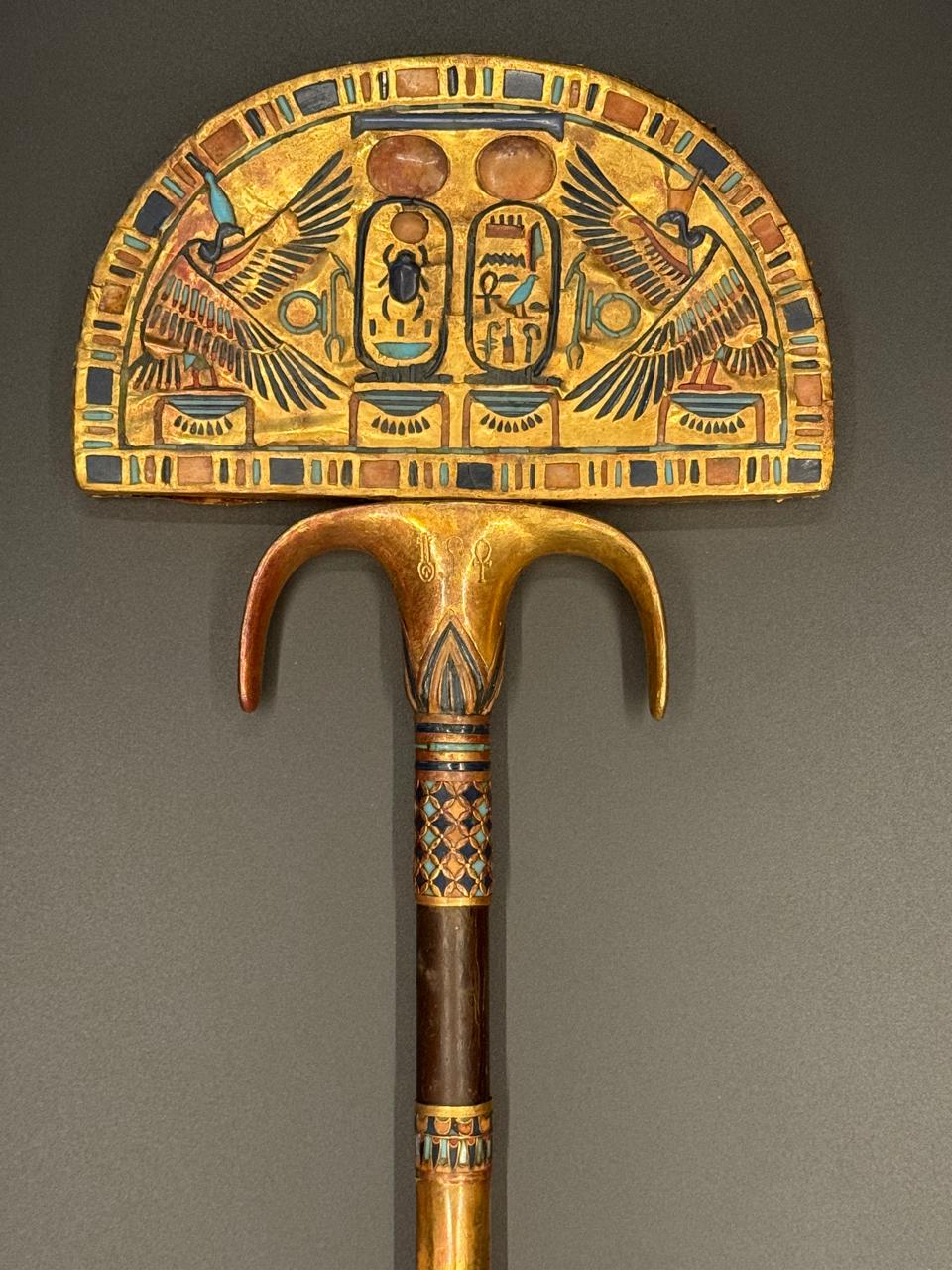
Fig 60) Golden fan.
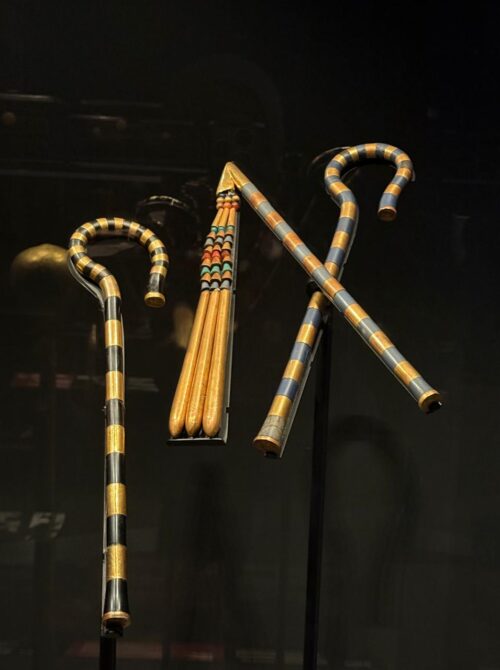
Fig 61) Flail and Crook, found on Tutankhamoun mummy.
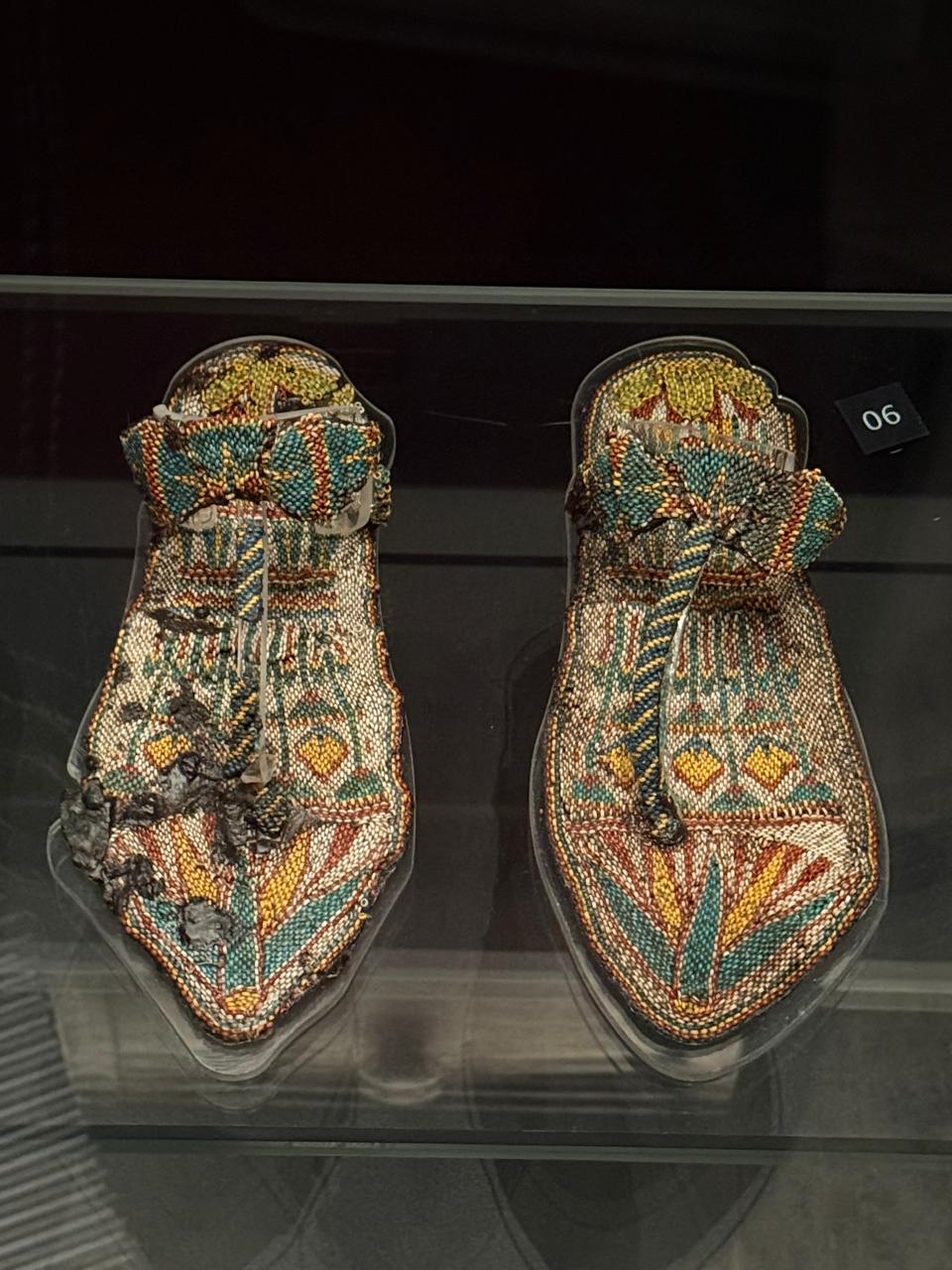
Fig 62) Sandals.
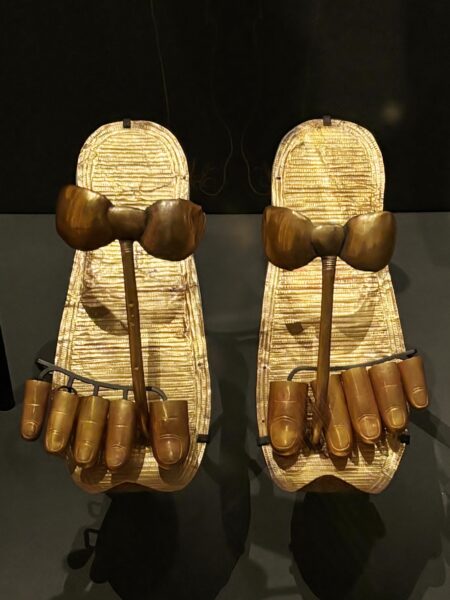
Fig 63) Sandals.
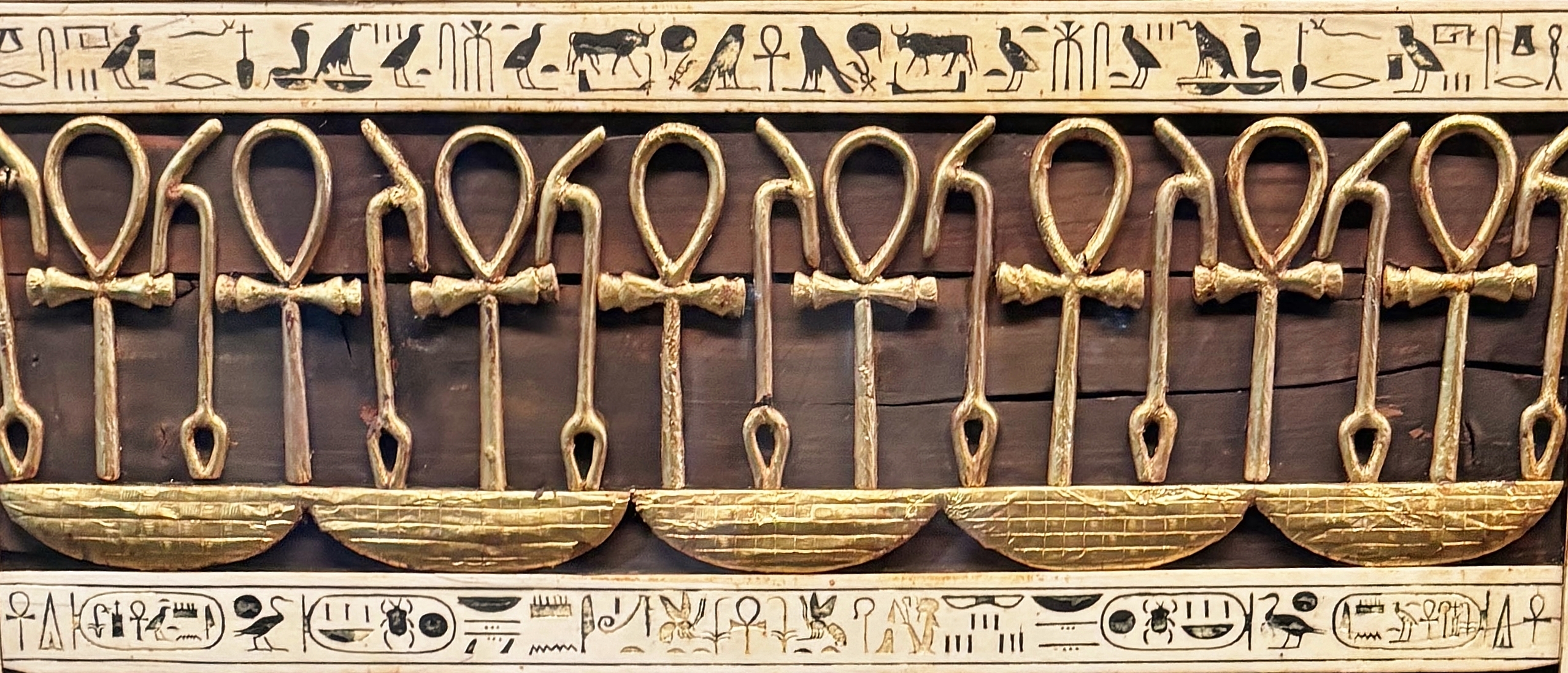
Fig 64) Openwork design detail from one of the chests.
Tutankhamun’s Treasures in the Grand Egyptian Museum
The Grand Egyptian Museum (GEM), located near the Giza Pyramids, represents a new era in the display of Egypt’s ancient heritage. For the first time, all of Tutankhamun’s treasures over 5398 artifacts are displayed together in one place. This is a historic achievement, as the collection had previously been divided between storage facilities and the Egyptian Museum in Tahrir.
In 2003 the Irish architectural firm Heneghan Peng was selected to design the museum after winning an international architectural competition.
After several partial openings, in 2025 on the first of November the Grand Egyptian Museum opened its doors as an international destination with a large and impressive celebrations.
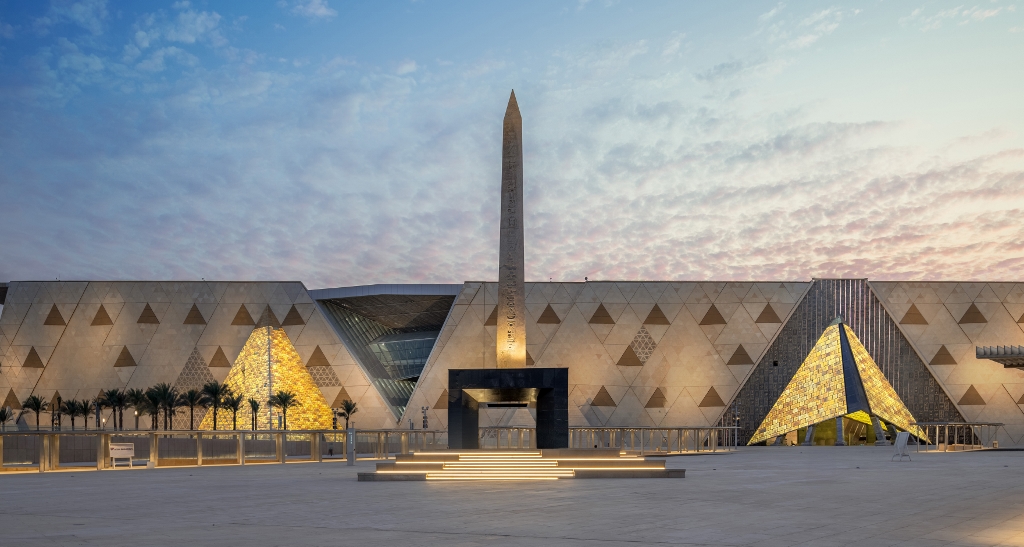
Fig 65) Grand Egyptian Museum. Image source: GEM website.
A Unique Display Experience
At the GEM, the treasures are arranged in a way that reflects the original placement inside the tomb. Visitors can follow the journey from the outer chambers to the burial chamber, experiencing the discovery almost as Howard Carter did.
The exhibition uses modern lighting, climate control, and advanced display techniques to preserve the artifacts while presenting them in a visually powerful way.
This is a historic achievement, as the collection had previously been divided between storage facilities and the Egyptian Museum in Tahrir.
The Mummies Hall and Context
Although Tutankhamun’s mummy remains in the Valley of the Kings, the museum provides rich context through multimedia, reconstructions, and detailed explanations. Visitors gain a deeper understanding of ancient Egyptian beliefs about death, the afterlife, and the role of the pharaoh.
Symbolism of Gold
The emphasis on gold throughout the exhibition highlights its religious and cultural significance. Gold was not merely a symbol of wealth, it represented eternity, immortality, and divine power.
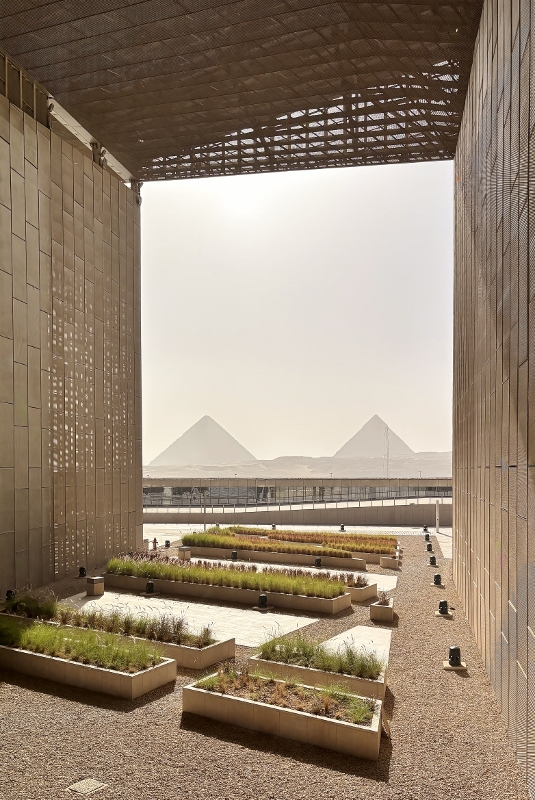
Fig 66) View of the pyramids from inside the Grand Egyptian Museum.
Cultural and Historical Importance
Tutankhamun’s treasures are more than beautiful objects; they are a window into ancient Egyptian civilization. They reveal:
- Advanced craftsmanship and artistic skill • Religious beliefs about the afterlife • Daily life in the royal court • The political and cultural context of the New Kingdom
The preservation of these artifacts allows modern audiences to connect with a civilization that existed over three millennia ago.
In the end, Tutankhamun achieved something few rulers ever do: he became immortal, not only in ancient belief but also in the memory of the modern world.
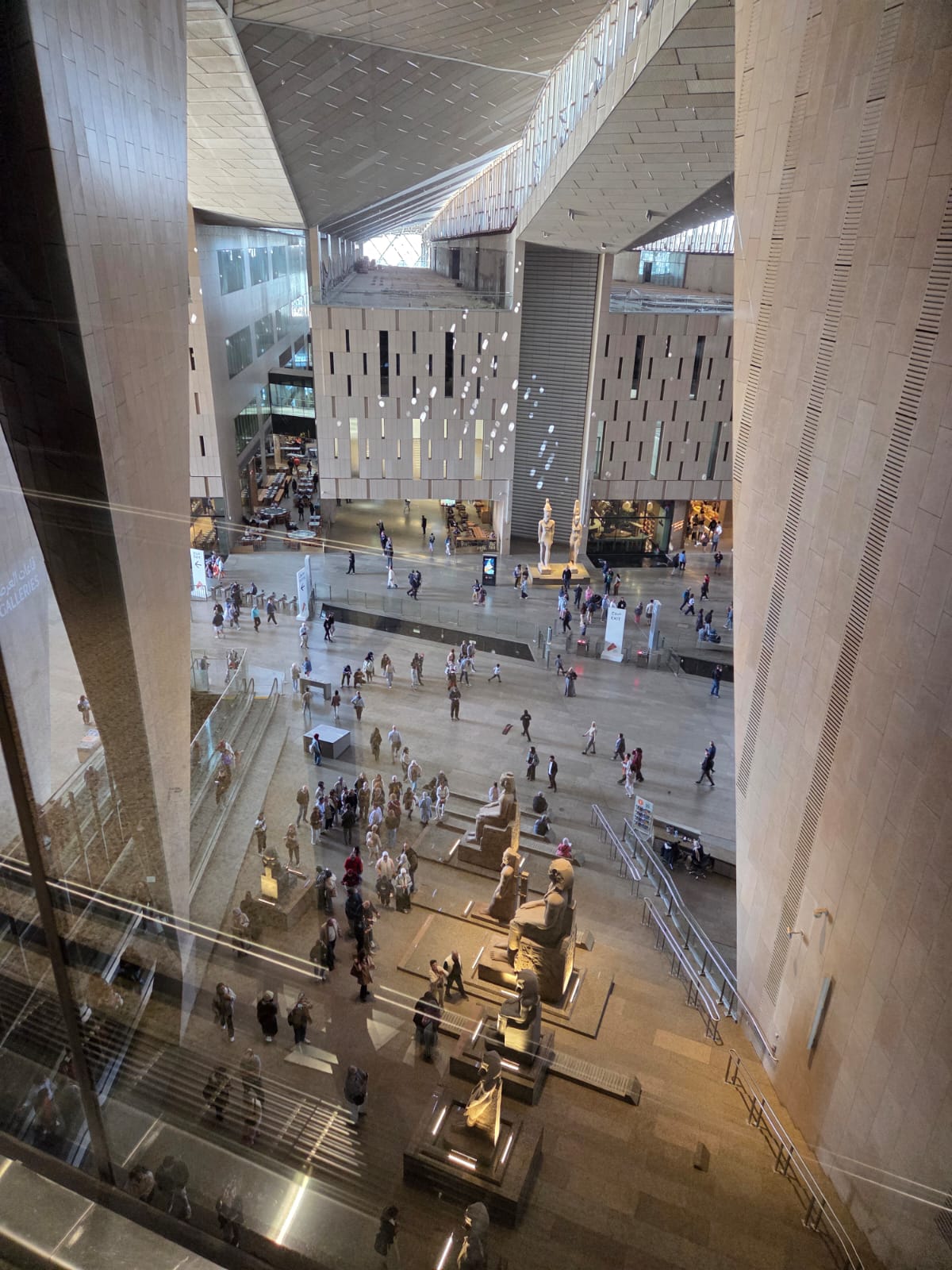
Fig 67) View from the bridge overlooking the Grand Stairs. Tutankhamun Galleries are to the left of the image.
Conclusion
Although Tutankhamun was a minor king in terms of political achievements, his legacy has become one of the greatest in human history. The discovery of his tomb transformed our understanding of ancient Egypt and brought its culture to life in an unprecedented way.
Today, the Grand Egyptian Museum offers a unique opportunity to experience the full splendor of Tutankhamun’s treasures.The golden mask, coffins, jewelry, and countless other artifacts stand as a testament to the artistry, beliefs, and grandeur of ancient Egyptian civilization.
“The Grand Egyptian Museum is always full of visitors, both Egyptians and international tourists, exploring the artifacts and the country’s history. The images in this article capture the busy yet reflective atmosphere I observe every time I guide visitors through the museum.“ Amani Shafie.
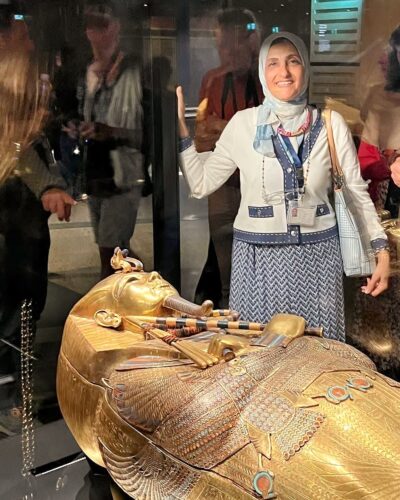
Fig 68) Amani Shafie at the Grand Egyptian Museum.
All copyrights reserved.
Source of images:
Unless stated, All images are by Amani Shafi and FEEFAA team taken at the Grand Egyptian Museum in 2026.
Opening Image
The throne back detail
About Amani Shafie,
Amani resides in Cairo, Egypt. She is an Egyptologist and professional tour guide, she holds a Bachelor degree from the Faculty of Tourism and Hotel Management, affiliated to Helwan University. She was selected as one of just 60 candidates from over 5,000 applicants in a highly competitive university tourism guidance program.
With extensive experience, she has guided visitors from all around the world for 42 years across the many layers of Egypt’s history, including Ancient Egyptian, Greco-Roman, Coptic, Islamic, and modern periods. Through her work, she combines academic knowledge with storytelling to present Egypt’s heritage in an engaging and meaningful way.
WhatsApp +20 122 7370010
